
How to Install Artificial Grass Strips Between Pavers & Enhance Your Outdoor Space
Transforming an ordinary patio, walkway, or driveway into a stylish, low-maintenance, and visually appealing outdoor space has never been easier. One of the most innovative and practical design ideas is to incorporate artificial grass strips between pavers. Not only does this design enhance the aesthetic appeal, but it also brings a natural touch to your hardscape while reducing maintenance. For homeowners and property managers in Louisville, Kentucky, the question often arises: “How to Install Artificial Grass Strips Between Pavers?” At Commonwealth Paving, located at 136 Outer Loop, Louisville, Kentucky 40214.
we have years of experience installing pavers and integrating artificial grass features to elevate outdoor spaces. Our team provides expert guidance and professional installation, ensuring your project is both beautiful and durable. You can reach us at +1 502 459 7283 for a consultation or a free estimate.
In this comprehensive guide, we’ll cover everything you need to know about installing artificial grass strips between pavers, including design tips, step-by-step installation instructions, material selection, and maintenance advice. By the end of this article, you’ll have a clear understanding of how to achieve a seamless and attractive finish for your outdoor area.
Why Add Artificial Grass Between Pavers?
Incorporating artificial grass strips between pavers is a modern trend in landscape design. It combines the clean lines of hardscaping with the soft, green appeal of turf. There are several advantages to this approach:
-
Low Maintenance: Unlike natural grass, artificial turf does not require watering, mowing, or fertilizing.
-
Aesthetic Appeal: The green contrast between pavers and grass creates a striking visual effect that enhances curb appeal.
-
Durability: High-quality artificial grass is resistant to wear, fading, and weather conditions.
-
Weed Control: Proper installation minimizes weed growth in gaps between pavers.
-
Eco-Friendly: Reduced water usage makes artificial grass a sustainable choice for landscaping.
Planning Your Project
Before starting the installation, careful planning ensures a successful outcome. Here are some key considerations:
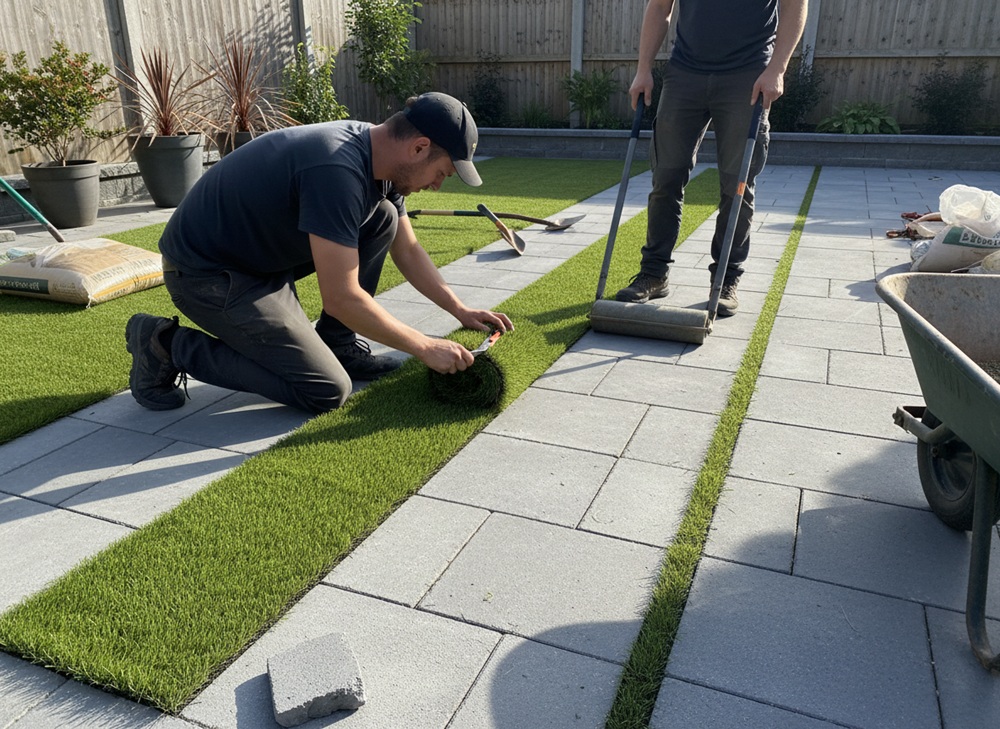
1. Measure Your Space
Measure the length and width of your paver area to determine how much artificial grass you will need. Accurate measurements will prevent material shortages or waste.
2. Select the Right Pavers and Grass
-
Pavers: Choose pavers that are uniform in size and thickness to ensure even installation. Materials like concrete, natural stone, or brick work well.
-
Artificial Grass: Select high-quality turf with a realistic appearance, UV protection, and good drainage features.
3. Decide Strip Width
The width of the grass strips depends on the aesthetic you want. Narrow strips (2-3 inches) provide subtle accents, while wider strips (4-6 inches) create a bold visual effect. Consistency in width is key to a professional look.
4. Plan Drainage
Proper drainage prevents water accumulation under the grass. Slightly sloping the paver surface and using permeable base materials ensures water drains away efficiently.
Step-by-Step Installation: How to Install Artificial Grass Strips Between Pavers
Installing artificial grass strips between pavers may seem complex, but with careful planning and the right materials, it can be a straightforward process. Here’s a step-by-step guide:
Step 1: Prepare the Area
-
Remove debris and existing materials: Clear any dirt, weeds, or old filler from between paver gaps.
-
Level the base: Ensure that the base is even to prevent uneven grass strips.
-
Adjust paver spacing: Check the gaps between pavers and adjust if necessary. Standard spacing ranges from 1 to 3 inches.
Step 2: Install a Base Material
-
Choose the right base: Crushed stone or decomposed granite provides a stable foundation.
-
Compact the base: Use a hand tamper or mechanical compactor to ensure the base is firm and level.
-
Ensure proper drainage: The base should allow water to drain away easily, preventing waterlogging beneath the artificial grass.
Step 3: Lay Weed Barrier
-
Optional but recommended: A thin layer of landscaping fabric helps prevent weeds from growing between the pavers and grass strips.
-
Cut to size: Trim the fabric to fit the gaps, ensuring it doesn’t cover the pavers themselves.
Step 4: Cut and Fit Artificial Grass Strips
-
Measure each gap: Accurately measure the length and width of each space between pavers.
-
Cut the grass strips: Use sharp utility scissors or a turf cutter to cut artificial grass to fit the gaps precisely.
-
Check alignment: Ensure strips are straight and consistent throughout the project.
Step 5: Secure the Grass Strips
-
Apply adhesive: Use a non-toxic, outdoor adhesive to secure the grass strips to the base if needed.
-
Anchor with nails or staples: For added stability, small landscaping nails or staples can hold the strips in place.
-
Check for evenness: Ensure each strip is level with the paver surface to avoid tripping hazards.
Step 6: Fill and Finish Gaps
-
Add infill (optional): Some types of artificial grass benefit from sand or rubber infill to keep fibers upright and provide cushioning.
-
Brush the grass fibers: Use a stiff brush to lift and arrange grass fibers for a natural look.
-
Inspect and adjust: Walk along the pavers to check that all strips are secure, aligned, and visually appealing.
Maintenance Tips for Artificial Grass Between Pavers
One of the main advantages of artificial grass is its low maintenance. However, some care is needed to keep your outdoor space looking its best:
-
Regular cleaning: Remove debris such as leaves or dirt using a leaf blower or soft broom.
-
Rinse occasionally: Lightly hose down the grass to remove dust and pollen.
-
Address stains promptly: For food or beverage spills, wipe clean with mild soap and water.
-
Check for loose strips: Inspect periodically and re-secure any strips if needed.
-
Avoid harsh chemicals: Use mild cleaning solutions to maintain the integrity of the grass fibers.
Following these simple steps ensures that your grass strips remain vibrant and your paver area continues to look pristine.
Design Ideas for Pavers with Artificial Grass
Artificial grass strips can transform the look of any outdoor space. Here are a few design ideas to inspire your project:
-
Linear walkway: Create a modern look by placing grass strips in straight lines between rectangular pavers.
-
Curved patterns: Add visual interest with curved or diagonal strips for patios and garden paths.
-
Checkerboard effect: Alternate pavers and wide grass strips for a bold, contemporary design.
-
Integration with landscaping: Surround the paver area with flower beds or shrubs to enhance the natural feel.
Working with professionals at Commonwealth Paving ensures that your design is both functional and visually striking.
Benefits of Professional Installation
While DIY installation is possible, professional installation offers several advantages:
-
Precision: Ensures consistent strip width and alignment.
-
Durability: Proper base and installation prevent shifting and uneven surfaces.
-
Time-saving: Professionals can complete projects efficiently with high-quality results.
-
Expert advice: Get recommendations on materials, design, and drainage solutions.
With Commonwealth Paving, you receive a turnkey solution that elevates your outdoor space and guarantees long-lasting results. Call +1 502 459 7283 to schedule a consultation.
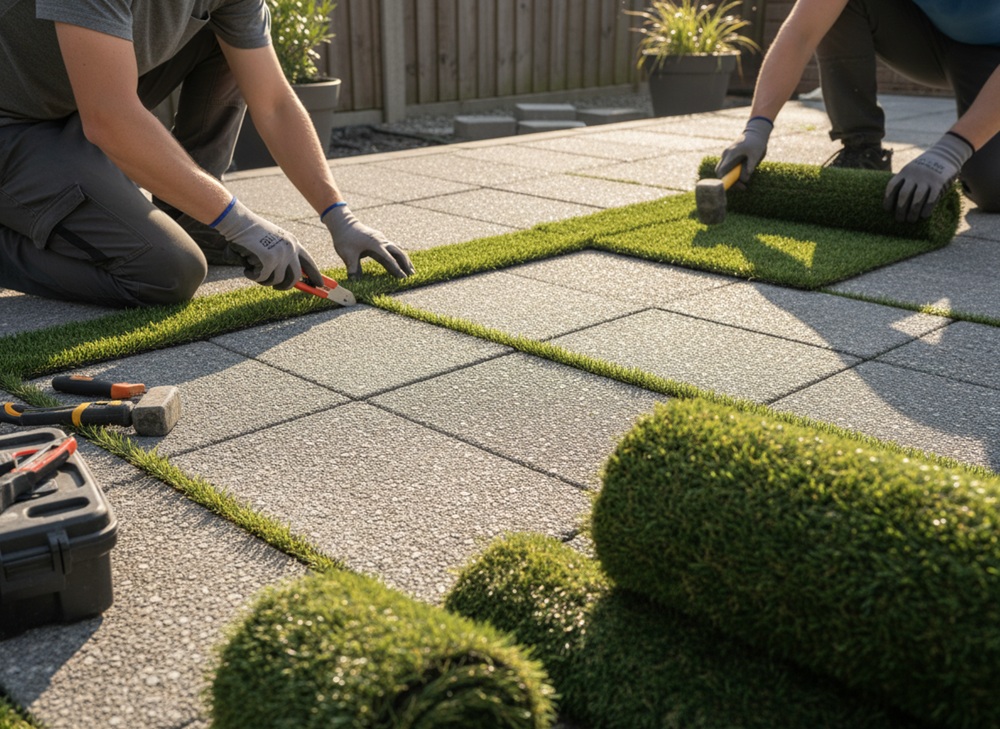
Cost Considerations
The cost of installing artificial grass strips between pavers depends on several factors:
-
Size of the area: Larger patios or walkways require more materials and labor.
-
Type of artificial grass: Premium turf with UV protection and realistic texture costs more.
-
Paver type and spacing: Wider gaps or uneven pavers may require additional preparation.
-
Labor: Professional installation ensures high-quality results but adds to the overall cost.
Although installation has upfront costs, the long-term benefits—low maintenance, aesthetics, and durability—make it a worthwhile investment.
Integrating artificial grass strips between pavers is an effective way to enhance your outdoor space with modern aesthetics, low maintenance, and long-lasting appeal. If you’re wondering “How to Install Artificial Grass Strips Between Pavers,” following the steps outlined above ensures a successful project with a professional finish.
At Commonwealth Paving, located at 136 Outer Loop, Louisville, Kentucky 40214, we specialize in transforming patios, walkways, and driveways with expert paver installation and artificial grass integration. Our team combines technical expertise with creative design to deliver outdoor spaces that are both functional and visually appealing.
For more information or to schedule a consultation, call +1 502 459 7283 today. Let us help you create an outdoor space that is stylish, durable, and maintenance-friendly for years to come.
Expert Tips on How to Install Artificial Grass Strips Between Pavers Effectively
Creating an outdoor space that feels polished, modern, and low-maintenance is a dream for many homeowners. One of the most effective ways to elevate the look of your patio, pathway, courtyard, or driveway edging is by adding artificial grass strips between pavers. This method adds crisp definition, a burst of natural-looking greenery, and the satisfaction of a clean, organized design.
But beneath the beauty lies a process that requires precision and proper technique. If you’re wondering “How to Install Artificial Grass Strips Between Pavers” in the most effective way, this complete guide will walk you through everything you need to know — from preparation and materials to expert installation tips that ensure long-lasting results.
At Commonwealth Paving, located at 136 Outer Loop, Louisville, Kentucky 40214, we help homeowners enhance their outdoor spaces with high-quality paving solutions, including expert installation of artificial grass accents. If you need guidance, professional installation, or a detailed estimate, you can always reach us at +1 502 459 7283.
Let’s dive into the best practices, planning steps, and professional techniques that will help you achieve a clean, seamless look.
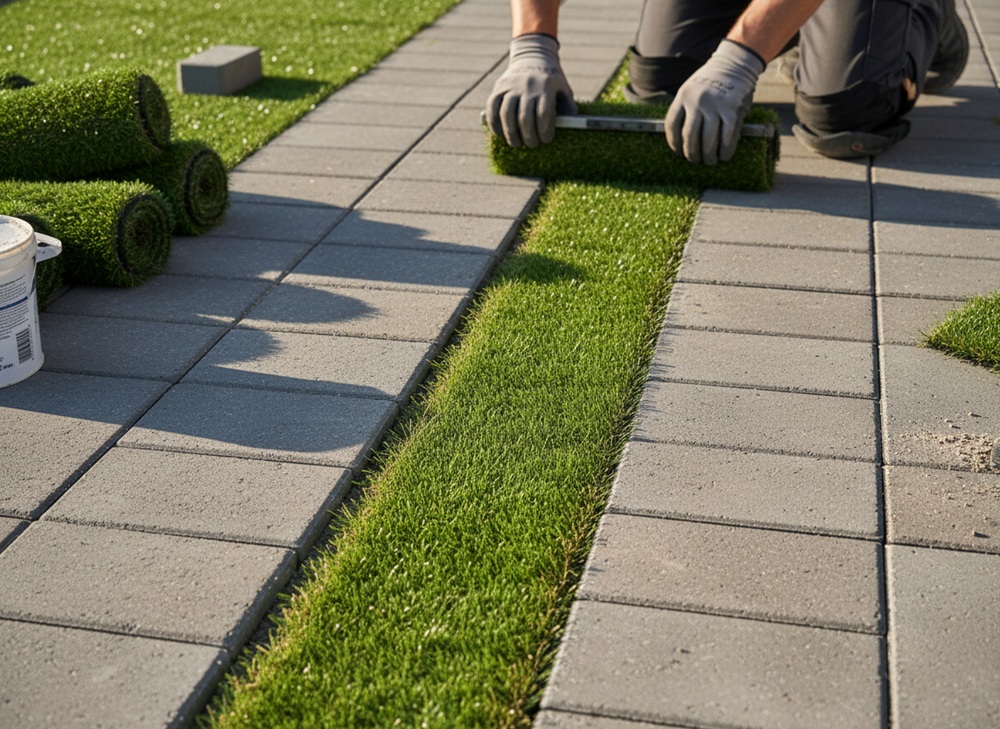
Why Artificial Grass Between Pavers Is So Popular
Before learning How to Install Artificial Grass Strips Between Pavers, it helps to understand why this design trend is taking over outdoor landscapes across the country.
This combination offers:
-
Clean visual contrast
The structured pavers paired with the smooth, evergreen look of artificial grass create a contemporary and visually appealing finish. -
Low maintenance
No mowing, watering, fertilizing, or trimming. Once installed properly, artificial grass strips remain pristine. -
Weather-resistant durability
High-quality artificial turf stands up to moisture, heat, freezing weather, and heavy foot traffic. -
Enhanced curb appeal
Even simple walkways feel premium with lush green inlays between the hardscape. -
Eco-friendly benefits
Less water use and no lawn chemicals make artificial grass an environmentally conscious choice.
These benefits make it clear why homeowners look for expert methods on How to Install Artificial Grass Strips Between Pavers effectively.
Step-by-Step Preparation: Setting Up for Success
Every durable installation starts with proper preparation. Many DIY attempts fail not because of poor materials, but because the base beneath the artificial grass was not prepared correctly.
Here’s how to prepare the area professionally:
1. Measure the Joint Spaces
Accurate measurements are essential for ordering the correct width of turf strips. Joints between pavers typically range from ½ inch to 2 inches.
Measure each gap individually because paver spacing often varies slightly.
2. Clean the Gaps Thoroughly
Remove:
- Dirt
- Weeds
- Previous sand
- Any loose debris
This step ensures a clean cavity where the artificial grass backing can sit flat and secure.
3. Check the Base Material
You want a stable and level foundation beneath the pavers. If the substrate has shifted, sunken, or become uneven over time, fix those issues before proceeding.
4. Add a Compact Bedding Layer
Many professional installers add a thin layer of decomposed granite or fine sand under the grass strip to improve drainage and stability.
If you’re unsure about the base quality, a professional team like Commonwealth Paving can inspect and correct it before installation.
Cutting the Grass Strips: Precision Matters
Understanding how to Install Artificial Grass Strips Between Pavers also includes mastering how to cut the turf correctly.
Choose the Correct Turf
For narrow joints, use:
- Short pile height
- Strong woven backing
- Durable fibers designed for high-traffic areas
Cut From the Backing
Always cut from the backside of the turf. The backing grid helps keep your cuts straight and consistent.
Cut Slightly Wider Than the Gap
A common expert trick is to cut turf about ⅛ inch wider than the paver joint. This ensures a snug fit that prevents movement or uplift.
Use a Sharp Utility Knife
Replace blades often—dull blades cause ragged edges or uneven cuts.
Inserting and Securing the Turf Strips
Now it’s time to place the artificial grass between the pavers.
1. Press the Turf Firmly Into the Joints
Start with one end and gently press the backing into the gap. The strip should sit slightly compressed—this is what gives it a clean, finished look.
2. Use Landscape Adhesive Where Needed
For wider joints, adhesive can be applied sparingly to the sides of the pavers, not the base. This stabilizes the turf without blocking drainage.
3. Brush the Fibers Upward
Once installed, brush the grass fibers upward with a stiff broom. This helps them stand tall and look natural.
4. Add Infill for Stability
Silica sand infill (small amount) helps:
-
Add weight
-
Keep fibers upright
-
Improve drainage
-
Prevent wrinkles
Don’t overfill; the goal is stability, not creating a layer above the turf fibers.
Expert Techniques for Perfect Alignment
Here are advanced tips professionals use when installing artificial grass between pavers:
Tip 1: Match Grain Direction
Artificial grass has a direction or “grain.” Install all strips facing the same way, so the color and texture stay consistent.
Tip 2: Keep the Strips Flush With Pavers
The turf should not sit higher than the surrounding stones. Level strips create a smooth and safe walking surface.
Tip 3: Avoid Over-Gluing
Too much adhesive can cause uneven drying or improper drainage. Use only what’s necessary.
Tip 4: Be Patient With Tight Spaces
Never force the strip into narrow gaps. Trim gradually for a perfect fit.
Tip 5: Clean Pavers After Installation
Dust, adhesive smudges, and sand particles should be rinsed away once the turf is fully in place.
Maintaining the Look After Installation
One major advantage of artificial grass strips is low-maintenance beauty, but small steps help keep them looking fresh for years.
Light Maintenance Includes:
-
Occasional brushing
-
Rinsing with water if debris builds up
-
Checking for lifted edges
-
Removing trapped leaves or dirt
Because the strips are narrow, maintenance takes only minutes.
Common Mistakes to Avoid
Understanding How to Install Artificial Grass Strips Between Pavers also includes knowing what not to do:
-
Not preparing the gaps properly
Loose debris leads to unstable turf backing. -
Using turf with long pile height
It bends, mats, and does not look clean between narrow pavers. -
Skipping infill altogether
Strips without infill shift more easily. -
Inconsistent strip width
This causes uneven appearance. -
Blocking water flow
Overuse of adhesive or base material can trap moisture.
Avoiding these mistakes ensures a professional outcome.
Pairing Turf Strips With Beautiful Asphalt Pathways
Many homeowners choose to incorporate turf-and-paver designs alongside asphalt pathways to create a cohesive and modern outdoor layout. If your property includes an asphalt walkway or driveway, sealing it can further enhance the overall appearance.
At Commonwealth Paving, we also provide high-quality asphalt sealing services to protect:
-
Pathways
-
Driveways
-
Courtyards
-
Sidewalk edges
A freshly sealed pathway paired with bright artificial turf strips and clean paver lines can transform an ordinary outdoor area into an elegant landscape.
Why Choose Professional Installation?
While installing artificial grass strips between pavers is possible as a DIY project, professional help often leads to:
-
Cleaner cuts
-
Perfect spacing
-
Better long-term durability
-
Faster installation
-
Flawless aesthetic results
Homeowners often underestimate how precise the process needs to be. A team like Commonwealth Paving ensures your outdoor space looks polished from every angle.
Transform Your Outdoor Space With Commonwealth Paving
If you’re ready to enhance your patio, walkway, or driveway edging, learning How to Install Artificial Grass Strips Between Pavers is a great first step — but partnering with experts ensures the highest-quality results.
At Commonwealth Paving, we specialize in:
- Paver installation
- Asphalt paving and sealing
- Artificial grass strip installation
- Full outdoor surface enhancements
You can visit us at:
Commonwealth Paving
📍 136 Outer Loop, Louisville, Kentucky 40214
📞 +1 502 459 7283
Whether you’re planning a DIY project or looking for professional assistance, our team is here to help bring your outdoor vision to life.
Address
Commonwealth Paving, 136 Outerloop, Louisville, Kentucky 40214
Phone: 502-459-7283, Fax: 502-456-2678
Opening Hours
| Monday | 9:00 AM – 5:00 PM |
| Tuesday | 9:00 AM – 5:00 PM |
| Wednesday | 9:00 AM – 5:00 PM |
| Thursday | 9:00 AM – 5:00 PM |
| Friday | 9:00 AM – 5:00 PM |
| Saturday | Closed |
| Sunday | Closed |