
Step-by-step guide on How to Install Artificial Grass Strips Between Pavers
How to Install Artificial Grass Strips Between Pavers: Adding artificial grass strips between pavers is one of the most attractive and low-maintenance ways to upgrade your outdoor space. Whether you’re enhancing a patio, driveway border, walkway, or garden path, the combination of clean paver lines and vibrant green artificial turf creates a refreshing, modern look that instantly boosts curb appeal. Homeowners across Kentucky are choosing this landscaping approach because it blends beauty, practicality, and long-lasting durability.
If you’re interested in creating this stylish look and want guidance from trusted professionals, Commonwealth Paving—located at 136 Outer Loop, Louisville, Kentucky 40214—is here to help with expert advice and professional support. Homeowners can even reach the team at +1 502 459 7283 for customized assistance on their outdoor improvement projects.
In this guide, we’ll walk you through how to Install Artificial Grass Strips Between Pavers, clearly explaining each step, giving professional insights, and ensuring you understand everything from materials to installation techniques. This is a full-length, in-depth resource designed to help homeowners or DIY enthusiasts achieve clean, crisp, perfectly aligned artificial grass joints that look professionally installed.
Why Install Artificial Grass Strips Between Pavers?
Before we dive into the installation process, let’s explore why this design trend has surged in popularity.
Artificial grass strips between pavers offer:
A Clean, Modern Aesthetic
The contrast between stone and greenery creates a crisp, modern look ideal for patios, pathways, and poolside areas.
Low Maintenance
Unlike natural grass, artificial turf doesn’t require watering, mowing, trimming, or fertilizing.
Durability
High-quality turf stands up to foot traffic, weather changes, and UV exposure.
Weed Resistance
With proper installation, weeds are highly unlikely to grow between your pavers.
Better Drainage
When installed correctly, artificial turf allows water to drain efficiently without puddling.
Consistent Appearance
Artificial grass keeps its color year-round, even through Kentucky’s seasonal shifts.
Whether you’re creating a stylish walkway or transforming a backyard patio into a more inviting space, artificial grass strips offer a simple yet visually stunning improvement.
Materials Needed for Installation
To learn How to Install Artificial Grass Strips Between Pavers, you need a clear understanding of the materials involved. Here are the essential items:
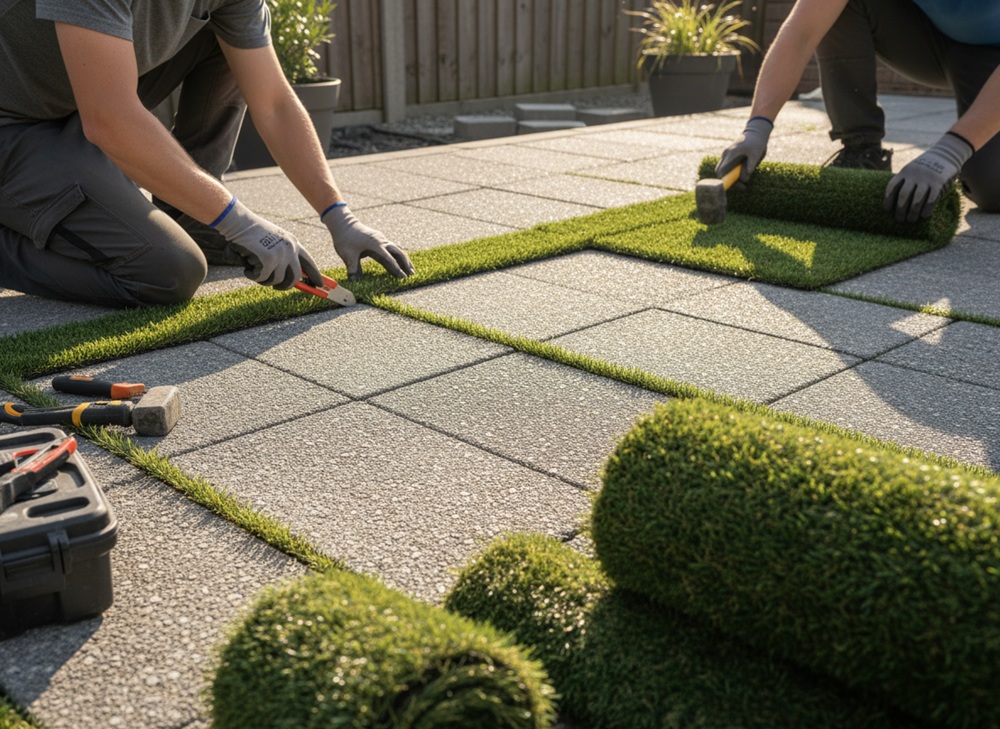
- Artificial turf (short pile, ½ inch to 1 inch height)
- Utility knife or turf cutter
- Turf adhesive or landscape glue
- Measuring tape
- Weed barrier fabric
- Sand, crushed stone, or decomposed granite
- Joint brushes or a stiff broom
- Turf seam tape (optional, depending on layout)
- Infill material (silica sand or alternative)
- A compactor or hand tamper blower, or a broom for cleaning the surface
When you work with Commonwealth Paving, the team can help you determine the precise amount of materials you need and ensure your base layers and pavers are properly prepared. Their expertise in ground preparation, leveling, and surface construction ensures long-lasting results.
Step-by-Step Guide: How to Install Artificial Grass Strips Between Pavers
Now, let’s walk through the complete process step by step.
Step 1: Plan and Measure the Joint Spaces
Start by determining the width of the spaces between your pavers. Most artificial grass strip designs use gaps that range from:
- ½ inch to 2 inches wide
Accurate measurements are crucial because you need to cut the turf into clean, uniform strips. Measure each gap carefully, especially if your pavers are irregular or have curves.
Homeowners often overlook slight variations in joint width, but precision is key to achieving a seamless, professional appearance.
Step 2: Prepare the Gaps Between the Pavers
If your pavers are already installed, remove any existing fillers such as sand, gravel, or old soil. Make sure the joint grooves are cleaned out thoroughly.
For best results:
- Remove all debris
- Clear out weeds
- Use a blower or stiff brush for deep cleaning
The depth of the gaps typically ranges from 1 to 2 inches, depending on the design and drainage requirements.
Proper preparation ensures your artificial grass strips sit flush with the top surface of the pavers without being too low or too high.
Step 3: Compact the Base Layer
Once the gaps are cleaned, fill them with a compactable base material such as:
- Crushed stone
- Decomposed granite
- Fine gravel
This layer provides stability and proper drainage.
Use a hand tamper or compactor to press the material firmly. The base should be:
- Level
- Smooth
- Evenly compacted
A well-prepared base ensures your artificial turf sits securely and doesn’t shift over time.
At Commonwealth Paving, base preparation is one of the areas where their expertise truly shines—because a stable base is the foundation for durable, long-lasting landscaping projects.
Step 4: Install a Weed Barrier (Optional but Recommended)
Although weeds are rare with artificial turf, installing a weed barrier fabric provides extra protection. Cut the fabric into narrow strips matching the width of your paver gaps.
Place the fabric over the compacted base and secure it using adhesive or pressure.
This step is especially useful in outdoor areas that are exposed to soil movement, heavy rain, or regular moisture.
Step 5: Cut the Artificial Turf into Strips
This is one of the most important parts of the installation process.
Roll out your artificial turf on a flat surface. Using a sharp utility knife, cut long strips that match:
- The measured width
- The exact length of each paver joint
Tips for clean, accurate cuts:
- Always cut from the back of the turf
- Follow the grain direction for consistency
- Make multiple light passes rather than one deep cut
- Keep the knife blade sharp
Your goal is to create precise strips that fit snugly into the gaps without bunching or curling.
Step 6: Apply Turf Adhesive
Apply a thin bead of landscape glue or turf adhesive inside the paver gaps. Be careful not to use too much, as excess adhesive can seep through the turf.
Spread the adhesive evenly using:
- A small spatula
- A glue spreader
- A putty knife
The adhesive will secure the turf strip to the base and prevent movement over time.
Step 7: Place the Artificial Grass Strips Between the Pavers
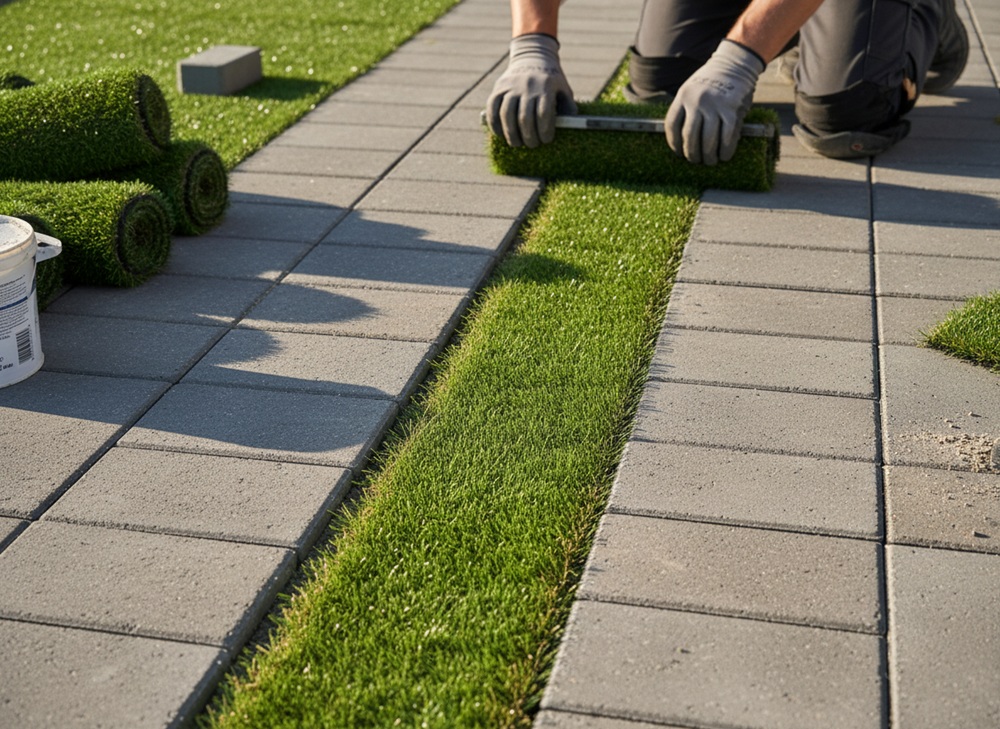
Carefully place each turf strip into the adhesive-lined joint.
Press firmly with your fingers or a narrow roller to ensure a strong bond.
Make sure:
- The turf fibers are upright
- The strip sits level with the paver surface
- The edges align perfectly without gaps
Adjust and trim as needed. This step requires patience because precision determines the final appearance.
Step 8: Add Infill Material
Once the strips are secured, it’s time to apply a thin layer of silica sand or turf infill. This helps:
- Weigh down the turf
- Keep fibers standing upright
- Improve drainage
- Extend durability
Brush the infill material into the turf using a stiff broom, ensuring even distribution.
Step 9: Final Grooming and Cleanup
The last step is to groom the artificial grass strips and clean the area.
Use:
- A stiff broom
- A turf brush
- A leaf blower
Brush the fibers upright and remove any loose debris from the pavers.
When completed properly, the result is a clean, modern, visually appealing finish that enhances any outdoor area.
Professional Tips for Best Results
If you want your installation to look flawless, consider these helpful tips:
Maintain Even Turf Height
Choose a turf height that complements the height of your pavers. Taller turf can look messy; shorter turf looks clean and sharp.
Check Drainage
Ensure that water flows naturally and doesn’t pool in the paver joints.
Avoid Overfilling Gaps
Infill should be light—too much can cause fibers to lie flat.
Match Turf Grain Direction
Install strips with consistent grain direction for a uniform look.
Use High-Quality Glue
Low-grade adhesive can weaken over time, especially in hot Kentucky summers.
If you want the best possible results or need assistance with your project, Commonwealth Paving offers professional ground preparation and paving services to help homeowners achieve long-lasting, beautiful installations.
Benefits of Hiring Professionals
Although many homeowners attempt DIY installation, professional support ensures:
- Perfect alignment
- Long-lasting durability
- Smooth and even base preparation
- Cleaner finishes
- Faster installation
- Better drainage system
Professionals also know how to handle curves, slopes, and uneven paver layouts with precision.
If you prefer expert help, reach out to Commonwealth Paving at +1 502 459 7283. Their team combines precision, experience, and excellent customer service for high-quality work.
Why Choose Commonwealth Paving for Your Outdoor Project?
When modifying or upgrading your patio, walkway, or driveway, you want the job done right. Commonwealth Paving, located at 136 Outer Loop, Louisville, Kentucky 40214, is known for:
- Reliable craftsmanship
- Expert ground and surface preparation
- Premium service quality
- Transparent communication
- Local experience with Kentucky soils and weather
The team understands the technical details behind durable outdoor surfaces—and that includes incorporating artificial grass strips between pavers with stable foundations and professional-grade results.
Transform Your Outdoor Space with Professional Precision
Learning how to Install Artificial Grass Strips Between Pavers is an excellent way to enhance your home’s landscape design. With the right materials, careful measurements, and precise installation, you can create a modern, low-maintenance outdoor look that stands the test of time.
But for homeowners who want guaranteed perfection, professional expertise makes a significant difference. Commonwealth Paving brings years of experience, skilled craftsmanship, and reliable service to every project. Their location at 136 Outer Loop, Louisville, Kentucky 40214, and toll-free number +1 502 459 7283, make them easily accessible for homeowners across the region.
Whether you’re designing a new outdoor path, enhancing a patio, or planning a full resurfacing project, their team can help you achieve durable and beautiful results.
How to Install Artificial Grass Strips Between Pavers for a Modern, Clean Look
Modern outdoor design is increasingly shifting toward clean lines, minimalist beauty, and low-maintenance solutions. One of the most popular trends transforming patios, walkways, pool decks, and driveways is the combination of sleek pavers with vibrant artificial grass strips. This elegant pairing instantly elevates curb appeal by creating strong contrast, fresh greenery, and a visually pleasing pattern that feels both natural and contemporary.
If you’re searching for a complete and practical guide on how to Install Artificial Grass Strips Between Pavers, you’re in the right place. This in-depth article explains the installation process step by step, discusses best practices, and offers expert insights on achieving the crisp, polished look your outdoor space deserves.
And if you ever need guidance, professional installation support, or help preparing the base layers for outdoor surfaces, Commonwealth Paving, located at 136 Outer Loop, Louisville, Kentucky 40214, is always ready to assist. You can contact their team at +1 502 459 7283 for expert advice and high-quality paving services.
Let’s dive into everything you need to know.
Why Artificial Grass Strips Between Pavers Have Become a Top Trend
Artificial grass is no longer just a lawn alternative—it has become a key design element in many modern outdoor areas. When combined with pavers, the result is a striking geometric layout that enhances both function and visual appeal.
Here’s why homeowners love this look:
A Bold, Modern Aesthetic
The contrast between concrete, stone, or porcelain pavers and green turf creates a crisp, eye-catching finish.
Low Maintenance
You get the appearance of perfectly cut grass without watering, mowing, edging, or fertilizing.
Weather-Resistant
Artificial turf stays green through all seasons, even in the varying Kentucky climate.
Durable and Long-Lasting
When installed properly, it withstands foot traffic and resists fading.
Improved Drainage
Continuous gaps allow water to drain naturally through the ground.
Versatile Use
Perfect for patios, walkways, garden paths, fire pit areas, pool surroundings, and even driveway accents.
This blend of beauty and practicality is what makes artificial grass strips between pavers one of the most timeless outdoor design solutions.
Before You Begin: Materials and Preparation
To learn how to Install Artificial Grass Strips Between Pavers correctly, it’s essential to gather the right materials and prepare the area properly.
Materials You’ll Need
- Artificial turf (short pile, typically ½ to 1 inch tall)
- Utility knife or turf cutting tool
- Measuring tape
- Landscape adhesive or turf glue
- Turf infill (silica sand recommended)
- Weed barrier fabric
- Compactable base material (crushed rock, sand, or decomposed granite)
- Joint brush or stiff broom
- Turf seam tape (optional)
- Hand tamper or mechanical compactor
- Blower or broom for cleaning
If you want assistance selecting high-quality materials or ensuring your ground preparation is perfect, Commonwealth Paving can guide you through the process.
Step-by-Step Guide: How to Install Artificial Grass Strips Between Pavers
Below is a full, detailed process that shows you exactly how to achieve a premium-quality finish.
Step 1: Plan Your Design and Measure All Gaps
The first step is understanding the layout of your pavers. The gaps between pavers (also known as joints) will determine the width of your turf strips. Typical widths range from:
- ½ inch
- 1 inch
- 1.5 inches
- 2 inches or wider, depending on the design
You must measure every joint accurately because even slight variations can affect the final look.
Pro Tip:
If your pavers have curves or irregular shapes, measure the narrowest point first to avoid cutting oversized turf strips.
Step 2: Clean and Prepare the Joint Spaces
If your pavers are already installed, the joint spaces may contain:
- Dirt
- Sand
- Old filler material
- Weeds
- Loose stones
Use a narrow tool or joint cleaner to remove all debris. A blower or brush helps achieve a perfectly clean surface.
The cleaner your gaps, the better your turf strips will adhere and stay in place.
Step 3: Add and Compact the Base Layer
Proper base preparation is one of the most important factors in making sure the artificial turf strips remain stable.
Fill each joint with:
- Crushed stone
- Decomposed granite
- Sand
Then compact the material using a hand tamper. The compacted layer supports drainage and prevents the turf from sinking over time.
A slightly lowered base—about ½ inch below the paver surface—allows you to place the turf flush with the paver height.
Professional crews like those at Commonwealth Paving emphasize base preparation because it ensures long-lasting, even installations.
Step 4: Install a Weed Barrier Fabric
This step is optional but recommended.
Cut thin strips of weed barrier fabric and place them on the compacted base. This extra layer helps prevent unwanted growth in the future.
Even though artificial grass is low-maintenance, weeds can occasionally appear in areas with high moisture. A weed barrier eliminates this risk.
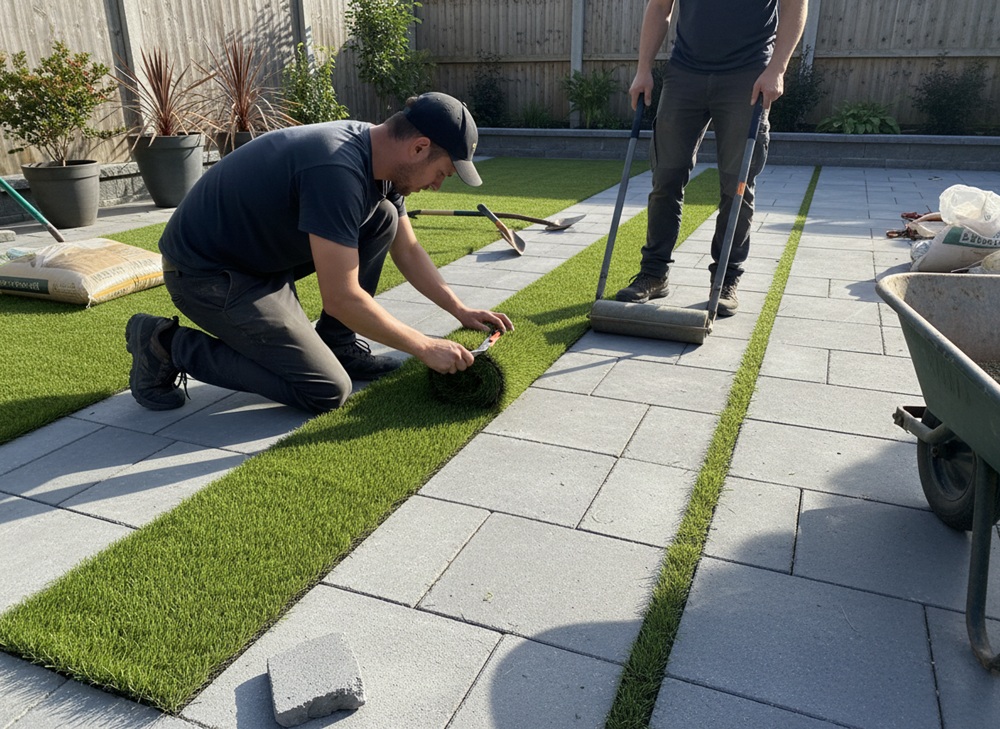
Step 5: Cut the Artificial Grass into Strips
Now it’s time to work with the turf itself.
- Roll out your artificial grass on a flat surface.
- Make sure the grain direction stays consistent throughout all strips.
- Flip the turf over so the backing faces upward.
- Use a sharp utility knife to cut long, narrow strips.
Important Tips When Cutting Turf:
- Never rush the cutting process.
- Make multiple shallow passes instead of one deep cut.
- Replace blades as soon as they dull—clean cuts make a huge difference.
- Measure twice, cut once.
The strips should be slightly wider than the joint spaces so you can trim edges for a snug, clean fit.
Step 6: Apply Adhesive to the Joint Spaces
Use a strong landscape adhesive or turf glue.
- Apply a thin, even line of adhesive along the bottom and sides of the joint.
- Avoid over-applying; too much glue can create lumps or seep through the turf.
Spread the adhesive using a putty knife or narrow glue trowel for an even layer.
Step 7: Place the Turf Strips in the Gaps
Carefully insert each strip into the adhesive-coated joint.
Make sure:
- The grass fibers face the correct direction.
- The strip fits snugly without gaps or bulges.
- The turf sits level with the paver surface.
Press firmly to ensure adhesion. You can use your fingers, a joint roller, or a smooth tool to apply pressure.
At this stage, your outdoor space will begin to show its modern, geometric beauty.
Step 8: Apply Infill for Support
Infill helps keep your turf in place and supports upright grass blades.
Lightly spread silica sand or other recommended infill materials over each grass strip. Then brush it into the fibers using a stiff broom or turf brush.
This step:
- Prevents turf shifting
- Improves drainage
- Helps the grass look more natural
- Adds weight for stability
Use a light hand—you don’t want overfilled joints.
Step 9: Brush and Clean the Surface
Finally, groom the grass strips with a stiff broom to lift the fibers and remove loose sand or debris.
You can also use a blower to clean the pavers and reveal the crisp contrast of green against stone.
Now step back and admire your work—your outdoor area has transformed into a clean, organized, and modern design showcase.
Expert Tips for the Best Possible Finish
Maintain Consistent Turf Direction
The grain of artificial grass should all face the same way to avoid noticeable shade differences.
Use Short-Pile Turf
Shorter turf looks cleaner in narrow lines and is easier to maintain.
Ensure Proper Drainage
Your base layer should allow water to flow naturally and prevent pooling.
Avoid Stretching the Turf
Stretching causes uneven tension and leads to wrinkles over time.
Trim Slowly and Carefully
Crisp, clean edges are essential for a professional appearance.
These refinements can be challenging for beginners, which is why many homeowners choose professional installation.
Why Many Homeowners Choose Professionals Instead of DIY
Installing turf strips looks simple, but precision work is required for exceptional results.
Professionals ensure:
- Perfect alignment
- Proper base compaction
- Straight, even cuts
- Expert adhesive application
- Seams and joints that last for years
- Clean finishing and grooming
If your project involves curves, slopes, large patios, or driveway borders, the skill of an experienced team is invaluable.
When you need expert ground preparation, paving, or installation guidance, Commonwealth Paving, located at 136 Outer Loop, Louisville, Kentucky 40214, offers reliable, high-quality service backed by local experience. Call +1 502 459 7283 for support.
Why Choose Commonwealth Paving for Outdoor Surface Preparation and Upgrades?
Commonwealth Paving is known for:
- Decades of expertise in paving and hardscape projects
- Accurate ground leveling and compaction
- Reliable workmanship
- Friendly and transparent communication
- Long-lasting results customized for Kentucky’s weather conditions
Whether you are building a new patio, upgrading your garden path, or enhancing your driveway with artificial grass strips, proper preparation is essential—and that’s where Commonwealth Paving excels.
A Modern, Clean Look Starts with Strong Preparation
Learning how to Install Artificial Grass Strips Between Pavers is the first step toward transforming your outdoor area into a stylish, modern, and low-maintenance landscape. Whether you’re upgrading a patio, walkway, or driveway border, the combination of green turf and crisp pavers gives your space a fresh, contemporary feel that stands out beautifully.
While DIY installation is possible, professional support ensures the perfect finish—especially when it comes to creating even lines, securing long-lasting results, and handling complex layouts.
For expert advice or paving-related services, you can rely on Commonwealth Paving, located at 136 Outer Loop, Louisville, Kentucky 40214. Contact their experienced team at +1 502 459 7283 to get started on your next outdoor improvement project.
Address
Commonwealth Paving, 136 Outerloop, Louisville, Kentucky 40214
Phone: 502-459-7283, Fax: 502-456-2678
Opening Hours
| Monday | 9:00 AM – 5:00 PM |
| Tuesday | 9:00 AM – 5:00 PM |
| Wednesday | 9:00 AM – 5:00 PM |
| Thursday | 9:00 AM – 5:00 PM |
| Friday | 9:00 AM – 5:00 PM |
| Saturday | Closed |
| Sunday | Closed |