
How Long Does It Take to Build a Driveway?
If you are planning a new driveway in 2025, one of the first questions that comes to mind is: “How long does it take to build a driveway?” Whether you’re a homeowner preparing for a renovation, upgrading curb appeal, or replacing an old, cracked surface, understanding the timeline is essential. Driveway construction involves several steps—each one critical for durability, strength, and long-term performance.
At Commonwealth Paving, located at 136 Outer Loop, Louisville, Kentucky 40214, homeowners frequently ask how much time they should plan for a typical driveway project. While exact timelines vary based on size, weather, and material, there is a clear process behind every successful driveway installation. This guide breaks down the entire timeline from planning to curing so you know exactly what to expect.
Why Understanding the Driveway Construction Timeline Matters
Before jumping into how long it takes to build a driveway, it’s helpful to understand why the timeline matters. A driveway is one of the most heavily used surfaces around your home—it supports vehicle weight, endures changing temperatures, and faces weather exposure year after year. The construction timeline has a direct impact on:
- Structural stability
- Longevity
- Water drainage performance
- Appearance
- Safety
Rushing the process can lead to early cracking, sinking, and drainage issues. Taking the right amount of time ensures the driveway is installed with proper compaction, correct materials, and enough curing time to handle daily use for decades.
So, How Long Does It Take to Build a Driveway? (Short Answer)
On average:
- Asphalt driveway: 3–7 days (including preparation and curing before use)
- Concrete driveway: 7–30 days (longer cure time)
- Paver driveway: 5–10 days
- Gravel driveway: 1–3 days
However, these numbers can change depending on the condition of the existing surface, weather delays, material availability, and project size.
But for a more accurate understanding, let’s break down the entire process step by step.
Step-by-Step Breakdown of Driveway Construction Timeline
Below is a comprehensive look at each phase of building a new driveway and how long each stage usually takes. If you are wondering “How long does it take to build a driveway?”, this breakdown gives you the clearest picture.
1. Consultation, Measurement & Quote (1–3 Days)
The first step is scheduling a consultation. A professional from Commonwealth Paving evaluates:
- The existing driveway condition
- Soil stability
- Drainage needs
- Driveway dimensions
- Material selection
- Budget and timeline
Once the assessment is complete, the homeowner receives a detailed estimate.
While this phase is quick, it is crucial because the driveway’s long-term performance begins with proper measurement and planning. Any drainage mistakes caught at this stage save thousands in the future.
2. Permits & Planning (1–10 Days, Depending on Location)
Not all driveways require permits, but some municipalities do—especially when altering grade, adding drainage features, or expanding driveway width.
During this planning stage, technicians finalize specs, prepare the project schedule, and arrange materials.
For Louisville-area residents, Commonwealth Paving efficiently manages this planning stage thanks to its extensive local experience, saving homeowners significant time and hassle.
3. Excavation & Removal of Old Materials (1–2 Days)
This is often one of the fastest phases, but also one of the most important. The old driveway must be removed, or the site must be properly excavated to the required depth.
This typically includes:
- Breaking and hauling away old asphalt or concrete
- Digging to the correct elevation
- Removing soft or unstable soil
- Shaping the driveway for the correct drainage slope
Many homeowners underestimate the importance of excavation. A driveway’s lifespan depends heavily on what is below the surface.
4. Base Installation & Compaction (1–2 Days)
If you truly want to know how long it takes to build a driveway, understand that this step is the backbone of the entire process.
A strong base ensures:
- No sinking or sagging
- Proper load distribution
- Resilience during freeze-thaw cycles
- Improved drainage
The base usually consists of:
- Crushed stone
- Gravel
- Graded and compacted layers
A poorly compacted base is one of the top causes of driveway failure. This step often takes more time than homeowners expect—but it is absolutely worth it.
5. Edge Restraints or Form Installation (Half Day – 1 Day)
Depending on the driveway material, edging or forms are installed:
- Concrete: Wooden or metal forms
- Pavers: Edge restraints to hold the pattern
- Asphalt: May require less edging, but must follow a precise outline
Good edging prevents spreading, cracking, and erosion over time.
6. Installing the Driveway Surface (1–2 Days)
This is when the driveway finally begins to take shape.
If Asphalt Is Used
- Asphalt is installed hot and must be rolled immediately.
- Installation usually takes a few hours to a full day, depending on he size.
If Concrete Is Used
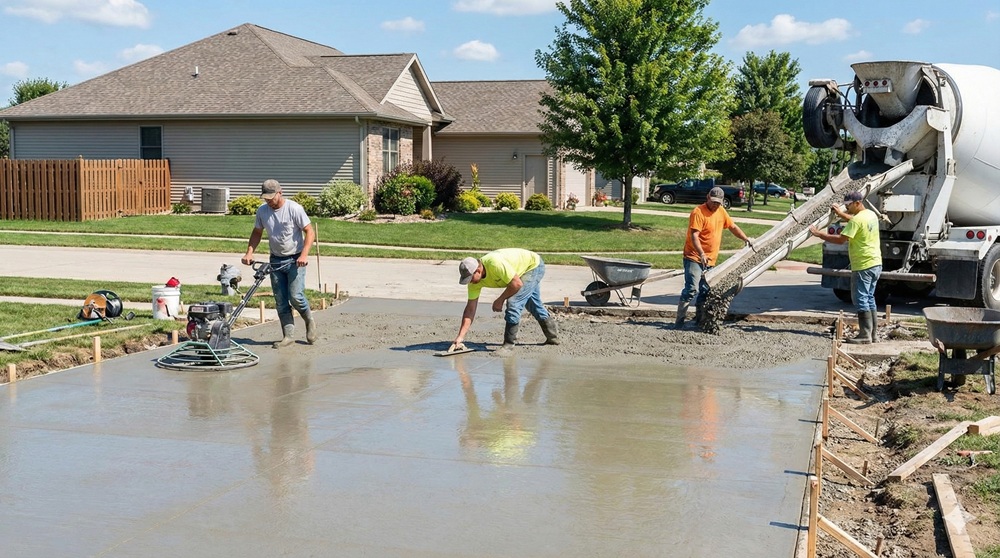
- Concrete is poured, leveled, and finished.
- Decorative finishes may add more time.
If Pavers Are Used
- Sand bedding is installed.
- Pavers are placed in the chosen pattern.
- More time is required for cutting and design details.
If Gravel Is Used
- Gravel is placed and compacted.
- Typically, the fastest surface installation type.
No matter the surface type, the installers at Commonwealth Paving ensure premium-quality materials and workmanship from start to finish.
7. Final Compaction and Finishing (Half Day – 1 Day)
After the main surface is installed:
- Asphalt ismachine-rolledd
- Pavers are vibrated, and sand is swept between joints
- Concrete receives final finishing touches
- Edges are cleaned and shaped
This is when the driveway gets its final strength and smoothness.
8. Curing and Cooling Time (1–30 Days, Depending on Material)
Understanding curing time is essential when asking, “How long does it take to build a driveway?”
Asphalt
- Walk on it: after 24 hours
- Drive on it: after 2–5 days
- Full cure: 30 days
Concrete
- Walk on it: after 24–48 hours
- Drive on it: after 7–14 days
- Full cure: 28–30 days
Pavers
- Generally usable immediately
- Joint sand may settle for 48 hours
Gravel
- Usable same day
Although curing adds days to your overall timeline, the installation crew is usually done with their work when curing begins.
Total Time: How Long Does It Take to Build a Driveway?
Here’s a simple summary:
| Driveway Type | Total Timeline |
|---|---|
| Asphalt | 3–7 days, including curing before use |
| Concrete | 7–30 days |
| Pavers | 5–10 days |
| Gravel | 1–3 days |
These timelines may vary slightly due to:
- Weather conditions
- Soil type
- Design complexity
- Drainage requirements
- Excavation difficulty
But when you hire experts like Commonwealth Paving, delays are minimized, and the process is streamlined based on decades of experience.
Weather: The Most Important Timeline Factor
Driveway construction is susceptible to weather. Even if you’re eager to finish, certain conditions require waiting:
- Rain delays base installation
- Hot temperatures affect asphalt
- Freezing weather affects concrete curing
- Wet soil causes compaction issues
This is why choosing a contractor who understands local Louisville weather patterns is essential.
Commonwealth Paving, based at 136 Outer Loop, Louisville, Kentucky 40214, plans driveway installations around ideal weather windows to ensure durability and long-term performance.
If you need to check scheduling or availability, call +1 502 459 7283 for timing guidance.
How to Make the Process Faster (Without Cutting Corners)
If you’re hoping to reduce your driveway construction timeline, here are ways to keep the project moving smoothly:
- Choose materials with quicker curing times (asphalt instead of concrete).
- Prepare your property by clearing vehicles and obstacles.
- Approve quotes and designs quickly.
- Schedule work during ideal weather months (spring and early fall).
- Let professionals handle all excavation and grading instead of DIY prep.
A fast job is only good if it’s done correctly. Commonwealth Paving balances efficiency with long-lasting quality.
Why Choosing Commonwealth Paving Speeds Up the Process
Experience is everything in driveway construction. When you work with Commonwealth Paving:
- Estimates are accurate and delivered quickly
- Crews are professional, experienced, and efficient
- Scheduling is managed with precision
- Equipment is modern and reliable
- Weather and curing conditions are carefully monitored
All of this reduces delays and ensures your driveway is completed the first time properly.
How Long Does It Take to Build a Driveway in 2025?
When you’re planning a new driveway, the question “How long does it take to build a driveway?” is more important than ever. In 2025, material costs, weather patterns, and construction demand make timing a key part of the decision.
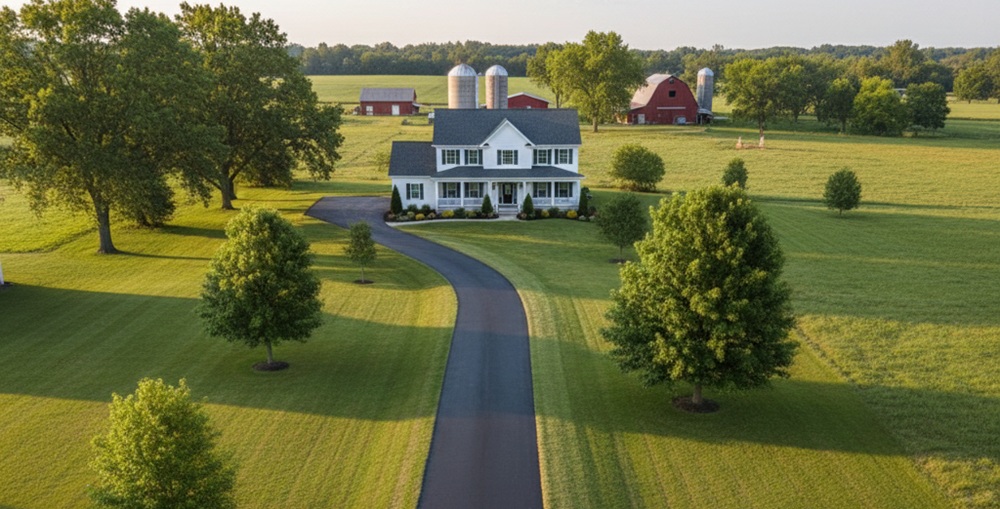
While timelines vary depending on the material and project scope, a professional team can complete most driveways within 3 to 10 days, with a longer curing time for concrete.
If you want a smooth, durable, professionally installed driveway in Louisville or the surrounding areas, Commonwealth Paving is the trusted choice.
For consultation, scheduling, or estimates, you can call +1 502 459 7283 or visit their office at 136 Outer Loop, Louisville, Kentucky 40214.
Your driveway is more than a surface—it’s a long-term investment in your home’s value, safety, and appearance. With the right team and the right timeline, you can enjoy a driveway built to last.
How Long Does It Take to Build a Driveway? Asphalt vs. Concrete Timelines
When planning a new driveway, one of the biggest questions homeowners ask is, “How long does it take to build a driveway?” Whether you’re upgrading your home’s curb appeal, replacing an aging surface, or constructing a brand-new driveway, understanding the timeline helps you plan better. It influences everything—from when you can park your vehicles to how construction aligns with your schedule, weather, and budget.
Commonwealth Paving, located at 136 Outer Loop, Louisville, Kentucky 40214, specializes in both asphalt and concrete driveways. Their team has decades of experience, and one thing they know well is that no two driveway timelines are the same. Materials behave differently, weather affects each surface uniquely, and the complexity of installation can vary widely.
In this detailed guide, we break down the step-by-step timeline for both asphalt and concrete driveways—so you can clearly understand how long it takes to build a driveway from start to finish, what factors influence the schedule, and which material might fit your needs the best.
Why Timeline Matters When Building a Driveway
Understanding the construction timeline helps homeowners:
- Schedule daily routines around the project
- Prevent premature use of the driveway
- Anticipate curing periods
- Understand cost differences
- Make informed decisions between asphalt and concrete
A driveway isn’t just another surface—it’s a long-term investment. A rushed installation results in cracks, poor drainage, weak structural strength, or early deterioration. A well-planned timeline ensures proper excavation, compaction, installation, and curing.
So, How Long Does It Take to Build a Driveway?
The short answer:
- Asphalt driveway: 3 to 7 days (with usable surface in 2–5 days)
- Concrete driveway: 7 to 30 days (with longer curing)
But this general estimate barely scratches the surface. To truly understand how long it takes to build a driveway, you need to explore each stage in detail—and understand how asphalt and concrete differ.
Let’s break it down step-by-step.
Step 1: Initial Consultation, Inspection, and Estimate (1–3 Days)
Before construction even begins, the team at Commonwealth Paving conducts an on-site evaluation. This includes:
- Measuring the driveway layout
- Assessing soil conditions
- Evaluating drainage and grading needs
- Checking existing materials (if replacing old pavement)
- Discussing material choices—concrete or asphalt
- Providing timelines and cost estimates
This step is usually fast but incredibly important. It sets the foundation for the entire process, ensuring the chosen material and timeline match your expectations.
Step 2: Permits and Scheduling (1–10 Days)
Depending on your area, permits might be required for:
- New construction
- Driveway expansions
- Altering drainage patterns
- Changing elevation or grading
In many cases, permits are quick, but some locations have longer approval cycles.
Meanwhile, Commonwealth Paving schedules:
- Crew availability
- Equipment
- Material delivery
- Estimated project start date
Weather and workload can affect the exact start date, but professional planning keeps delays minimal.
Step 3: Excavation and Removal of Old Materials (1–2 Days)
Once construction begins, the first major step is excavation. This includes:
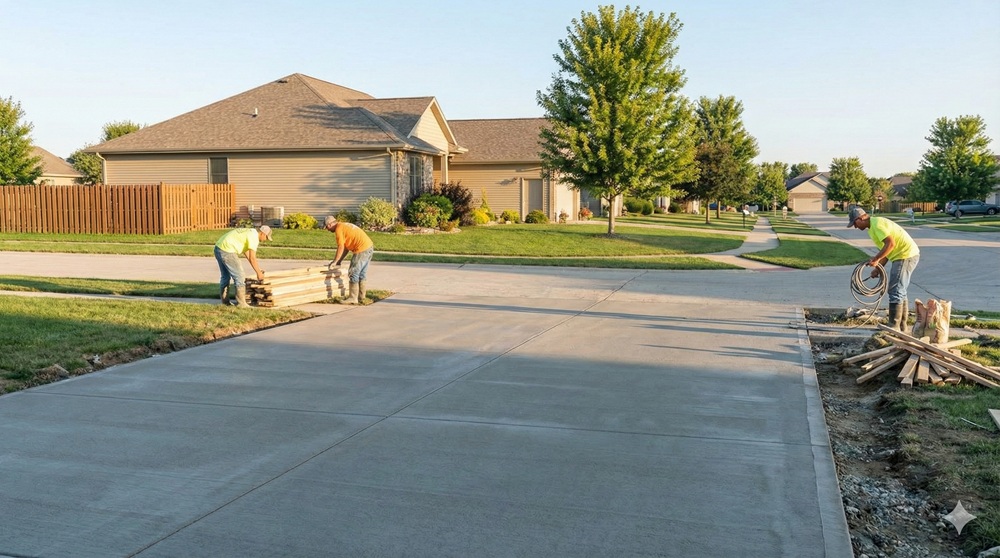
- Removing old asphalt or concrete
- Excavating soil to the proper depth
- Hauling away debris
- Preparing the ground for a new base
- Ensuring the correct slope for drainage
This step typically takes:
- 1 day for small/standard driveways
- 2 days for large, complex, or deeply damaged driveways
Good excavation is crucial. If the base beneath your new driveway is unstable, the entire surface will deteriorate prematurely.
Step 4: Installing the Base (1–2 Days)
A stable base is essential, no matter which material you choose.
The base installation includes:
- Laying crushed stone or gravel
- Grading the surface
- Compacting layers for strength
- Ensuring optimal drainage
A strong base extends the lifespan of both asphalt and concrete driveways.
Timeline:
- Asphalt base prep: 1 day
- Concrete base prep: 1–2 days
Concrete requires a slightly more reinforced base because it is rigid and cannot flex like asphalt.
Step 5: Edge Preparation (Half Day – 1 Day)
Before the final surface layer is installed:
- Concrete driveways need wooden or metal forms
- Asphalt driveways may need edge shaping
- Both types require layout precision
This step ensures the driveway keeps its shape, prevents shifting, and promotes clean lines.
Step 6: Installing the Driveway Surface
This is where the timeline between asphalt and concrete begins to differ significantly.
Asphalt Installation Timeline (1 Day)
Asphalt is installed hot and must be compacted quickly. The process includes:
- Pouring hot asphalt
- Raking and leveling
- Machine rolling
- Smoothing edges
For a typical residential project, asphalt installation is completed in:
- A few hours to a full day
Asphalt installation is relatively quick because it relies more on heat-based bonding rather than slow curing.
Concrete Installation Timeline (1–2 Days)
Concrete installation takes longer because the material is poured and shaped:
- Concrete is mixed (truck or on-site)
- Poured into forms
- Spread and leveled
- Smoothed with finishing tools
- Edges are shaped precisely
Decorative finishes (broom-textured, polished, stamped) may add extra time.
Total installation typically takes:
- 1 day for basic concrete
- 2 days for decorative or large driveways
Step 7: Curing Time
This is where the biggest difference lies when asking “How long does it take to build a driveway?”
Asphalt Curing Timeline
- Light foot traffic: After 24 hours
- Vehicle use: After 2–5 days
- Full curing: 30 days
Asphalt cools quickly, allowing for much faster usability. However, it continues hardening over several weeks.
Concrete Curing Timeline
- Light foot traffic: After 24–48 hours
- Vehicle use: After 7–14 days
- Full curing: 28–30 days
Concrete needs significantly more time because it strengthens through a chemical hydration process. Using the driveway too early can cause irreversible surface damage.
Step 8: Final Inspection and Cleanup (Half Day)
After installation:
- The team inspects edges
- Checks drainage flow
- Monitors surface finish quality
- Removes forms (for concrete)
- Cleans up all materials
This final step ensures the driveway is safe, smooth, and ready for curing.
Comparing Asphalt vs. Concrete Timelines
To understand how long it takes to build a driveway, here is a simplified comparison:
| Stage | Asphalt | Concrete |
|---|---|---|
| Excavation | 1–2 days | 1–2 days |
| Base Installation | 1 day | 1–2 days |
| Surface Installation | 1 day | 1–2 days |
| Curing Before Use | 2–5 days | 7–14 days |
| Full Cure | 30 days | 28–30 days |
| Overall Timeline | 3–7 days | 7–30 days |
The difference comes down primarily to preparation and curing. Asphalt wins in terms of speed, while concrete tends to require more time but may offer longer-term structural strength.
Factors That Influence Driveway Installation Time
Even with these timelines, several external factors can affect how long it takes to build a driveway.
1. Weather Conditions
Both asphalt and concrete are highly weather-sensitive. Rain, extreme heat, or freezing temperatures can delay construction.
2. Driveway Size
A 2000 sq ft driveway naturally takes longer than a 700 sq ft one.
3. Soil Stability
Some soils require additional excavation or stabilization.
4. Old Driveway Removal
Complete removal of thick concrete layers adds time.
5. Design Complexity
Curved edges, decorative concrete finishes, or multi-level driveways require more labor.
6. Material Availability
Seasonal demand can influence scheduling.
7. Crew Scheduling
Professional companies like Commonwealth Paving manage scheduling tightly to minimize delays.
Which Material Is Faster for Building a Driveway?
If speed is your priority, asphalt is the clear winner. Asphalt driveways become drivable within days and fully cured in a month.
Concrete driveways take longer but provide exceptional longevity and strength.
Your decision depends on:
- How soon do you need to use the driveway
- Your preferred appearance
- Maintenance expectations
- Budget
And of course, your project timeline.
Why Choose Commonwealth Paving for Your Driveway Project
When choosing between asphalt and concrete, or when you simply want the job completed on time and done correctly, Commonwealth Paving is a top choice for Louisville homeowners.
They offer:
- Decades of local experience
- High-quality equipment
- Skilled professionals
- Timely scheduling
- Honest timelines
- Local weather knowledge
- Durable, long-lasting installations
You can contact them at +1 502 459 7283 or visit them at 136 Outer Loop, Louisville, Kentucky 40214 for scheduling or consultation.
How Long Does It Take to Build a Driveway?
By now, you have a clear picture of the complete process. So, how long does it take to build a driveway?
- Asphalt: 3–7 days
- Concrete: 7–30 days
It depends on the steps required, curing times, and environmental factors. Building a driveway is an essential home improvement that deserves careful planning and expert installation.
Whether you choose asphalt or concrete, Commonwealth Paving delivers quality craftsmanship, accurate timelines, and reliable customer service from start to finish.
If you’re ready to begin your project or need a personalized timeline estimate, call +1 502 459 7283 today.
Address
Commonwealth Paving, 136 Outerloop, Louisville, Kentucky 40214
Phone: 502-459-7283, Fax: 502-456-2678
Opening Hours
| Monday | 9:00 AM – 5:00 PM |
| Tuesday | 9:00 AM – 5:00 PM |
| Wednesday | 9:00 AM – 5:00 PM |
| Thursday | 9:00 AM – 5:00 PM |
| Friday | 9:00 AM – 5:00 PM |
| Saturday | Closed |
| Sunday | Closed |