
How Long Does It Take to Install an Asphalt Driveway? Key Steps Explained
If you’re planning a brand-new driveway for your home or upgrading an existing one, one question naturally comes to mind: How Long Does It Take to Install an Asphalt Driveway? Whether you’re preparing for a home renovation, trying to coordinate construction with your schedule, or simply curious about how the process works, understanding the installation timeline gives you a clear picture of what to expect.
Asphalt continues to be one of the most preferred driveway materials in Louisville and the surrounding regions. It’s durable, cost-effective, weather-resistant, and fast to install compared to many other paving options. Homeowners choose it because it offers a clean, smooth surface that enhances both curb appeal and property value.
But while asphalt installation is faster than many alternatives, the timeline varies based on a range of factors—from the existing condition of your driveway to the complexity of your layout and the skills of your contractor. Commonwealth Paving, located at 136 Outer Loop, Louisville, Kentucky 40214, has extensive experience installing asphalt driveways of all sizes. Their team understands how to complete the job efficiently while ensuring long-lasting quality.
Below, we take a deep dive into the installation steps, what affects the timeline, and how you can plan your project better by understanding the full process.
Why Timeline Matters for Asphalt Driveway Installation
Knowing How Long Does It Take to Install an Asphalt Driveway allows you to:
- Plan when you need to move or park your vehicles
- Schedule construction around weather or personal events
- Understand how long the full curing period lasts
- Estimate start-to-finish project expectations
- Avoid early wear by knowing when the surface is ready for use
Asphalt installation isn’t just about pouring material and smoothing it out. There’s a precise sequence of professional steps—from excavation to compaction—that must be executed properly for the driveway to last its full lifespan. Rushing or skipping steps can lead to premature cracking, drainage issues, rutting, and costly repairs.
How Long Does It Take to Install an Asphalt Driveway? A Complete Breakdown
For most residential projects, the full installation process takes 3 to 7 days from start to finish. However, this doesn’t mean the driveway is ready for vehicle use immediately after installation. Asphalt cools quickly, but it still requires several days to harden enough to support weight.

A typical asphalt driveway installation timeline includes:
- Initial inspection and planning
- Excavation and removal
- Base installation
- Grading and drainage setup
- Installing hot-mix asphalt
- Compaction
- Cooling and early curing
Let’s break each phase down in detail.
Step 1: Site Inspection and Planning (1–3 Days)
Before any physical work begins, Commonwealth Paving evaluates the site. Their team analyzes:
- Soil stability
- Drainage pathways
- Slope and grading requirements
- Existing pavement conditions
- Driveway dimensions
- Material needs
- Traffic load expectations
This step ensures your driveway is built on a firm foundation with good water flow—both essential for long-term durability.
A detailed plan is created, and you receive a clear, realistic timeline. With years of experience working throughout Kentucky, the team at Commonwealth Paving understands local soil profiles, weather patterns, and paving requirements better than most.
Step 2: Removing the Old Driveway Surface (1–2 Days)
If you have an old driveway, whether it’s asphalt, gravel, or concrete, removal is the next step. Heavy equipment is used to break it down and haul it away.
This stage usually takes:
- 1 day for smaller driveways
- 2 days for larger spaces or thick concrete removal
Removing old materials is essential to prevent instability in the new surface. Existing cracks or weak areas must be cleared away to avoid transferring those problems into the fresh asphalt.
Step 3: Excavation and Soil Preparation (1 Day)
Once the old surface is removed, the soil underneath must be prepared. This includes:
- Excavating to the proper depth
- Compacting the soil foundation
- Assessing any soft or unstable areas
- Regrading to create ideal water flow
Proper soil prep is one of the most important factors in How Long Does It Take to Install an Asphalt Driveway. If the soil is too loose or wet, additional time may be needed for stabilization.
Step 4: Installing the Base Layer (1–2 Days)
A strong driveway depends heavily on the quality of the base layer. This step involves:
- Laying a crushed stone or gravel foundation
- Compacting it in even layers
- Smoothing and shaping the surface
- Establishing the final grade slope
A well-prepared base prevents:
- Water pooling
- Frost heave
- Surface sinking
- Early cracking
Asphalt relies on a sturdy, compacted base because it’s flexible. Without it, the driveway can warp or deteriorate quickly.
Base installation typically takes:
- 1 day for smaller/simple layouts
- 2 days for larger or more complex designs
Step 5: Grading and Drainage Setup (Half Day – 1 Day)
Proper grading and drainage are essential to avoid water damage. This stage creates the slight slope needed to direct water off the driveway into appropriate areas.
Good drainage ensures:
- Frost-resistant performance
- Reduced erosion
- Longer lifespan
- Fewer surface cracks
Depending on the site’s natural slope, grading can be quick or require additional time to adjust the ground.
Step 6: Asphalt Installation (1 Day)
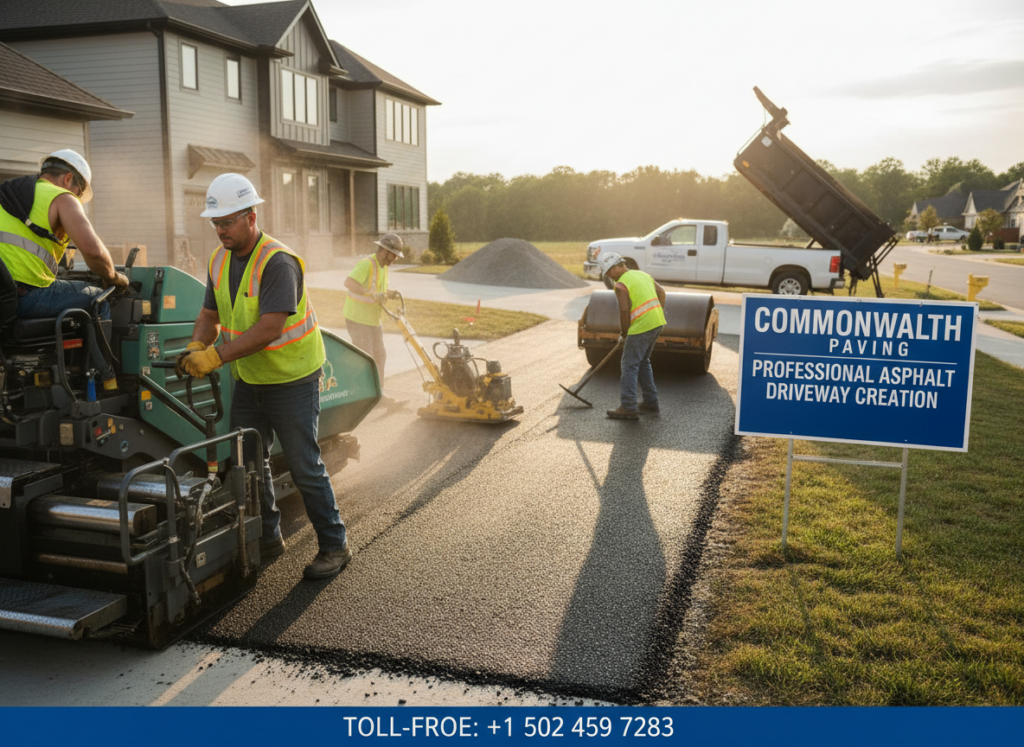
This is the stage most homeowners get excited to see—the fresh, black asphalt being installed. Hot-mix asphalt is delivered to the job site at high temperature and must be handled quickly.
Installation includes:
- Pouring hot asphalt evenly across the base
- Raking and leveling the material
- Compacting it with heavy rollers
- Shaping edges and transitions into sidewalks or roads
- Ensuring uniform thickness
- Smoothing the surface
A typical asphalt installation is completed within a few hours to a full day, depending on driveway size.
This is one of the main reasons many homeowners choose asphalt—the actual installation is much faster than concrete.
Step 7: Initial Cooling Time (6–24 Hours)
Asphalt begins cooling immediately after rolling, but it must sit undisturbed to harden properly. You can usually walk on it within a few hours but shouldn’t park or drive on it yet.
The first 24 hours are crucial. The surface remains soft enough to dent if misused.
Step 8: Curing Time Before You Can Drive on It (2–5 Days)
Once you understand How Long Does It Take to Install an Asphalt Driveway, it’s equally important to know how soon you can use it. Most homeowners can drive on a new asphalt driveway after:
- 2 to 3 days in warm weather
- 3 to 5 days in cooler weather
Asphalt cures faster when temperatures are mild and conditions are dry. Heavy vehicles—like RVs, trucks, or dumpsters—should wait even longer.
During early curing, avoid:
- Sharp turns while parking
- Parking in the same spot repeatedly
- Using stationary heavy equipment
The first week of care dramatically affects long-term strength.
Step 9: Full Curing Time (30 Days)
While the driveway becomes drivable in a few days, full curing takes approximately 30 days. During this period:
- The asphalt hardens
- Oils evaporate
- The surface strengthens
- Flexibility stabilizes
This is why many professionals recommend delaying sealcoating until after the asphalt has fully cured—typically several months later.
Factors That Influence Installation Time
Even with a clear breakdown, the exact answer to How Long Does It Take to Install an Asphalt Driveway can vary. Key factors include:
1. Weather Conditions
Asphalt installation requires dry conditions. Rain or extreme temperatures may delay work.
2. Driveway Size
Larger areas require more excavation, material, and installation time.
3. Soil Condition
Soft or unstable soil may need reinforcement.
4. Old Driveway Removal
Thick, aged concrete takes longer to remove than old asphalt.
5. Design Complexity
Curved driveways, dual lanes, or large parking pads add time.
6. Material Availability
Hot-mix asphalt must be installed immediately after transport.
Professional companies like Commonwealth Paving plan carefully to minimize delays and keep homeowners informed at every step.
Why Asphalt Installation Is Faster Than Concrete
One of the biggest advantages of asphalt is speed. Concrete requires several days to cure before you can drive on it, and full curing can take a month or more. Asphalt installation, by contrast, allows vehicle use within two to five days in most cases.
This makes asphalt an excellent choice for:
- Busy homeowners
- Families needing driveway access ASAP
- Projects under tight timelines
Why Choose Commonwealth Paving for Asphalt Driveway Installation
When installing an asphalt driveway, experience and precision matter. Commonwealth Paving, located at 136 Outer Loop, Louisville, Kentucky 40214, provides:
- Efficient project scheduling
- Expert base preparation
- High-quality asphalt mixes
- Uniform compaction
- Durable, long-lasting results
- Transparent communication and accurate timelines
With decades of industry experience, their team understands how to deliver top-performing asphalt driveways that withstand Louisville’s climate conditions.
For consultations, scheduling, or estimates, you can call them directly at +1 502 459 7283.
How Long Does It Take to Install an Asphalt Driveway?
To summarize:
- Total installation timeline: 3 to 7 days
- Drive-on time: 2 to 5 days
- Full curing: Approximately 30 days
Understanding How Long Does It Take to Install an Asphalt Driveway helps you plan your schedule, set expectations, and choose the right time of year for installation. Asphalt is one of the fastest and most dependable paving solutions for homeowners seeking durability and efficiency.
If you’re planning a new driveway or want a professional evaluation of your property, Commonwealth Paving is ready to help you every step of the way.
How Long Does It Take to Install an Asphalt Driveway? Factors That Affect the Timeline
If you’re planning a new driveway for your home or business, one of the biggest questions on your mind is likely: How Long Does It Take to Install an Asphalt Driveway? Homeowners want a clear timeline so they can plan projects, schedule parking arrangements, and avoid unnecessary disruptions. The good news is that asphalt is one of the fastest paving materials to install—when done by the right professionals.
At Commonwealth Paving, located at 136 Outer Loop, Louisville, Kentucky 40214, and reachable at +1 502 459 7283, we understand how valuable your time is. Whether you’re upgrading a worn-out driveway or installing a completely new one, a smooth, timely process matters. In this blog, we’ll break down the complete installation timeline, step-by-step, and explain the major factors that influence how long the project truly takes.
Why Timeline Matters for Asphalt Driveway Installation
Asphalt is known for its quick installation, durability, and cost-effectiveness. Homeowners love it because, compared to concrete or paver driveways, it sets faster and can usually be driven on sooner.
But the actual project duration can vary. When people ask, “How Long Does It Take to Install an Asphalt Driveway?”, the real answer depends on several things:
- The size of the driveway
- The condition of the existing ground
- Whether old material needs removal
- Weather conditions
- Crew size and equipment
- Type of asphalt used
- Drainage requirements
Understanding all these details helps set clear expectations and prevents surprises during installation.
Typical Timeline for Installing an Asphalt Driveway
If you choose expert installers like Commonwealth Paving, the usual timeline for most standard residential projects falls between 2 to 7 days, depending on complexity.
Below is a detailed breakdown of everything that happens—step by step.
1. Initial Inspection & Planning (1 Day)
Before installation begins, the team conducts a detailed assessment of:
- Soil stability
- Drainage concerns
- Property elevation and slope
- Existing driveway condition
- Accessibility for machinery
This ensures the driveway is designed correctly for long-term performance. Skipping this step may lead to cracks, potholes, or water pooling.
At Commonwealth Paving, our experts inspect every detail thoroughly to create a customized plan for your property.
2. Demolition of Existing Driveway (1 Day)
If your property already has an old asphalt or concrete driveway, it must be removed before installing a new one. With heavy-duty machinery, the removal process typically takes a few hours to a full day, depending on driveway size and thickness.
Concrete takes longer to break apart than old asphalt, so expect a slight variation here.
Once removed, the debris is hauled away, leaving a clean workspace for grading.
3. Excavation & Grading (1–2 Days)
This stage determines how long your asphalt driveway lasts. Proper grading and leveling prevent water accumulation—a major cause of premature asphalt damage.
During this step, the team:
- Grades the soil
- Ensures proper slope for drainage
- Levels the foundation area
- Prepares the sub-base zone
If the soil is soft or unstable, extra time may be needed to reinforce and compact the area.
4. Building the Sub-Base (1 Day)
The sub-base is the most important structural layer of your driveway. A strong base ensures:
- Durability
- Even weight distribution
- Resistance to shifting or cracking
- Long-term stability
A typical sub-base is 4–6 inches of crushed stone, compacted tightly using industrial rollers. This prevents the asphalt above from sinking or forming depressions.
This step usually takes a day, but larger driveways may take slightly longer.
5. Adding the Binder Layer (Optional Based on Design)
Some driveway installations require a binder layer between the sub-base and the final asphalt surface. This layer is thicker and contains larger aggregates for strength.
Including this layer can add a few additional hours, but it improves durability significantly, especially for:
- Heavy vehicle usage
- Long driveways
- Sloped surfaces
Your installer will determine whether it’s needed.
6. Laying the Hot Mix Asphalt (1 Day)
This is the part homeowners are most excited about. Fresh asphalt is poured hot and spread evenly across the prepared base.
This typically takes 4–6 hours, depending on driveway size. Once spread, it is compacted using rollers to create a dense, smooth, and durable surface.
The keyword question comes up again here: How Long Does It Take to Install an Asphalt Driveway?
While installation of the asphalt surface itself is fast, the prep work leading up to this moment is what ensures the job is done right.
7. Final Rolling and Compaction (Same Day)
After spreading the asphalt, the crew performs a final compaction. This creates the sleek, flawless black appearance that asphalt is known for.
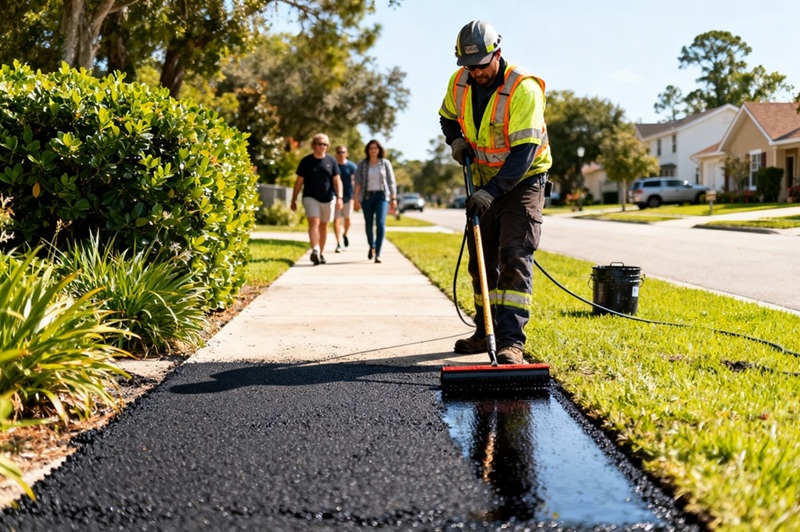
Once compacted, the driveway begins cooling immediately.
Curing Time: When Can You Use the Driveway?
Many homeowners confuse installation time with curing time. They are very different.
Light Foot Traffic
You can walk on your new asphalt driveway within 3–4 hours.
Parking Your Car
You can usually park on it after 2–3 days, depending on the temperature.
Full Cure
Asphalt takes 30 days or more to fully cure.
During this time, the surface may feel slightly soft during hot weather—this is perfectly normal.
Key Factors That Affect How Long It Takes to Install an Asphalt Driveway
Now that we’ve covered the ideal timeline, let’s dive into what can extend (or shorten) the installation duration.
1. Driveway Size
A larger driveway requires more excavation, more asphalt, and more rolling time. A 1,000 sq ft project is simply faster than a 3,000 sq ft one.
2. Weather Conditions
Asphalt installation is weather-sensitive. Hot, dry weather is ideal because asphalt cools evenly. Rain or freezing temperatures can delay installation by a few days.
3. Soil Condition
If the soil is unstable, holds moisture, or sinks easily, special preparation such as:
- Geotextile fabric
- Deeper sub-base layers
- Additional compaction
may be required, adding extra time.
4. Complexity of the Design
Curved driveways, long driveways, or areas with multiple slopes require more time and precision.
5. Drainage Requirements
Water management is critical. Installing drains, adjusting slopes, or adding trenches can increase installation time.
6. Removal of Old Material
Concrete removal takes longer than asphalt removal, so if you’re replacing a concrete driveway, expect an additional day.
7. Number of Crew Members and Equipment Quality
At Commonwealth Paving, we use modern equipment and trained crews to ensure fast, efficient installation. Companies with fewer workers or outdated machinery take longer.
How Commonwealth Paving Ensures Fast, High-Quality Installation
Located at 136 Outer Loop, Louisville, Kentucky 40214, Commonwealth Paving has built a reputation for reliable, well-planned asphalt driveway installations.
Here’s what homeowners appreciate:
- Fast turnaround times
- High-quality materials
- Precise grading and leveling
- Durable sub-base preparation
- Honest timeline estimates
- Clear communication throughout the project
Whether it’s a small residential driveway or a large commercial entrance, efficiency and quality remain the priority. If you ever want a clear estimate of How Long Does It Take to Install an Asphalt Driveway, our team is always ready to guide you at +1 502 459 7283.
Realistic Timeline Summary
Here’s a general idea of total installation duration:
Small Driveway (600–1,000 sq ft)
2–3 days
Medium Driveway (1,000–2,000 sq ft)
3–5 days
Large Driveway (2,000+ sq ft)
5–7 days
Add curing time for vehicle use, usually 48–72 hours, depending on temperature.
Signs Your Asphalt Driveway Installation Will Take Longer
Some issues may extend installation time, such as:
- Very steep driveway
- Water drainage problems
- Poor soil quality
- Need for extensive excavation
- Extremely wide or long layout
- Unpredictable weather
At Commonwealth Paving, we perform a complete inspection to identify these risks before the project begins.
So, How Long Does It Take to Install an Asphalt Driveway?
Most standard installations take 2 to 7 days, depending on driveway size, ground conditions, weather, and project complexity. Asphalt remains one of the fastest and most efficient materials for driveway construction.
Choosing a skilled and experienced team ensures your driveway is not only installed on time but also lasts for decades.
If you’re planning an asphalt project in Louisville or the surrounding areas, contact Commonwealth Paving at +1 502 459 7283 or visit us at 136 Outer Loop, Louisville, Kentucky 40214. We’ll provide a clear timeline, accurate estimate, and high-quality workmanship from start to finish.
Address
Commonwealth Paving, 136 Outerloop, Louisville, Kentucky 40214
Phone: 502-459-7283, Fax: 502-456-2678
Opening Hours
| Monday | 9:00 AM – 5:00 PM |
| Tuesday | 9:00 AM – 5:00 PM |
| Wednesday | 9:00 AM – 5:00 PM |
| Thursday | 9:00 AM – 5:00 PM |
| Friday | 9:00 AM – 5:00 PM |
| Saturday | Closed |
| Sunday | Closed |