
How to Install Artificial Grass Strips Between Pavers: Tools, Tips, and Costs
If you’re searching for a stylish way to elevate your outdoor space—be it a walkway, patio, driveway border, or modern backyard design—then installing artificial grass strips between pavers is one of the most popular landscaping trends today. It gives your space a clean, contemporary look while reducing maintenance and keeping your yard green all year long. But the real question homeowners ask is: How to Install Artificial Grass Strips Between Pavers correctly so they look neat and last for years?
In this detailed guide, we break down the process, tools, materials, professional tips, and real-world cost expectations, all while keeping the method beginner-friendly. And if you want the installation done professionally for long-term durability, Commonwealth Paving, located at 136 Outer Loop, Louisville, Kentucky 40214, is the company you can call at +1 502 459 7283.
Let’s dive into everything you need to know.
Why Artificial Grass Strips Between Pavers Are So Popular
This design trend has exploded across Kentucky and the rest of the U.S. because it blends nature with structure in a balanced, stylish way. Homeowners today want outdoor areas that look beautiful but don’t demand constant maintenance. Artificial grass meets this need perfectly.
Some benefits include:
- Looks clean and modern
- Ideal for patios, pool decks, garden paths, and driveway edges
- No watering, mowing, or fertilizing
- Works in shaded areas where real grass won’t grow
- Durable in high-traffic zones
- Stays green year-round
- Adds value and curb appeal to your property
Because of these advantages, more homeowners in Louisville are choosing this solution, especially when renovating outdoor surfaces with reliable paving professionals like Commonwealth Paving.
Tools and Materials Needed
To understand How to Install Artificial Grass Strips Between Pavers, it’s important to know what tools and materials are typically used. You don’t need anything overly complicated, but precision tools improve your results.
Tools You Will Need:
- Utility knife or turf knife (sharp blades required)
- Measuring tape
- Stiff brush or broom
- Rubber mallet
- Small shovel or trowel
- Hand tamper
- Straight edge or metal ruler
Materials Needed:
- Artificial turf (high-quality, short pile recommended)
- Silica sand infill
- Weed barrier or landscape fabric
- Adhesive (turf glue or outdoor adhesive)
- Turf seam tape (optional depending on design)
- Crushed rock or decomposed granite (for base adjustment)
These items help ensure the strips fit tightly into the gaps, stay secure over time, and maintain their green vibrancy.
Step-by-Step Guide: How to Install Artificial Grass Strips Between Pavers
This is where we go in-depth. The steps below are written so that a homeowner can understand the process clearly—even if a professional team such as Commonwealth Paving performs the work.
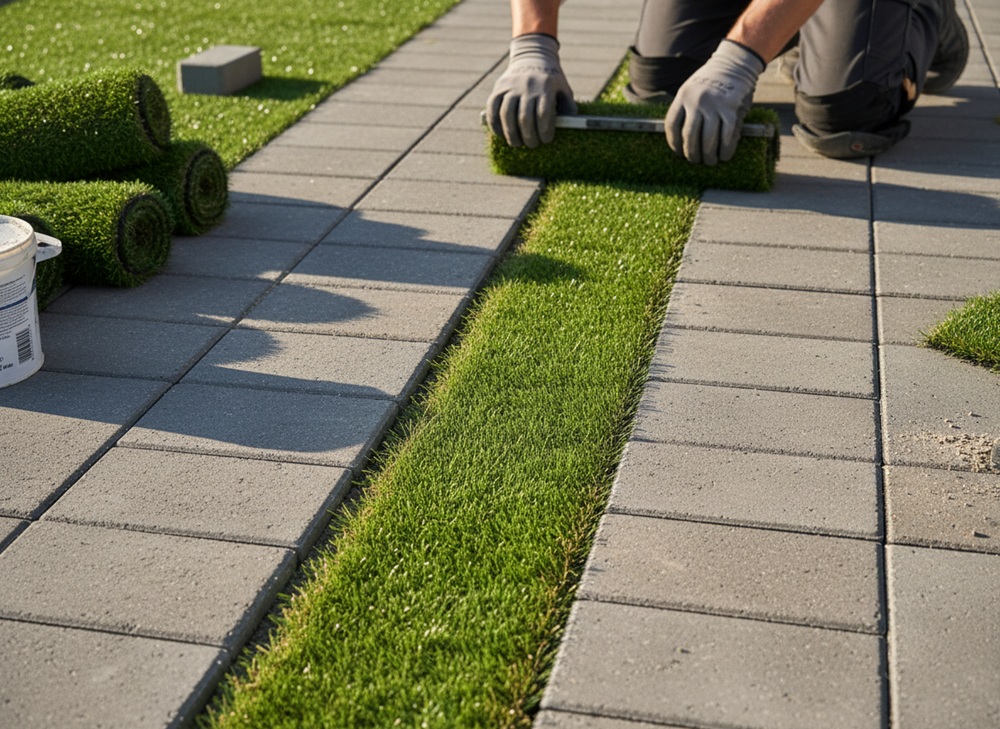
Step 1: Measure the Gaps Between Pavers
Accurate measurement is key. Measure the length and width of the gaps between your pavers. Each strip of artificial grass must fit snugly, or the final look won’t be clean.
Most modern paver installations leave gaps ranging from:
- ½ inch
- 1 inch
- 2 inches
- Or custom spacing
The narrower the gap, the more precise your cutting must be.
Step 2: Clean Out the Gaps
Next, remove all debris from the space where the turf will sit. This includes:
- Dirt
- Gravel
- Old grass
- Weeds
- Loose material
A small trowel or shovel works great here.
A clean base ensures the strips stay level and reduces the chance of uneven surfaces.
Step 3: Prepare the Base Layer
To prevent sinking or shifting, create a compacted base. This is where many DIY projects fail—proper compaction ensures the turf stays flush with your pavers.
Base preparation includes:
- Add a thin layer of crushed rock, decomposed granite, or crusher dust.
- Moisten the base slightly.
- Compact with a hand tamper or mallet.
You want a firm but smooth foundation so the turf doesn’t look raised or dipped.
Step 4: Lay a Weed Barrier
Weed barrier may seem optional, but it is essential. If weeds grow up in those thin gaps, they can push the turf out of place or cause unevenness.
Cut strips of landscape fabric and lay them directly in the gaps after the base is compacted.
This greatly reduces long-term maintenance.
Step 5: Cut the Artificial Grass Strips Precisely
This is the most delicate part of How to Install Artificial Grass Strips Between Pavers.
Cutting tips:
- Always cut from the back side of the turf.
- Follow the stitch lines to avoid messy edges.
- Make sure the pile direction is the same for all strips.
- Cut slightly wider than the gap at first, then trim down.
The better your cuts, the more polished the final design.
Short-pile turf (½ to 1 inch height) generally works best between pavers because it sits neatly without puffing up.
Step 6: Fit the Turf Strips into the Gaps
Carefully place each strip into the gap. The fit should be secure but not overly tight. If it bunches up, trim it again.
Make sure the turf fibers are standing upright and not folded under the edges.
A rubber mallet can gently tap the turf into place for a tidier finish.
Step 7: Apply Adhesive or Install Without Glue (Based on Design)
Depending on the size of the gap and the installation conditions, you may or may not need adhesive.
Two ways to secure turf strips:
1. Adhesive Method
- Apply turf glue along the edges.
- Press the turf strip onto the adhesive.
- Hold until secure.
This ensures long-term durability, especially in high-traffic areas.
2. Friction Fit Method
If your gaps are narrow (½ inch to 1 inch), you can fit the turf tightly without glue. The pressure from the pavers keeps it in place.
This is quicker and makes future replacement easy.
Step 8: Brush and Sand Infill
Once the strips are installed, brush the turf fibers with a stiff broom to lift them upright.
Then apply silica sand infill to:
- Add weight
- Support the blades
- Prevent flattening
- Improve durability
Only a small amount is needed between paver gaps.
Step 9: Final Inspection
Once everything is in place:
- Check for loose edges
- Trim any stray fibers
- Sweep the pavers
- Ensure all strips align well with each other
You should now see a beautifully modern, green-accented surface that adds charm and character to your outdoor space.
Costs: How Much Does It Cost to Install Artificial Grass Strips Between Pavers?
Costs vary depending on materials, labor, and paver layout. Here’s a general breakdown.
1. Material Costs
- Artificial turf: $3 – $8 per sq ft
- Crushed rock base: $0.50 – $1 per sq ft
- Adhesive and seam tape: $20 – $40
- Silica infill: $8 – $12 per bag
- Weed barrier fabric: $0.30 – $0.60 per sq ft
Because strips use very little turf, most of the cost depends on skill and labor—not material.
2. Labor Costs
If you hire professionals like Commonwealth Paving, expect labor charges to vary depending on:
- Existing paver condition
- Gap width and length
- Turf precision cuts
- Site preparation
- Installation complexity
In Louisville, typical labor cost for installing turf strips between pavers ranges from:
$8 – $18 per linear foot
or
$10 – $20 per sq ft of total turf area
This investment ensures:
- Perfect alignment
- Long-lasting installation
- Professional finishing
- Increased curb appeal
3. Total Cost Estimate
For a regular patio or walkway with around 80 to 150 linear feet of gaps, a full installation may cost:
$500 – $2,500 on average
Driveways or larger patios may cost more depending on layout.
Tips for Best Results
1. Choose high-quality turf
Cheaper turf mats flatten quickly. Always select durable, UV-resistant turf with short, dense blades.
2. Keep the blade direction consistent
Inconsistent direction creates different shades of green in your final design.
3. Maintain a clean and compact base
This prevents sinking and allows water to drain properly.
4. Use professional-grade adhesive
Hardware-store glues may not withstand Kentucky’s heat and cold cycles.
5. Hire professionals if your project is large
Installing strips between pavers is precision work. A small mistake can make the entire surface look uneven.
This is why many homeowners call Commonwealth Paving for outdoor paving and enhancement projects.
Why Choose Commonwealth Paving for the Job?
Creating perfect turf strips between pavers may look simple, but it requires expertise, accuracy, and experience to get perfect results.
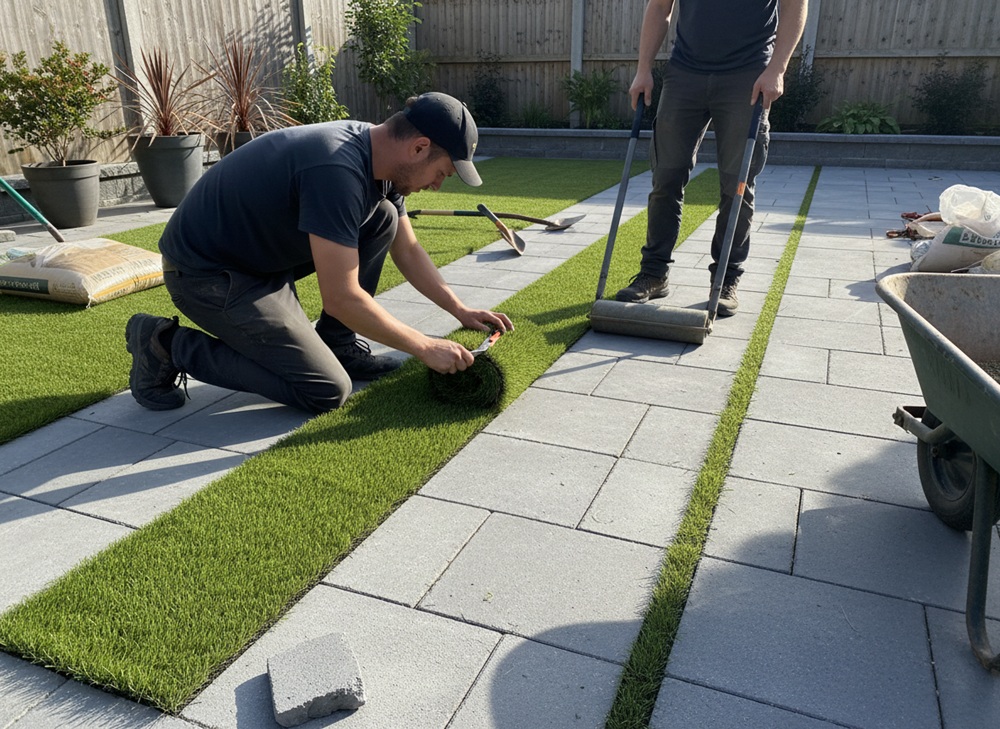
Commonwealth Paving, located at 136 Outer Loop, Louisville, Kentucky 40214, is a trusted paving and outdoor enhancement company offering:
- Expert installation techniques
- Durable materials
- Clean and precise turf cutting
- Professional paver groundwork
- Long-lasting finishing
- Transparent pricing
Whether you need artificial turf strips, full driveway paving, or patio renovation, they ensure the work is completed with precision and care.
You can call them anytime at +1 502 459 7283 for a free estimate.
Now that you know How to Install Artificial Grass Strips Between Pavers, you can appreciate both the art and the technique behind this modern landscaping trend. From preparation and cutting to installation and cost planning, each step contributes to achieving a clean, beautiful, and durable outdoor look.
This design upgrades your home instantly, offering a stylish, low-maintenance solution that stays green year-round. And when installed professionally, it enhances curb appeal, improves outdoor usability, and elevates your entire property.
For homeowners in Louisville looking for expert installation, Commonwealth Paving is your trusted partner for high-quality outdoor paving and turf enhancements.
DIY Guide: How to Install Artificial Grass Strips Between Pavers Easily
Modern landscaping trends continue to shift toward designs that balance beauty with practicality. One of the most popular outdoor upgrades is the installation of artificial grass strips between pavers. This small detail can dramatically transform a patio, driveway border, walkway, or backyard entertainment space. The fusion of green turf and stone gives an appealing contrast that looks clean, organized, and contemporary all year long—without the constant maintenance of natural grass.
If you want to learn How to Install Artificial Grass Strips Between Pavers in the simplest, most effective way, this DIY guide is designed for you. Whether you’re adding charm to an existing patio or renovating your entire landscape, this step-by-step explanation will walk you through the tools, process, tips, and cost considerations you need to know.
And if at any point you prefer professional help, Commonwealth Paving, located at 136 Outer Loop, Louisville, Kentucky 40214, offers expert outdoor enhancement services and can ensure a flawless finish. You can reach them at +1 502 459 7283.
Let’s begin with the basics.
Why Add Artificial Grass Strips Between Pavers?
Before jumping into the installation, let’s understand why this design has become a favorite among homeowners in Louisville and beyond.
1. Zero Maintenance, Maximum Beauty
Unlike natural grass that demands watering, mowing, weeding, fertilizing, and sunlight, artificial turf remains green and attractive with almost no maintenance.
2. Works in Every Climate
Kentucky’s weather can swing between humid summers and freezing winters. Artificial grass remains consistent year-round with no brown patches and no seasonal die-off.
3. Creates a Modern Aesthetic
Artificial turf strips bring a unique, high-end look to outdoor spaces. They make pavers appear intentional and custom-designed.
4. Prevents Weed Growth
When installed correctly, turf strips reduce weed growth in the paver gaps—a common issue for most homeowners.
5. Long-Lasting and Durable
Quality turf stays vibrant for years, withstanding foot traffic, moisture, and sunlight.
Because of these advantages, many homeowners choose this upgrade as part of broader paving projects handled by Commonwealth Paving.
Tools and Materials Needed
Before you begin learning How to Install Artificial Grass Strips Between Pavers, gather the following items:
Tools
- Measuring tape
- Sharp utility knife or turf-cutting knife
- Metal ruler or straight edge
- Rubber mallet
- Hand tamper
- Stiff brush or broom
- Small shovel or trowel
Materials
- Artificial turf (short pile recommended)
- Landscape fabric or weed barrier
- Crushed rock or decomposed granite
- High-quality outdoor adhesive or turf glue
- Silica sand infill
- Turf seam tape (optional based on design)
Having all materials ready ensures a smooth installation process.
DIY Step-by-Step: How to Install Artificial Grass Strips Between Pavers
This guide simplifies the process so even beginners can follow along. While professionals like Commonwealth Paving can deliver seamless results, many homeowners enjoy taking on this DIY project themselves.
Step 1: Measure the Spaces Between the Pavers
Start by measuring the width and length of the gaps between your pavers. Most gaps range from:
- ½ inch
- 1 inch
- 1.5 inches
- Or custom spacing
Accurate measurements ensure your final strips fit neatly without visible gaps or curling edges.
Tip: Write down measurements for each gap—outdoor stone patterns aren’t always perfectly uniform.
Step 2: Clean Out the Paver Gaps Thoroughly
Use a trowel, small shovel, or even a screwdriver to remove all existing material inside the gaps. This includes:
- Dirt
- Weeds
- Sand
- Gravel
- Roots
- Debris
A clean surface ensures your turf strips will sit level and secure.
Step 3: Prepare the Base Layer
Preparing a stable foundation is crucial to a long-lasting finish.
Inside each gap:
- Add a thin layer of crushed rock or decomposed granite.
- Lightly water the base to help it settle.
- Compact the base using a hand tamper or mallet.
The base should be firm but level. This prevents your turf strips from sinking over time.
Step 4: Install the Landscape Fabric
Place narrow strips of weed barrier fabric into each paver gap. This small step significantly reduces weed growth and keeps your turf installation cleaner.
Trim any excess fabric so it sits neatly inside the space.
Step 5: Cut the Artificial Grass Strips
This is the most detailed part of How to Install Artificial Grass Strips Between Pavers, and precision is essential.
Cutting instructions:
- Lay the turf upside down for easier cutting.
- Use a sharp blade and follow the stitch rows.
- Cut strips slightly wider than the paver gap first.
- Test the fit, then trim gradually until perfect.
- Make sure all strips have the same pile direction to maintain color consistency.
Short-pile turf (½–1 inch) works best between pavers, giving a clean, refined appearance.
Step 6: Place the Turf Strips into the Gaps
Gently set each strip into its respective gap. Use:
- Your fingers to press it down
- A rubber mallet for a light tap
- A ruler to adjust positioning
The turf should sit snugly without bulging upward. If the strip feels too tight, trim a sliver from the edge.
Step 7: Apply Adhesive (If Required)
Some installations rely purely on a compression fit, especially in narrow gaps. But for driveways, patios, and high-traffic areas, applying adhesive is recommended.
How to use adhesive correctly:
- Apply small beads of turf glue along the paver edges.
- Carefully press the turf strip into place.
- Hold for a few seconds until secure.
This method ensures long-lasting results and prevents shifting.
Step 8: Brush the Turf and Add Infill
Once the turf is secured:
- Use a stiff brush to lift the turf blades
- Add a small amount of silica sand infill
- Brush again for even distribution
Infill improves durability, supports the grass fibers, and provides weight.
Step 9: Perform a Final Inspection
Check for:
- Loose ends
- Uneven strips
- Visible fabric
- Gaps between turf and pavers
- Overhanging strands
Trim and adjust until everything looks clean and consistent.
When installed well, the result is a crisp, modern, green-lined design that elevates your entire outdoor space.
How Much Does DIY Installation Cost?
One of the most common questions homeowners ask—after learning How to Install Artificial Grass Strips Between Pavers—is the cost. Compared to larger turf installations, this project is highly affordable.
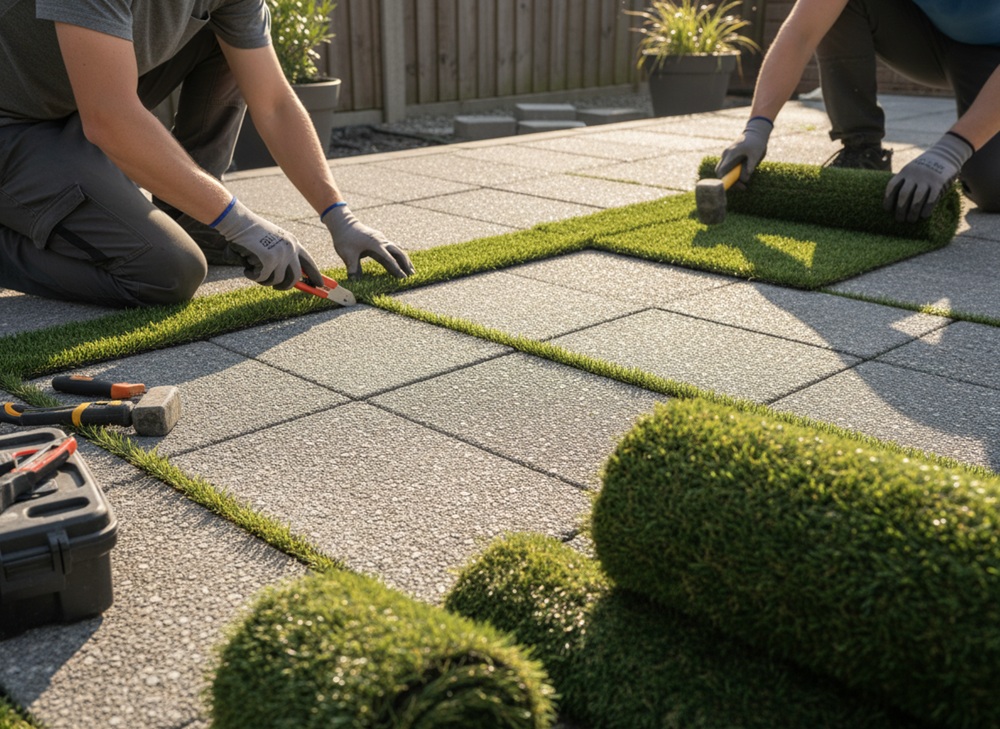
DIY cost breakdown:
- Artificial turf material: $3–$8 per square foot
- Crushed rock: $0.50–$1 per sq ft
- Landscape fabric: $0.30–$0.60 per sq ft
- Adhesive: $20–$40
- Silica infill: $10–$12 per bag
Because turf strips use minimal turf, your total cost depends mostly on labor—your own time and effort.
Typical DIY total: $150–$500
(for small patios, walkways, and garden paths)
Larger spaces or driveways may go higher depending on length and complexity.
Professional Installation Costs
If you want perfect finishing and guaranteed durability, hiring professionals is ideal. A company with paving experience understands:
- Base preparation
- Drainage considerations
- Exact seam alignment
- Long-term turf behavior
- Weather resistance
- Ideal adhesive selection
In Louisville, homeowners often rely on Commonwealth Paving for these precise tasks.
Professional costs typically range:
- $8–$18 per linear foot, depending on the design
- Or
- $10–$20 per sq ft of turf area
This ensures a clean, long-lasting installation that enhances the overall value of your property.
Expert Tips for a Clean, Modern Finish
1. Choose the right turf height
Shorter blades create a cleaner appearance and blend well with stone.
2. Ensure consistent blade direction
This avoids mismatched shades or uneven shine.
3. Keep the base level
Uneven foundations cause turf to dip or shift.
4. Use quality adhesive in high-traffic areas
Driveways and patio entries require stronger bonding.
5. Don’t rush the trimming
Precision cutting determines the final aesthetic.
6. Call professionals when needed
For complex paver layouts, curves, or sloped surfaces, expert help ensures reliability.
Many homeowners in Louisville rely on Commonwealth Paving when they want a durable, stylish installation done right.
Why Homeowners Trust Commonwealth Paving
If your project is more extensive—or if you simply want flawless results—Commonwealth Paving is a trusted name in outdoor improvement. Their team is known for precision, proper base preparation, finishing quality, and dependable service.
Reasons homeowners call Commonwealth Paving:
- Accurate measurements and professional cuts
- Proper compaction and drainage preparation
- Long-lasting installation techniques
- High-quality materials
- Decades of paving expertise
- Clear communication and fair pricing
Located at 136 Outer Loop, Louisville, Kentucky 40214, they offer everything from asphalt paving to outdoor enhancement work. If you want your turf strips installed professionally, call +1 502 459 7283 for a consultation.
Installing artificial grass between pavers is one of the easiest ways to upgrade your outdoor space. It adds charm, modern style, and low-maintenance greenery to pathways, patios, driveways, and garden designs.
By following this detailed DIY guide on How to Install Artificial Grass Strips Between Pavers, you can create a clean, attractive landscape feature that stays beautiful year-round. From measuring and cutting to securing and finishing, the process is straightforward when done carefully.
However, if you prefer expert-level precision—or if your project is large or complex—Commonwealth Paving is the trusted choice for homeowners throughout Louisville. With their experience and commitment to quality, they ensure every project is built to last.
If you ever need professional help or want a free estimate, just call +1 502 459 7283 or visit them at 136 Outer Loop, Louisville, Kentucky 40214.
Address
Commonwealth Paving, 136 Outerloop, Louisville, Kentucky 40214
Phone: 502-459-7283, Fax: 502-456-2678
Opening Hours
| Monday | 9:00 AM – 5:00 PM |
| Tuesday | 9:00 AM – 5:00 PM |
| Wednesday | 9:00 AM – 5:00 PM |
| Thursday | 9:00 AM – 5:00 PM |
| Friday | 9:00 AM – 5:00 PM |
| Saturday | Closed |
| Sunday | Closed |