
How to Install Artificial Grass Strips Between Pavers
If you want to transform your outdoor walkway, patio, or driveway into a modern, stylish, and low-maintenance space, installing artificial grass between pavers is one of the best design choices you can make. This technique adds a fresh pop of green, breaks up the hard surface visually, and gives your outdoor area a luxurious, well-designed look. But most homeowners have an important question before getting started: how to install artificial grass strips between pavers correctly so that they look natural, last for years, and require as little maintenance as possible?
This guide walks you through everything you need to know—materials, installation steps, pro-level techniques, and the exact role a trusted contractor like Commonwealth Paving, based at 136 Outer Loop, Louisville, Kentucky 40214, can play in helping your project succeed. Whether you’re improving curb appeal or upgrading your patio, this tutorial will show you how to do it right.
Why Artificial Grass Between Pavers Is Becoming So Popular
Before diving into the installation process, it helps to understand why this trend has exploded across residential landscaping:
- It creates a clean, modern aesthetic.
- It stays green year-round with almost no maintenance.
- It eliminates issues of mud, weeds, and patchy natural grass.
- It works in driveways, patios, pathways, pool decks, and garden designs.
- It adds value by improving curb appeal instantly.
This combination of beauty and function makes homeowners wonder not only how to install artificial grass strips between pavers, but also how to do it in a way that looks neat and professional. The good news? With the right approach and the right help, it’s absolutely achievable.
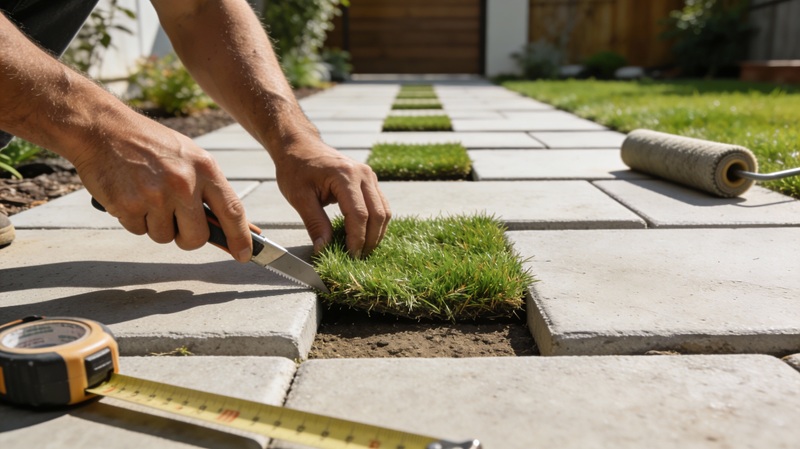
Essential Materials You Will Need
To install artificial grass between pavers like a pro, these materials are typically required:
- Artificial turf rolls (preferably short-pile turf)
- Utility knife or turf cutter
- Landscape fabric
- Jointing sand or crushed gravel base
- Adhesive or turf glue
- Turf nails or staples (depending on base type)
- Measuring tape
- Stiff broom or brush
- Weed barrier material
- Optional: polymeric sand or edging for added stability
Step-by-Step Guide: How to Install Artificial Grass Strips Between Pavers
Here’s the complete process explained in an easy, professional format.
Step 1: Measure the Gaps Between Your Pavers
Every installation begins with proper measurement. Use a tape measure to find the exact width and length of each gap where you plan to install turf strips.
Consistent gaps (like 1–2 inches) create the most seamless, designer-level finish. If your pavers vary in distance, take individual measurements to ensure each strip fits perfectly.
Accurate measuring is the foundation of mastering how to install artificial grass strips between pavers without visible seams or awkward edges.
Step 2: Prepare the Base for Turf Installation
Great installations always start with a strong base.
Clean the gaps thoroughly by removing:
- Old soil
- Weeds
- Rocks
- Loose debris
Then, fill each gap with ¼” crushed gravel or jointing sand. This creates a strong, level base that prevents sagging and improves drainage.
The base should be compact and even. If you skip this, the grass may sink later—and the sleek modern look will disappear.
Step 3: Add a Weed Barrier
One of the biggest advantages of artificial grass is the reduction of weeds. But if weeds grow underneath, your strips may rise or look uneven.
Place a thin layer of landscape fabric or a premium weed-barrier material in each channel. Cut it to size so that it sits neatly inside the gap.
This small step goes a long way toward ensuring your installation stays clean and flawless for years.
Step 4: Cut the Artificial Grass to Fit
Now comes the most delicate part of understanding how to install artificial grass strips between pavers—cutting the turf.
Unroll your turf and cut narrow strips that match the measurements you recorded earlier. Use a sharp utility knife and always cut from the back, following the stitch rows to maintain straight lines.
Tips for perfect strips:
- Cut slightly wider than needed; you can trim later.
- Ensure all grass fibers point in the same direction for uniform appearance.
- Keep the edges clean and straight—uneven cuts will show.
This step requires patience and precision, but it’s the key to a professional-looking installation.
Step 5: Place the Strips Between the Pavers
Gently insert each artificial grass strip into its corresponding gap. Make sure the pile (the direction the blades lean) matches across all strips for consistent texture.
Press the strip firmly into the base, ensuring it sits flush with the top of the pavers. Your goal is to make it look like the grass and stone were built together.
Step 6: Secure the Strips Using Adhesive or Nails
To keep turf strips from shifting, you need proper anchoring.
For walkways and patios:
A strong outdoor adhesive or turf glue along the sides works best.
For driveways:
Use a combination of turf glue and galvanized turf nails for added support. The compression from car tires makes securing even more important.
Adhesive should be applied sparingly—just enough to hold the strip but not enough to overflow onto the pavers.
Step 7: Brush and Fluff the Turf
Once your strips are secured, use a hard broom to brush the grass fibers upward. This gives them a natural, lush appearance.
This simple finishing touch is what makes your installation look like it was done by professionals.
Maintenance Tips to Keep Your Installation Looking Great
Even though artificial turf requires minimal upkeep, a little light maintenance helps it stay sharp:
- Sweep occasionally to remove leaves and dust.
- Rinse with water to keep the fibers clean.
- Re-brush the turf to maintain upright fibers.
- Remove debris from the pavers to avoid staining.
If installed correctly, your artificial grass strips will look great for years without major effort.
Benefits of Hiring Professionals for This Job
While many homeowners explore how to install artificial grass strips between pavers with DIY intentions, the best results often come from paving and turf professionals—especially for larger spaces or driveways.
Here’s why:
1. Precision Cutting and Alignment
Professionals ensure every strip aligns perfectly and sits correctly within the paver spacing.
2. Strong, Well-Prepared Base Material
The base is the most important part. Experienced installers compact and level the base properly.
3. Clean, Invisible Seams
A pro knows how to angle the turf, cut edges, and hide seams so everything looks seamless.
4. Faster Installation Time
What takes a DIYer several days can often be done in one day by a trained paving team.
5. Long-Term Durability
Professionally installed turf strips last much longer and maintain their fresh appearance.
If you want the most polished, high-end result for your home, it’s worth connecting with experts who work with both pavers and artificial turf.
Why Homeowners in Louisville Trust Commonwealth Paving
When it comes to pavements, driveways, walkways, and outdoor surface enhancements in Louisville, Commonwealth Paving has earned the trust of residential and commercial clients alike.
Here’s what sets them apart:
- Decades of experience in paving and surface design
- Skilled teams that handle detailed projects like turf strip installation
- High-quality materials and long-lasting installation techniques
- Reliable customer service and transparent communication
If you’re considering adding artificial grass strips between pavers—or planning a larger paving project—Commonwealth Paving offers exceptional craftsmanship with local expertise.
You can reach them at +1 502 459 7283, or visit them at 136 Outer Loop, Louisville, Kentucky 40214.
Learning how to install artificial grass strips between pavers can transform your outdoor space into a modern, green, and visually stunning landscape. Whether you prefer a DIY approach or want a flawless professional finish, the key is careful preparation, precise cutting, and secure installation.
Artificial turf brings elegance, durability, and low maintenance to any walkway, patio, or driveway. And for those who want exceptional results that stand the test of time, trusting a specialist like Commonwealth Paving ensures that every detail turns out perfect.
If you ever need help planning or completing your paving upgrades, the experts at Commonwealth Paving are ready to assist you with professional guidance, reliable service, and proven quality—right here in Louisville.
Beginner Tutorial: How to Install Artificial Grass Strips Between Pavers
If you’ve been searching for a simple way to refresh your yard, walkway, patio, or driveway, installing artificial grass strips between pavers might be the perfect project. This modern landscaping idea has taken over home design trends, offering a clean, stylish, and low-maintenance aesthetic that looks good year-round. But for complete beginners, the big question remains: how to install artificial grass strips between pavers without frustration or costly mistakes?
This beginner-friendly guide will walk you through the entire process, from understanding materials to installing each strip with precision. It’s written in an easy tone with clear directions so homeowners can confidently take on the project—or decide if they’d rather get expert help from Commonwealth Paving, located at 136 Outer Loop, Louisville, Kentucky 40214, reachable at +1 502 459 7283.
Let’s get started.
Why Artificial Grass Strips Between Pavers Are a Fantastic Upgrade
Artificial grass strips between pavers aren’t just a trend; they’re a smart combination of design and practicality. You get the beauty of lush green turf with the strength and structure of stone or concrete pavers. Here’s why homeowners love this style:
- It creates a high-end, magazine-worthy outdoor look.
- It stays neat and green regardless of season.
- It eliminates the messy maintenance of real grass in narrow gaps.
- It works perfectly for walkways, patios, pool decks, courtyards, and driveways.
- It increases curb appeal and property value instantly.
For beginners wanting to learn how to install artificial grass strips between pavers, this project is satisfying, visually rewarding, and manageable with the right guidance.
Tools and Materials You Will Need
A successful installation begins with preparation. Here are the essential items you’ll need:
- Artificial turf (short pile works best)
- Utility knife or turf cutter
- Crushed gravel or jointing sand
- Landscape fabric (weed barrier)
- Outdoor turf adhesive
- Measuring tape
- Brush or broom
- Gloves
- Optional: turf nails for areas with vehicle traffic
Don’t worry — you don’t need specialized tools. Most beginners already have many of these items at home.
Step-by-Step Beginner Tutorial: How to Install Artificial Grass Strips Between Pavers
This section answers your main question: how to install artificial grass strips between pavers in a simple way that even first-time DIYers can follow.
Step 1: Clean and Prepare the Gaps
Start by removing any debris, soil, weeds, or loose gravel from the gaps between the pavers. You want a clean, empty channel so the grass strips can sit neatly.
Use a stiff brush to sweep out dirt, and if weeds have deep roots, pull them out completely.
If the gaps are uneven or deep, don’t worry—this is where the gravel or sand base comes in.
Step 2: Create a Strong Base for the Artificial Grass
Artificial turf needs a stable foundation. Fill each gap with:
- Crushed gravel for better water drainage, or
- Jointing sand for small decorative gaps
Lightly compact the material with your hand or a small tool. The goal is to create a flat, even surface.
This step is critical for beginners who want their installation to look professional and last a long time. Without a proper base, the grass may sink or shift over time.
Step 3: Add a Weed Barrier
Even artificial turf can be affected by weeds growing below it. To prevent this, cut narrow strips of landscape fabric or weed barrier and place them inside the channels.
This keeps weeds away and ensures a clean look for years.
Step 4: Measure the Gaps Carefully
Measure the width and length of each gap between your pavers. Many driveways or patios have uniform spacing, but some don’t — so measure each one individually for accuracy.
Precise measurements are essential because your turf strips must fit snugly to look natural. Even being off by a few millimeters can make an installation look uneven.
Write down your measurements before cutting the turf.
Step 5: Cut the Artificial Grass Strips
This is the step where beginners need the most patience. Turn the turf over and use a sharp utility knife to cut strips based on your measurements. Always cut from the back of the turf—the backing lines help you cut straight.
Tips for perfect cutting:
- Follow the stitch rows to avoid jagged edges.
- Cut the strips slightly wider at first; you can trim later.
- Ensure that all strips face the same blade direction for a uniform look.
Short, controlled cuts work better than long strokes.
Step 6: Place the Turf Strips Into the Gaps
Now comes the exciting part: placing your freshly cut strips into the paver gaps.
Press each strip down gently, making sure the edges touch the paver walls. The turf should sit just slightly above the paver surface; brushing later will fluff it to the perfect height.
If a strip is too wide, carefully trim it. If it’s too narrow, cut a new one—forcing a bad fit will ruin the clean aesthetic.
Step 7: Secure the Grass Strips in Place
To keep your artificial grass strips from moving, especially in walkways or driveways, use turf adhesive along the sides of the strip. Apply a thin line and press the turf firmly.
For driveways where cars drive over the turf:
- Add turf nails into the base for extra stability.
- Make sure the strips are fully secure to avoid loosening over time.
Beginners often skip securing the turf properly, which leads to early wear. Don’t miss this step.
Step 8: Brush and Fluff the Grass
Use a stiff brush to lift the blades of the artificial turf. This gives the strips a natural look and ensures the fibers stand upright.
Brushing also helps blend the turf into the design so the pavers and grass look like a single unified feature.
Beginner Mistakes to Avoid
If you’re learning how to install artificial grass strips between pavers, these common mistakes are easy to avoid:
1. Cutting Before Measuring Properly
This leads to uneven strips and wasted turf.
2. Skipping the Weed Barrier
Weeds push the turf up and distort the look.
3. Not Creating a Compact Base
Uncompacted sand or gravel settles unevenly over time.
4. Using Too Much Glue
Adhesive should never spill onto pavers.
5. Cutting Turf with Dull Blades
This causes frayed edges and sloppy seams.
Take your time, and each step will reward you with clean, professional-looking results.
Why This Project Works for Beginners
Installing artificial grass strips is a great beginner-friendly landscaping upgrade because:
- It requires basic tools.
- The cuts are small and manageable.
- Each strip is independent, so mistakes are fixable.
- The visual payoff is instant.
Even if you’ve never worked with turf before, learning how to install artificial grass strips between pavers through this guide gives you all the confidence you need.
The Professional Touch: Why Many Homeowners Choose Commonwealth Paving
While this tutorial empowers beginners to handle the project themselves, many homeowners still prefer professional installation for larger areas, driveways, or complex paver layouts.
That’s where Commonwealth Paving becomes your most trusted partner.
Based at 136 Outer Loop, Louisville, Kentucky 40214, Commonwealth Paving brings years of experience in paving, landscaping enhancements, outdoor design, and surface preparation. Their skilled team understands how to deliver long-lasting, flawless results that stand up to weather, foot traffic, and vehicle pressure.
Whether you want a driveway upgrade, a patio remodel, or a complete outdoor redesign, calling +1 502 459 7283 gives you expert guidance and exceptional craftsmanship.
The Benefits of Professional Installation
If you decide that a DIY approach isn’t right for you, professionals offer advantages that beginners can’t match:
- Perfect alignment of turf strips
- Precision cutting without wastage
- Strong, compact base preparation
- Advanced adhesive techniques
- Long-lasting durability
- Cleanup and final finishing
Professionals also know how to evaluate drainage, slope, sun exposure, and traffic patterns to create a long-lasting installation.
For homeowners looking to modernize their outdoor spaces, this beginner-friendly guide on how to install artificial grass strips between pavers provides all the clarity and confidence you need to begin. The process is straightforward when approached step by step—cleaning the gaps, preparing the base, cutting carefully, placing strips neatly, securing them properly, and brushing for a fresh finish.
Whether you’re upgrading a walkway, enhancing your patio, or designing a stunning driveway border, this project is one of the easiest ways to elevate the look of your home.
But if you want the guarantee of a perfect, long-lasting finish, the specialists at Commonwealth Paving are ready to help. Reach them anytime at +1 502 459 7283, or visit them at 136 Outer Loop, Louisville, Kentucky 40214 for expert service and reliable craftsmanship.
Address
Commonwealth Paving, 136 Outerloop, Louisville, Kentucky 40214
Phone: 502-459-7283, Fax: 502-456-2678
Opening Hours
| Monday | 9:00 AM – 5:00 PM |
| Tuesday | 9:00 AM – 5:00 PM |
| Wednesday | 9:00 AM – 5:00 PM |
| Thursday | 9:00 AM – 5:00 PM |
| Friday | 9:00 AM – 5:00 PM |
| Saturday | Closed |
| Sunday | Closed |