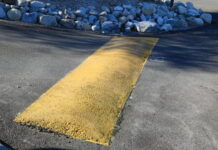


Often referred to as “silent policemen,” rubber speed bumps are the most common speed limiting measure. Easy installation and the ability to absorb shock effectively make them ideal for controlling traffic. They are a perfect solution for roads that operate around the clock and demand drivers to be extra cautious.
Despite their advantages, rubber speed bumps are potentially hazardous for pedestrians. Many passersby trip and injure themselves when not aware of the speed bumps. They pose a threat to motorists, too, who fail to notice the bump and do not slow down.
Why are Rubber Speed Bumps Hazardous?
Before giving any final verdict, let us analyze what makes speed bumps a trip-and-fall hazard.
Weather
 The adverse weather is one of the primary causes that transform speed bumps from visual guides that avoid accidents to potential threats that injure people. The winter season, especially, maximizes their ability to cause harm — speed bumps get covered in snow and are not visible to the pedestrians crossing the roads. Therefore, there are high chances of slipping.
The speed bumps are even dangerous for the drivers for the same reason. Due to their minimum visibility, the drivers do not reduce the speed of their vehicles.
The shape of the rubber speed bumps
The shape of the rubber speed bumps is another major factor that makes them a hazard for both pedestrians and motorists. Their spherical, protruding shape makes them inappropriate for strollers used to walking on smooth, flat surfaces. An unexpected vertical rise in the surface is sufficient to catch them off guard and cause a sprain or other foot-related injury.
Similarly, when the drivers are unaware of speed bumps and meet an unexpected rise on the seemingly flat road, accidents take place. This can damage the car as well as harm the driver.
The verdict
Rubber speed bumps are indeed a potential tripping threat for both motorists and pedestrians. That said, they are highly crucial traffic-limiting and speed-reducing elements as they keep tabs on risky driving practices and divert traffic from areas with high foot traffic.
In a way, these speed bumps are a necessary evil. Their disadvantages are not sufficient to overlook the advantages of rubber speed bumps. Therefore, taking the middle way remains the only option. In other words, rubber speed bumps should be utilized but with safety measures in mind. This is the only way to minimize mishaps.
Here are some general rules of safety that will prevent rubber speed bumps from becoming a hazard:
- Keeping the rubber speed bumps in top shape will prevent them from turning into potential accident-causing objects. As they cannot be repainted, changing them as soon as they degrade will ensure maximum performance, boost visibility, thus, prevent accidents.
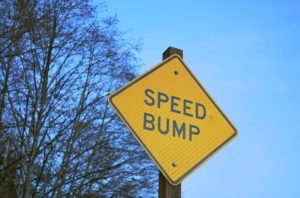
- Posting warning signs, such as “caution – speed bump ahead,” is another effective way to drive the passersby’s attention towards the approaching speed bump. When aware, they are less likely to fall and injure themselves.
- Clearing the snow as soon as possible ensures the speed bumps remain visible.
- Keeping the area well-lit will allow the pedestrians and motorists to notice the speed bump even in low-light conditions. That said, rubber speed bumps usually have reflective yellow stripes that make them visible at night.
These measures will ensure strollers do not fall and drivers reduce their speed before the speed bump approaches. Being mindful of these measures will negate the disadvantages of the speed bumps and ensure they only yield the results that they are expected to.
Address
Commonwealth Paving, 136 Outerloop, Louisville, Kentucky 40214
Phone: 502-459-7283, Fax: 502-456-2678
Opening Hours
| Monday | 9:00 AM – 5:00 PM |
| Tuesday | 9:00 AM – 5:00 PM |
| Wednesday | 9:00 AM – 5:00 PM |
| Thursday | 9:00 AM – 5:00 PM |
| Friday | 9:00 AM – 5:00 PM |
| Saturday | Closed |
| Sunday | Closed |