
How Much Does Pothole Repair Cost? A Homeowner’s Breakdown
Discovering a pothole in your driveway or private access road can be frustrating. Beyond the inconvenience, potholes can damage vehicles, create safety hazards, and quickly get worse if left untreated. One of the first questions most homeowners ask is simple: How much does pothole repair cost?
The honest answer is that pothole repair costs can vary widely depending on the size of the pothole, the underlying cause, and how quickly the problem is addressed. In 2025, with rising material and labor costs, understanding what actually goes into pothole repair pricing is more important than ever.
Why Pothole Repair Costs Are Not One-Size-Fits-All
Unlike many home improvement projects, pothole repair does not have a flat price. Two potholes that look similar on the surface can have very different repair costs depending on what’s happening underneath.
Most potholes form when water penetrates the asphalt and weakens the base layer. Once the base loses strength, the surface collapses under vehicle weight. This means that the real cost of pothole repair is often tied to how much structural damage exists beneath the visible hole.
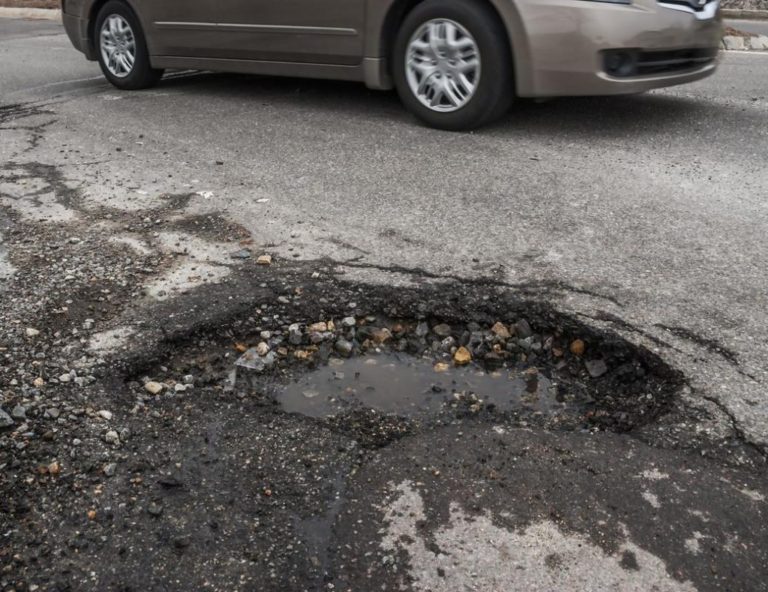
A shallow pothole caused by surface wear costs much less to fix than a deep pothole caused by base failure. This is why professional evaluation plays such a big role in determining accurate pricing.
Average Pothole Repair Costs Homeowners Can Expect
While every project is unique, most residential pothole repairs fall into a predictable range.
Small potholes that are addressed early—before they spread—are usually the least expensive to repair. These repairs often involve removing loose material and properly compacting new asphalt.
Moderate potholes that show signs of recurring damage or moisture intrusion cost more because they may require partial base repair.
Large or recurring potholes represent the higher end of pothole repair costs. These repairs involve removing damaged asphalt, stabilizing or replacing the base, and rebuilding the area for long-term durability.
The key takeaway for homeowners is simple: early repair almost always costs less than waiting.
The Biggest Factors That Affect Pothole Repair Cost
Several important factors influence how much pothole repair will cost. Understanding these helps homeowners avoid surprises and unrealistic expectations.
The size of the pothole is an obvious factor. Larger potholes require more material and labor.
The depth of damage is even more important. Surface-level damage is easier and less expensive to fix than potholes that extend into the base.
The condition of the base plays a major role. If the base is water-damaged or unstable, it must be repaired for the pothole repair to last.
Drainage issues also affect cost. If water is pooling near the pothole or flowing toward it, correcting drainage may be necessary to prevent repeat damage.
Finally, weather and timing matter. Repairs performed during suitable conditions cure better and last longer, which improves overall value.
Why Early Pothole Repair Saves Money
One of the biggest mistakes homeowners make is delaying pothole repair. What starts as a small defect often grows rapidly—especially in Louisville’s climate.
Rainwater enters the pothole, freezes in winter, expands, and breaks the surrounding asphalt apart. Vehicle traffic then accelerates the damage. Within months, a small pothole can double or triple in size.
Early pothole repair:
- Requires less material
- Involves less labor
- Prevents base failure
- Reduces repeat repairs
From a cost perspective, early action is almost always the most affordable option.
DIY Pothole Repair vs Professional Costs
Many homeowners consider DIY pothole repair to save money. While DIY materials are cheaper upfront, they often cost more over time.
DIY pothole repair usually involves cold patch materials that do not bond as strongly as professional solutions. These patches are more vulnerable to moisture and temperature changes, which leads to frequent failure.
Repeated DIY repairs add up quickly. Worse, they often trap moisture beneath the surface, accelerating base damage and increasing future repair costs.
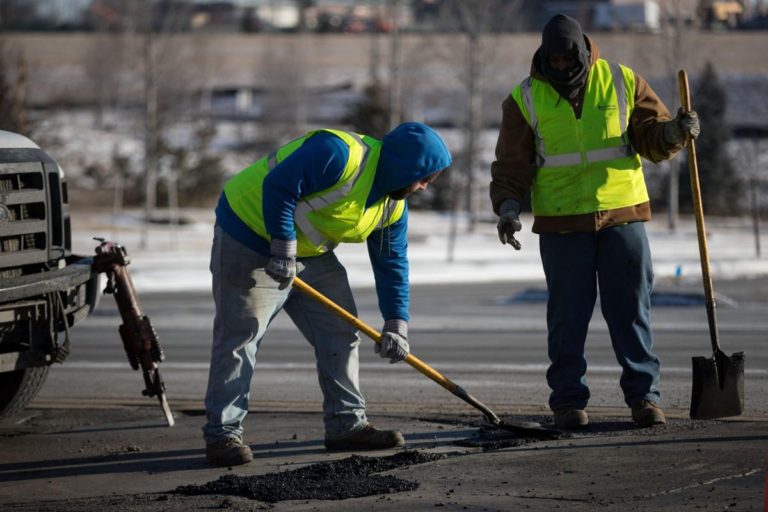
Professional pothole repair costs more initially, but it typically eliminates the need for repeated fixes—making it the more cost-effective choice long-term.
Temporary Repairs vs Long-Term Solutions
Not all pothole repairs are intended to last the same amount of time. Temporary repairs cost less but provide limited durability.
Short-term repairs may be appropriate in emergency situations or as a stopgap measure. However, they are not designed to withstand long-term traffic or harsh weather.
Long-term pothole repair focuses on structural integrity. It addresses base issues, uses proper materials, and ensures correct compaction. While the upfront cost is higher, the lifespan of the repair is significantly longer.
Homeowners should always ask whether a repair is intended to be temporary or long-lasting—and price it accordingly.
How Louisville’s Climate Impacts Repair Costs
Louisville’s climate plays a major role in pothole repair pricing and performance. Heavy rainfall, freeze–thaw cycles, and hot summers all accelerate pavement deterioration.
Repairs must be designed to handle:
- Moisture infiltration
- Temperature expansion and contraction
- Repeated vehicle stress
Repairs that ignore these factors often fail prematurely, leading to higher lifetime costs. Climate-aware pothole repair methods may cost slightly more upfront but deliver far better value over time.
When Pothole Repair Is More Affordable Than Replacement
Homeowners often worry that pothole repair is just delaying the inevitable replacement of their driveway. In many cases, this is not true.
If the base of the driveway is still stable and damage is localized, professional pothole repair can extend pavement life by many years. This makes repair far more affordable than resurfacing or replacement.
Replacement is only necessary when base failure is widespread and recurring across large areas. A professional evaluation helps determine whether repair is still the most cost-effective option.
The Hidden Cost of Ignoring Potholes
Ignoring potholes can be far more expensive than repairing them.
Unrepaired potholes:
- Damage vehicle tires and suspension
- Create trip hazards
- Allow water to spread beneath the pavement
- Accelerate surrounding asphalt failure
As potholes grow, repair costs increase. In some cases, delayed action turns a small repair into a major reconstruction project.
From a financial standpoint, timely pothole repair is one of the smartest investments a homeowner can make.
What’s Included in Professional Pothole Repair Pricing
Professional pothole repair pricing usually includes more than just filling a hole.
A proper repair often involves:
- Removing damaged asphalt
- Evaluating base stability
- Repairing or stabilizing the base if needed
- Installing and compacting new asphalt
- Blending the repair with the surrounding pavement
This comprehensive approach is why professional pothole repair lasts significantly longer than surface-only fixes.
Why Commonwealth Paving Provides Accurate and Honest Cost Estimates
For homeowners in Louisville, Commonwealth Paving is known for providing clear, honest pothole repair assessments.
Each project begins with a careful evaluation of the pothole’s cause—not just its appearance. This ensures that homeowners are not paying for unnecessary work, while also avoiding repairs that are destined to fail.
Rather than offering “one-price-fits-all” solutions, Commonwealth Paving focuses on the most cost-effective repair method that delivers long-term durability.
Commonwealth Paving Contact Information
Company Name: Commonwealth Paving
Address: 136 Outer Loop, Louisville, Kentucky 40214
Toll-Free Number: +1 502 459 7283
How to Budget for Pothole Repair as a Homeowner
The best way to manage pothole repair costs is to plan ahead. Regular driveway inspections help identify small issues early. Prompt repairs prevent damage from spreading and reduce long-term expenses.
Homeowners who treat pothole repair as part of routine property maintenance consistently spend less over time than those who wait for visible failure.
Long-Term Value vs Short-Term Savings
When evaluating pothole repair costs, homeowners should focus on value—not just price.
The cheapest repair is rarely the best repair. Long-lasting solutions reduce repeat costs, protect vehicles, and preserve driveway integrity.
Professional pothole repair offers:
- Fewer repeat repairs
- Better durability
- Improved safety
- Higher property value
Over time, these benefits outweigh the initial cost difference.
What Should Homeowners Expect to Pay?
So, how much does pothole repair cost? The answer depends on size, depth, base condition, and timing. However, one principle remains consistent: early, professional pothole repair is always more affordable than delayed action.
For Louisville homeowners, investing in proper pothole repair protects not only the driveway but also vehicles, safety, and long-term property value. Understanding what influences repair costs allows you to budget confidently and avoid unnecessary expenses.
When potholes are addressed correctly, and at the right time, repair costs stay manageable—and the results last for years instead of months.
Pothole Repair Solutions: Quick Fixes vs Long-Term Results
Potholes have a way of appearing at the worst possible time. One day, your driveway or private access road looks fine, and the next, there’s a deep hole that rattles your vehicle, damages tires, and creates a safety risk. When this happens, most homeowners want the fastest solution possible. But here’s the real question you should be asking: Do I need a quick fix, or should I invest in a long-term pothole repair solution?
Understanding the difference between short-term and long-term pothole repair is critical—especially in Louisville, where hot summers, freezing winters, heavy rain, and freeze–thaw cycles accelerate pavement damage. Some repairs are designed to buy time, while others are meant to restore structural integrity and prevent repeat failures. Choosing the wrong approach can lead to ongoing frustration and higher costs over time.
This guide breaks down pothole repair solutions in a clear, homeowner-friendly way, helping you understand when quick fixes make sense, when they don’t, and how long-term results are achieved.
Why Potholes Keep Coming Back
Before comparing repair solutions, it’s important to understand why potholes form in the first place. A pothole is rarely just a surface problem. It usually begins when water enters small cracks in asphalt and reaches the base layer underneath. Once the base becomes saturated or unstable, vehicle weight causes the surface above to collapse.
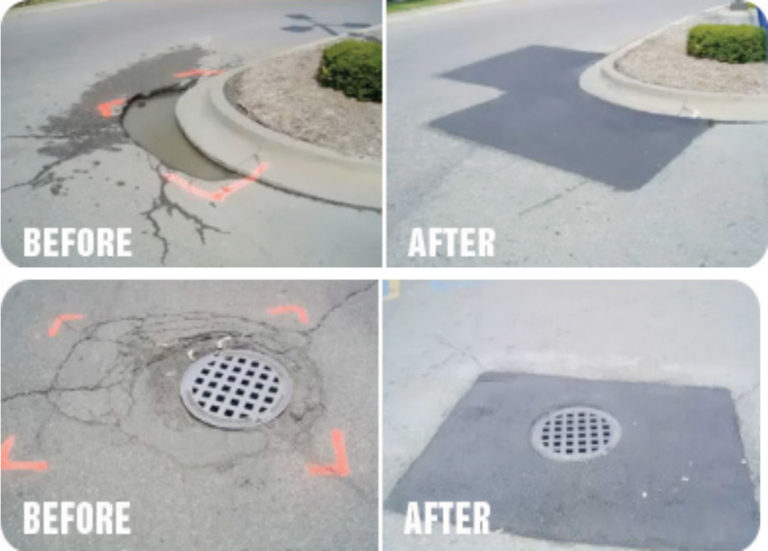
In Louisville’s climate, this process happens quickly. Rainwater penetrates pavement, winter temperatures freeze that moisture and expand it, and summer heat weakens the asphalt binder. If a repair does not address these underlying issues, the pothole is almost guaranteed to return.
This is why not all pothole repair methods deliver the same results.
What Are Quick-Fix Pothole Repair Solutions?
Quick fixes are designed to address potholes fast, often with minimal preparation and low upfront cost. These solutions are popular because they appear simple and convenient.
Quick-fix pothole repair usually involves filling the hole with a pre-mixed asphalt product and compacting it as best as possible. These repairs are often used in emergencies to reduce hazards and improve appearance temporarily.
For homeowners, quick fixes may seem attractive because they:
- Cost less upfront
- Can be done quickly
- Improve safety immediately
- Require minimal downtime
However, quick fixes come with limitations that are important to understand.
The Pros and Cons of Quick Fixes
Quick fixes can be useful in certain situations, but they are rarely designed to last.
On the positive side, quick fixes can reduce immediate risks. A filled pothole is better than an open one, especially if vehicles or pedestrians use the area regularly. These repairs may also help temporarily during extreme weather when long-term repairs are not feasible.
The downside is durability. Most quick-fix pothole repair solutions do not address the weakened base beneath the surface. Without base repair and proper compaction, the asphalt patch is sitting on unstable ground. As a result, the repair often loosens, cracks, or sinks within months—sometimes even weeks.
In Louisville’s freeze–thaw conditions, quick fixes are especially vulnerable to failure.
When Quick Fixes Might Make Sense
There are limited scenarios where quick pothole repair solutions are reasonable.
If the pothole is small, shallow, and located in a low-traffic area, a temporary fix may slow deterioration until a more permanent repair can be scheduled. Quick fixes can also be useful as a short-term safety measure when weather conditions prevent proper long-term repairs.
However, homeowners should view these solutions as temporary by design—not as a permanent answer.
What Defines Long-Term Pothole Repair Solutions?
Long-term pothole repair focuses on restoring pavement strength, not just appearance. These repairs are designed to prevent the pothole from coming back by addressing the root cause of the damage.
A long-term repair typically involves removing all damaged asphalt, evaluating the condition of the base, repairing or stabilizing the base if necessary, and installing new asphalt with proper compaction. The repaired area is then blended into the surrounding pavement to prevent water infiltration.
This approach takes more time and investment upfront, but the results last significantly longer.
Why Base Repair Is the Key to Long-Term Results
The most important difference between quick fixes and long-term pothole repair is how the base is treated.
When the base layer beneath the asphalt is weak or water-damaged, surface patches alone will fail. Long-term repairs rebuild or stabilize the base so it can support traffic loads properly.
Once the base is restored, the new asphalt has a solid foundation. This dramatically reduces the chance of repeat potholes and extends the overall life of the pavement.
Cost Comparison: Cheap Now vs Affordable Over Time
One of the biggest misconceptions about pothole repair is that quick fixes are more affordable. While they do cost less initially, they often become more expensive over time.
Repeated quick fixes require buying materials multiple times and investing ongoing labor. Worse, they can trap moisture beneath the surface, accelerating base failure and leading to larger repairs later.
Long-term pothole repair costs more upfront, but it typically eliminates the need for repeated repairs. Over several years, this approach is often far more cost-effective for homeowners.
Durability in Louisville’s Climate
Louisville’s weather makes durability especially important. Freeze–thaw cycles, heavy rainfall, and summer heat all work against poorly repaired pavement.
Quick fixes struggle in these conditions because they lack proper bonding and compaction. Long-term repairs are designed to handle expansion, contraction, and moisture exposure.
This climate factor is one of the main reasons professional pothole repair solutions consistently outperform temporary fixes in Louisville.
Safety and Liability Considerations
Potholes are not just a maintenance issue—they are a safety concern. Uneven pavement increases the risk of trips, falls, and vehicle damage.
Quick fixes that fail unexpectedly can create new hazards. Loose patches or sinking repairs may be worse than the original pothole.
Long-term pothole repair creates stable, level surfaces that improve safety and reduce liability risk for homeowners.
How Pothole Repair Fits Into Overall Pavement Health
Pothole repair should never be viewed in isolation. It is part of a larger pavement maintenance strategy that includes crack repair, drainage management, and surface protection.
Long-term repair solutions often identify and address nearby cracks or drainage issues that contributed to pothole formation. This comprehensive approach improves overall pavement performance and reduces future damage.
Quick fixes rarely take this broader view, which is why potholes often return in the same area.
Repair Timing: Another Difference Between Quick and Long-Term Solutions
Timing plays a major role in repair success. Asphalt materials require proper temperature and moisture conditions to cure correctly.
Quick fixes are often done whenever the pothole becomes annoying, regardless of the weather. This can reduce effectiveness and shorten lifespan.
Professional long-term pothole repair is scheduled when conditions allow materials to bond and perform properly, ensuring stronger, longer-lasting results.
Why Professional Evaluation Matters
Homeowners often choose quick fixes because they underestimate the severity of the damage. A pothole that looks minor on the surface may actually indicate deeper structural problems.
Professional evaluation helps determine whether a quick fix is reasonable or if long-term repair is necessary. This prevents wasted money on repairs that are destined to fail.
Understanding the true condition of the pavement is essential to choosing the right pothole repair solution.
Why Commonwealth Paving Focuses on Long-Term Results
For homeowners in Louisville, Commonwealth Paving provides professional pothole repair solutions designed for durability and value.
Each project begins with a careful assessment to identify the root cause of the pothole—not just the visible damage. By addressing base stability, drainage, and material performance, Commonwealth Paving delivers repairs that last.
Rather than relying on quick fixes that lead to repeated problems, the focus is on restoring pavement strength and preventing future failures. Clear communication ensures homeowners understand whether a temporary or long-term solution makes the most sense for their situation.
Commonwealth Paving Contact Information
Company Name: Commonwealth Paving
Address: 136 Outer Loop, Louisville, Kentucky 40214
Toll-Free Number: +1 502 459 7283
How Homeowners Should Decide Between Quick Fixes and Long-Term Repair
The right pothole repair solution depends on several factors: pothole size, depth, traffic level, base condition, and long-term goals.
Quick fixes may be acceptable for temporary situations or very minor damage. However, if potholes are recurring, growing, or located in high-traffic areas, long-term pothole repair is almost always the better investment.
Choosing the right solution early can prevent repeated frustration and unnecessary expense.
The Real Cost of Choosing the Wrong Solution
Choosing a quick fix when long-term repair is needed often leads to:
- Repeated pothole repairs
- Higher cumulative costs
- Accelerated pavement failure
- Increased safety risks
On the other hand, choosing long-term repair when appropriate provides stability, safety, and peace of mind.
Quick Fix or Lasting Solution?
Pothole repair is not just about filling a hole—it’s about restoring pavement performance. Quick fixes may offer immediate relief, but they rarely solve the underlying problem. Long-term pothole repair addresses the real cause of damage and delivers results that last.
For Louisville homeowners, understanding the difference between temporary patches and durable repairs is key to protecting both pavement and budget. When repairs are done correctly and at the right time, potholes stop being a recurring headache and become a solved problem.
Investing in the right pothole repair solution today can save years of frustration, repeated costs, and pavement damage tomorrow.
Address
Commonwealth Paving, 136 Outerloop, Louisville, Kentucky 40214
Phone: 502-459-7283, Fax: 502-456-2678
Opening Hours
| Monday | 9:00 AM – 5:00 PM |
| Tuesday | 9:00 AM – 5:00 PM |
| Wednesday | 9:00 AM – 5:00 PM |
| Thursday | 9:00 AM – 5:00 PM |
| Friday | 9:00 AM – 5:00 PM |
| Saturday | Closed |
| Sunday | Closed |