
How to Apply Asphalt Driveway Sealer (Step-by-Step for Beginners)
An asphalt driveway goes through a lot every single day. Sunlight, rain, vehicle traffic, oil spills, dirt, and changing temperatures slowly weaken the surface over time. Without proper maintenance, asphalt can fade, crack, and eventually develop potholes that become expensive to repair. That is why applying asphalt driveway sealer is one of the smartest ways to protect your pavement investment in 2026.
For beginners, the process may look intimidating at first, but understanding the right steps can make the project much easier and more effective. Proper sealing not only improves appearance but also helps extend the life of the driveway while reducing long-term repair costs.
At Commonwealth Paving, property owners receive professional asphalt maintenance services designed to keep pavement surfaces strong, smooth, and visually appealing. Located at 136 Outer Loop, Louisville, Kentucky 40214, Commonwealth Paving continues to provide trusted paving and sealing solutions for commercial and industrial clients. For professional assistance, call +1 502 459 7283.
Why Asphalt Driveway Sealer Is Important
Many people think driveway sealer is only used to improve appearance, but its benefits go far beyond creating a darker surface. Asphalt driveway sealer acts as a protective barrier that shields pavement from moisture, UV rays, oil, chemicals, and oxidation.
Over time, asphalt naturally loses the oils that keep it flexible. Sun exposure and harsh weather conditions speed up this process, causing the surface to become dry and brittle. Once cracks form, water can penetrate beneath the pavement and weaken the foundation.
Applying asphalt driveway sealer regularly helps prevent this damage by preserving the surface and slowing deterioration. A properly sealed driveway can last significantly longer than unsealed asphalt.
In addition to protection, freshly sealed asphalt gives a driveway a rich black finish that instantly improves curb appeal. Whether for a commercial property or private surface, sealing creates a cleaner and more professional appearance.
Understanding When to Seal a Driveway
Timing is one of the most important factors in successful asphalt driveway sealer application. Sealing too early or under poor weather conditions can reduce durability and affect the final result.
Fresh asphalt should generally cure for several months before sealing. This allows the surface oils to stabilize properly. Older driveways usually benefit from resealing every few years depending on traffic levels and weather exposure.
Warm, dry weather is ideal for asphalt driveway sealer application. Temperatures should typically remain above 50 degrees Fahrenheit for proper curing. Rain during or immediately after sealing can damage the finish and weaken the protective layer.
Checking the weather forecast before starting the project is essential for achieving strong and even coverage.
Preparing the Driveway Properly
Preparation is often the difference between a long-lasting sealcoat and one that fails prematurely. Before applying asphalt driveway sealer, the surface must be cleaned thoroughly.
Dirt, dust, leaves, weeds, and debris should all be removed from the driveway. Oil stains should also be treated because sealer may not bond correctly to contaminated areas.
Pressure washing can help remove stubborn dirt and improve surface cleanliness. After cleaning, the driveway must dry completely before sealing begins. Moisture trapped beneath the sealer can reduce adhesion and create uneven curing.
Cracks and potholes should also be repaired before applying asphalt driveway sealer. Sealing over damaged pavement without repairs simply hides the problem temporarily instead of fixing it properly.
At Commonwealth Paving, professionals understand that quality preparation is critical for long-term pavement performance.
Choosing the Right Asphalt Driveway Sealer
Not all sealing products provide the same level of protection. Selecting the right asphalt driveway sealer is important for durability, appearance, and weather resistance.
Some sealers are designed for light residential use, while others are made for commercial or industrial traffic. Professional-grade sealers typically offer stronger protection against moisture, sunlight, and chemicals.
Beginners should also consider application type. Certain products are easier to spread evenly and may be better suited for smaller projects. Reading product instructions carefully helps avoid application mistakes.
High-quality asphalt driveway sealer creates better flexibility, stronger adhesion, and longer-lasting results compared to low-cost alternatives.
Tools Needed for Asphalt Driveway Sealer Application
Having the correct tools makes the sealing process much smoother and more efficient. Most driveway sealing projects require simple equipment, but using quality tools helps create more professional-looking results.
Some commonly used tools include:
- Push brooms and leaf blowers for cleaning
- Squeegees or sealcoating brushes for spreading sealer
- Crack filler and patching materials for repairs
Protective gloves and old clothing are also recommended because asphalt driveway sealer can be difficult to remove once it dries.
Using the proper application tools helps distribute the sealer evenly and reduces streaking or pooling during the process.
Step-by-Step Asphalt Driveway Sealer Application
Once the driveway is clean, repaired, and fully dry, the sealing process can begin. Beginners should work carefully and patiently to achieve smooth and even coverage.
The first step is mixing the asphalt driveway sealer thoroughly. Many products settle during storage, so proper mixing ensures consistent texture and performance.
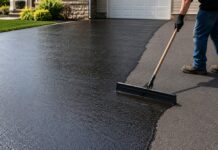
Next, pour a small amount of sealer onto one section of the driveway. Using a squeegee or sealing brush, spread the material evenly across the surface. It is important to maintain a thin and uniform coat rather than applying excessively thick layers.
Working in small sections helps maintain control and prevents uneven coverage. Most professionals recommend starting near the highest point of the driveway and working toward the exit area to avoid stepping on freshly sealed pavement.
Edges and corners should receive careful attention to ensure complete coverage without excess buildup.
Avoiding Common Beginner Mistakes
Many first-time sealing projects experience problems because of avoidable mistakes. One of the most common issues is applying too much asphalt driveway sealer at once.
Thick layers may seem stronger, but they often dry unevenly and remain soft for longer periods. Thin and even coats usually provide better durability and appearance.
Another common mistake is sealing during poor weather conditions. High humidity, cold temperatures, or incoming rain can interfere with curing and reduce sealcoat lifespan.
Skipping crack repairs is another major issue. Sealer alone cannot stop structural pavement damage from spreading. Cracks should always be repaired before sealing begins.
Rushing the drying process can also cause damage. Vehicles should remain off the driveway until the sealer cures fully according to product instructions.
How Long Asphalt Driveway Sealer Lasts
The lifespan of asphalt driveway sealer depends on several factors including weather conditions, traffic levels, surface preparation, and product quality.
In general, professionally applied sealcoating lasts longer than DIY applications because professionals use commercial-grade materials and specialized equipment. High-traffic areas may require resealing more frequently than lightly used surfaces.
Regular maintenance plays a major role in extending sealcoat performance. Keeping the surface clean and repairing cracks early helps preserve the protective layer.
Professional pavement inspections can also identify early signs of wear before major damage develops.
The Benefits of Professional Sealcoating Services
While many beginners attempt DIY sealing projects, professional asphalt driveway sealer application often delivers superior long-term results. Professional crews understand how to evaluate pavement conditions, select proper materials, and apply sealcoating evenly.
At Commonwealth Paving, experienced professionals use high-quality sealing products and advanced equipment to maximize pavement protection and appearance. Their expertise helps ensure the sealer bonds properly and cures evenly for lasting durability.
Professional sealcoating also saves property owners time and effort while reducing the risk of costly application mistakes.
For commercial and industrial properties, professional maintenance helps maintain a clean, safe, and attractive appearance that leaves a positive impression on visitors and customers.
Protecting Asphalt From Weather Damage
Weather is one of the biggest threats to asphalt pavement. UV rays dry out asphalt surfaces, while water penetration weakens the foundation below. Freeze-thaw cycles create additional stress that accelerates cracking and pothole formation.
Asphalt driveway sealer helps defend against all of these issues by creating a protective shield over the pavement surface. This barrier slows oxidation, repels water, and reduces damage caused by chemicals and vehicle fluids.
In areas with heavy rainfall or temperature fluctuations, regular sealcoating becomes especially important for preserving pavement life.
Preventive maintenance through sealing is far more affordable than major asphalt replacement projects later.
Improving Property Appearance With Fresh Sealcoating
A freshly sealed driveway dramatically improves curb appeal. Faded gray pavement instantly transforms into a smooth black surface that looks cleaner, newer, and more professional.
For businesses, appearance matters. Customers often judge a property’s condition based on its exterior maintenance. Cracked and faded pavement can create a negative first impression, while freshly sealed asphalt helps properties look well cared for and inviting.
Sealcoating also creates a smoother surface that is easier to clean and maintain over time.
Why Preventive Maintenance Saves Money
One of the biggest advantages of using asphalt driveway sealer is long-term cost savings. Preventive maintenance helps stop small issues from becoming major repair expenses.
Replacing an entire asphalt surface can be extremely expensive, especially for commercial and industrial properties. Sealcoating and crack repair are far more affordable and help extend pavement lifespan significantly.
By investing in routine maintenance now, property owners can avoid costly structural repairs later while maintaining safer and more attractive pavement surfaces.
Applying asphalt driveway sealer is one of the best ways to protect and extend the life of asphalt pavement. With proper preparation, quality materials, and careful application, even beginners can improve the appearance and durability of their driveway.
However, professional sealcoating services often provide stronger protection, better durability, and longer-lasting results. For property owners who want reliable pavement maintenance solutions, Commonwealth Paving continues to deliver trusted asphalt services designed for long-term performance.
Located at 136 Outer Loop, Louisville, Kentucky 40214, Commonwealth Paving provides professional asphalt maintenance and sealing services tailored to commercial and industrial needs. To learn more about asphalt driveway sealer solutions, call +1 502 459 7283 today.
Top 7 Asphalt Driveway Sealer Tips That Extend Pavement Life
An asphalt driveway is a major investment, and like any investment, it requires proper care and maintenance to stay in excellent condition. Over time, exposure to sunlight, rain, vehicle traffic, chemicals, and changing temperatures slowly weakens asphalt surfaces. Without protection, driveways begin to fade, crack, and develop potholes that can become expensive to repair.
That is why using the right asphalt driveway sealer techniques is one of the smartest ways to protect pavement in 2026. A high-quality sealing process not only improves appearance but also helps extend pavement life, reduce repair costs, and maintain long-term durability.
At Commonwealth Paving, property owners receive professional asphalt maintenance solutions designed to preserve and protect pavement surfaces. Located at 136 Outer Loop, Louisville, Kentucky 40214, Commonwealth Paving continues to deliver trusted paving and sealcoating services for commercial and industrial properties. For more information, call +1 502 459 7283.
Why Asphalt Driveway Sealer Matters More Than Ever
Modern asphalt surfaces face more stress than ever before. Heavy vehicles, unpredictable weather, UV exposure, and moisture infiltration all contribute to pavement deterioration. Asphalt naturally loses flexibility as it ages, causing cracks and surface damage to appear over time.
An asphalt driveway sealer acts as a protective shield against these damaging elements. It helps block water penetration, reduces oxidation caused by sunlight, and protects the pavement from chemicals such as oil and gasoline.
Without regular sealing, asphalt surfaces deteriorate much faster, leading to expensive maintenance and shorter pavement lifespan. Proper sealcoating is one of the most cost-effective ways to protect asphalt and avoid major repair projects later.
The following tips can help property owners maximize the benefits of asphalt driveway sealer and extend pavement life significantly.
Choose the Right Asphalt Driveway Sealer
Not all sealers provide the same level of protection. One of the most important factors in successful pavement maintenance is selecting the right asphalt driveway sealer for the specific surface and traffic conditions.
Some products are designed for light residential use, while others are engineered for commercial and industrial pavement that experiences heavier traffic loads. Higher-quality sealers generally provide better resistance against UV rays, moisture, chemicals, and wear.
Choosing low-cost products may save money initially, but poor-quality sealers often wear out quickly and require more frequent reapplication. Professional-grade asphalt driveway sealer products usually provide stronger adhesion, improved flexibility, and longer-lasting protection.
At Commonwealth Paving, experienced professionals understand how to select the most effective sealing materials based on pavement condition and environmental factors.
Clean the Surface Thoroughly Before Sealing
One of the most common reasons sealcoating fails is poor surface preparation. Dirt, debris, oil stains, and moisture can prevent asphalt driveway sealer from bonding properly with the pavement.
Before applying any sealer, the driveway should be cleaned completely. Sweeping alone is usually not enough. Pressure washing often helps remove stubborn dirt and contaminants that could weaken the sealcoat.
Oil spots are especially important to address because asphalt driveway sealer may not adhere correctly to oily surfaces. Any cracks or potholes should also be repaired before sealing begins.
Proper preparation allows the sealer to create a strong and even protective layer across the pavement surface. Skipping this step can significantly reduce sealcoat lifespan and effectiveness.
Repair Cracks Early Before They Spread
Cracks are one of the earliest signs of asphalt deterioration. Even small cracks allow water to enter beneath the pavement surface, weakening the foundation and accelerating damage.
One of the best ways to extend pavement life is repairing cracks before applying asphalt driveway sealer. Sealcoating alone cannot fix structural damage or stop existing cracks from spreading.
Professional crack filling helps seal openings and prevent moisture infiltration. Once repairs are complete, the asphalt driveway sealer can create an additional layer of protection over the repaired surface.
Ignoring cracks before sealing often leads to recurring damage, pothole formation, and expensive future repairs. Early maintenance is far more affordable than large-scale pavement restoration.
Apply Asphalt Driveway Sealer During Ideal Weather Conditions
Weather conditions play a major role in the success of any sealcoating project. Temperature, humidity, and moisture all affect how well asphalt driveway sealer bonds and cures.
Warm and dry weather generally produces the best results. Temperatures should remain above recommended levels for proper drying and adhesion. Rain during or shortly after application can damage the fresh sealcoat and create uneven surfaces.
Applying asphalt driveway sealer during extremely hot weather can also cause problems because the material may dry too quickly before spreading evenly.
Professional contractors carefully monitor weather conditions before beginning sealcoating projects. Proper timing helps ensure the sealer cures correctly and provides maximum durability.
Use Thin and Even Coats Instead of Thick Layers
Many beginners believe applying thick layers of asphalt driveway sealer provides better protection, but the opposite is often true. Excessively thick coatings may dry unevenly and remain soft for longer periods.
Thin and even coats generally create stronger and more durable results. Proper application techniques allow the sealer to bond evenly with the asphalt surface while maintaining flexibility.
Professional sealcoating crews use specialized tools and equipment to achieve smooth coverage without excessive buildup. Consistent application improves both appearance and performance.
Some driveways may require multiple thin coats depending on pavement condition and traffic exposure. However, allowing proper drying time between coats is essential for achieving long-lasting results.
Protect the Driveway From Water Drainage Problems
Water is one of the biggest threats to asphalt pavement. Poor drainage allows moisture to collect on or beneath the driveway surface, increasing the risk of cracking, potholes, and structural failure.
Even the best asphalt driveway sealer cannot fully protect pavement if standing water remains on the surface regularly. Proper drainage design helps direct water away from the driveway and reduces long-term moisture damage.
Property owners should inspect nearby gutters, downspouts, and grading to ensure water flows away from the pavement. Pooling water should never be ignored because it accelerates asphalt deterioration rapidly.
Combining proper drainage with regular sealing creates much stronger long-term pavement protection.
Schedule Routine Maintenance Instead of Waiting for Damage
One of the most valuable asphalt maintenance strategies is consistency. Many property owners wait until severe damage appears before considering sealcoating or repairs. Unfortunately, delaying maintenance usually increases repair costs significantly.
Routine asphalt driveway sealer application helps preserve pavement condition and slows the natural aging process. Regular inspections also allow small problems to be identified before they become major issues.
Preventive maintenance provides several important advantages:
- Extends pavement lifespan and improves durability
- Reduces expensive repair and replacement costs
- Maintains a clean and attractive property appearance
At Commonwealth Paving, professionals help clients create customized maintenance plans designed to protect asphalt surfaces year-round.
Why Professional Sealcoating Often Delivers Better Results
Although some property owners attempt DIY sealing projects, professional asphalt driveway sealer application often produces far superior results. Professional contractors understand how to evaluate pavement conditions, select proper materials, and apply sealcoating evenly.
Professional crews use commercial-grade equipment that allows for smoother application and better coverage. They also understand how weather, traffic patterns, and asphalt age affect sealing performance.
At Commonwealth Paving, experienced professionals focus on delivering high-quality sealcoating services that maximize pavement protection and appearance. Their expertise helps property owners avoid common mistakes that reduce sealcoat durability.
Professional maintenance not only saves time but also helps prevent costly long-term pavement damage.
The Role of Asphalt Driveway Sealer in Curb Appeal
Sealcoating does more than protect asphalt. It also dramatically improves the appearance of a property. Freshly sealed pavement creates a smooth, rich black finish that looks cleaner and more professional.
For businesses and commercial properties, curb appeal plays an important role in customer impressions. Cracked and faded pavement can make a property appear neglected, while a freshly sealed driveway creates a more welcoming appearance.
Sealcoating also improves pavement visibility by enhancing line striping contrast and overall surface uniformity.
A well-maintained driveway reflects positively on the entire property and contributes to long-term value.
How Sealcoating Saves Money Over Time
One of the biggest advantages of using asphalt driveway sealer regularly is cost savings. Replacing damaged asphalt pavement can be extremely expensive, especially for commercial and industrial properties.
Sealcoating helps delay the need for major reconstruction by protecting the pavement from daily wear and environmental damage. Regular maintenance reduces cracking, slows oxidation, and minimizes moisture infiltration.
Preventive care is almost always more affordable than extensive repair projects later. Property owners who invest in routine sealcoating typically experience lower maintenance costs and longer pavement lifespan overall.
Common Signs Your Driveway Needs Sealing
Recognizing early warning signs can help property owners schedule maintenance before major damage develops. Fading color, surface dryness, minor cracks, and rough texture are common indicators that the pavement may need asphalt driveway sealer application.
Water absorption is another sign. If rainwater no longer beads on the surface and instead soaks into the pavement quickly, the protective layer may already be wearing away.
Regular inspections help identify these problems early and allow timely maintenance before costly structural damage occurs.
Protecting asphalt pavement requires more than occasional repairs. Consistent maintenance and proper asphalt driveway sealer application are essential for extending pavement life and preserving appearance.
By choosing quality sealers, preparing surfaces properly, repairing cracks early, maintaining good drainage, and scheduling routine maintenance, property owners can significantly reduce long-term asphalt costs.
For reliable and professional sealcoating services, Commonwealth Paving continues to provide trusted pavement maintenance solutions for commercial and industrial properties. Located at 136 Outer Loop, Louisville, Kentucky 40214, Commonwealth Paving helps clients protect their asphalt investments with high-quality workmanship and durable results.
To learn more about professional asphalt driveway sealer services, call +1 502 459 7283 today.
Address
Commonwealth Paving, 136 Outerloop, Louisville, Kentucky 40214
Phone: 502-459-7283, Fax: 502-456-2678
Opening Hours
| Monday | 9:00 AM – 5:00 PM |
| Tuesday | 9:00 AM – 5:00 PM |
| Wednesday | 9:00 AM – 5:00 PM |
| Thursday | 9:00 AM – 5:00 PM |
| Friday | 9:00 AM – 5:00 PM |
| Saturday | Closed |
| Sunday | Closed |