
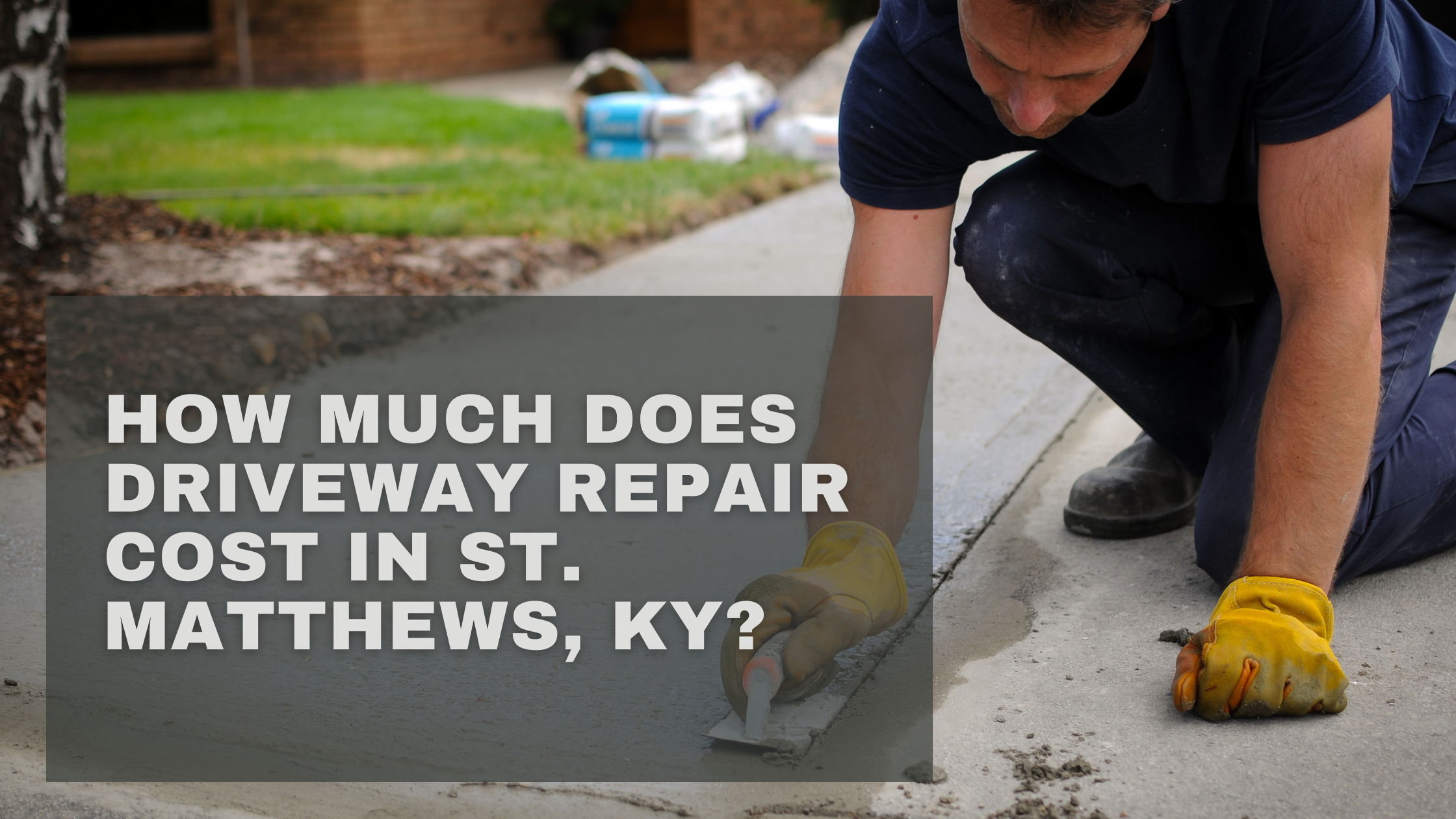
Cracks, lifted edges and sunken spots are common on older driveways in St. Matthews. The good news is that not every problem means a new driveway. Driveway repair in St. Matthews, KY typically costs anywhere from about $1.50 to $4.50 per square foot for minor fixes, while full replacement can run $7 to $13 per square foot or more. Where your driveway falls in that range depends on what’s wrong with it.
This guide walks through the repair options, what each one typically costs, and how to tell when it’s time to stop patching and start over.
Typical Driveway Repair Costs in St. Matthews, KY
Many St. Matthews driveways are narrow or sit close to the house, so a typical driveway is often in the 500 to 800 square foot range. Here are rough ballparks for a 600 square foot driveway:
| Repair option | Rough cost per sq ft | Approx. cost (600 sq ft) |
| Crack sealing and minor repairs | $1.50 – $4.50 | $900 – $2,700 |
| Sealcoating (protection, not repair) | Lower than repair | Ask for a quote |
| Milling and resurfacing | $2 – $5 | $1,200 – $3,000 |
| Full removal and replacement | $7 – $13 | $4,200 – $7,800 |
These are estimates, not quotes. Tree root damage, drainage problems and the condition of the base underneath can all change the final price.
Common Driveway Problems in St. Matthews
Every neighborhood has its own pattern. These are the problems we see most often around St. Matthews and the 40207 area:
Tree root damage. Mature trees line many St. Matthews streets. Over time their roots lift and crack the asphalt, especially near the street and along the edges. Cutting out and repaving the damaged section is usually the fix, and the cost depends on how big the area is and whether the roots will keep pushing up the new surface.
Layers of old patches. Many driveways here have been patched or overlaid several times. Each layer hides the real problem underneath, and the cracks keep coming back. Once a driveway has been patched repeatedly, replacement often becomes the better value.
Drainage and pooling. Low spots near garages and walkways hold water. In Kentucky’s freeze-thaw winters, that water turns into cracks and potholes. Repairing the surface without fixing the water problem means the damage returns.
Faded, dry surfaces. Driveways that were never sealcoated turn gray and brittle, and start breaking up at the edges.
Narrow, tight drives. Older lots often have driveways close to fences, landscaping and the house. These need careful edge work and the right-sized equipment, which can affect the price.
Your Repair Options, From Smallest to Biggest
1. Crack sealing
If cracks are small and the driveway is still level, crack sealing is the cheapest way to stop water from getting under the asphalt. Hot-pour sealing fills the cracks and keeps them from spreading.
2. Patching and edge repair
For broken edges, sunken spots and small damaged areas, asphalt patching removes the bad section and replaces it. Small potholes can be handled quickly with pothole repair before they grow.
3. Sealcoating
Sealcoating isn’t a repair, but it protects a sound driveway from sun, water and salt, and keeps it dark and clean. Done on a regular schedule, sealcoating can delay the need for bigger repairs.
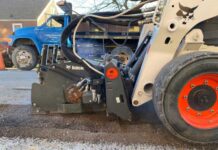
4. Milling and resurfacing
If the base is solid but the surface is worn, asphalt milling removes the top layer so a new layer can go down. It costs less than full replacement and gives you a fresh, even surface.
5. Full removal and replacement
If the driveway is sinking, rutted, or cracked across large areas, the base has likely failed. In that case, new driveway paving on a compacted stone base is the better long-term value than another round of repairs.
Repair or Replace? A Simple Way to Decide
Repair is usually enough when:
- Cracks are mostly small and the surface is still level
- Damage is limited to one or two areas, such as an edge or a root-lifted corner
- The driveway is under about 15 to 20 years old
- Water drains away properly
Replacement usually makes more sense when:
- Cracks run across the whole driveway
- The surface is sinking or rutted
- It has been patched many times and problems keep returning
- Water pools in several places
A well-built asphalt driveway can last 15 to 25 years, and sealing cracks early helps it get there. If you’re unsure which category your driveway is in, an in-person look at the base is the only way to know for sure.
What Affects the Price?
- Size. Square footage is the biggest factor. Narrow St. Matthews driveways tend to be smaller, which keeps total costs lower.
- Tree roots. Root removal and repaving the lifted section adds labor. If roots will keep growing, there may be extra steps to protect the new surface.
- Base condition. A failing base needs to be repaired or rebuilt, which raises the cost but prevents early failure.
- Drainage. Fixing low spots and runoff protects your investment.
- Access. Tight spaces next to the house, fences and landscaping may need smaller equipment and slower, more careful work.
- Timing. Spring, summer and early fall are the best seasons, when it’s warm enough for asphalt to compact properly.
How to Make Your Repair Last
- Seal small cracks early, before water gets under the asphalt.
- Schedule sealcoating every few years once the driveway is in good shape.
- Trim or manage tree roots near the driveway where possible.
- Keep water moving away from garages and walkways.
Frequently Asked Questions
Can you fix a driveway damaged by tree roots? Yes. The damaged section is removed, the lifted base is dealt with, and the area is repaved so it blends in with the rest of the driveway. If the roots will keep growing, your contractor should explain the options before starting.
How do I know if my driveway needs repair or full replacement? If cracks are small and the surface is still level, crack sealing, patching and sealcoating usually do the job. If cracks cover the whole driveway, the surface is sinking, or it has been patched many times, replacement is usually better value.
Do you work on small or narrow driveways? Yes. Many St. Matthews driveways are narrow or close to the house, and the equipment and edge work are planned around that.
When is the best time to repair a driveway in St. Matthews, KY? Spring, summer and early fall. Sealcoating and crack sealing are also best done in warm, dry weather.
Do you give free estimates? Yes. Call 502-459-7283 or request an estimate online, and we’ll come out and look at the driveway in person.
Get an Accurate Price for Your St. Matthews Driveway
The only way to know your real cost is to have someone look at the driveway in person. Commonwealth Paving is a family-owned Louisville paving contractor that has been serving St. Matthews and the East End since 1988. We’ll check the surface, base and drainage, then tell you whether it needs a repair or a full replacement, with a clear written price and no surprises.
Learn more about our paving services in St. Matthews, KY, or request a free estimate today. You can also call us at 502-459-7283 (Monday to Friday, 9am to 5pm).
Have a long private drive instead? We also serve Prospect, KY. For more tips, visit our blog.