
Cost of Speed Bumps for Asphalt: Complete Pricing Guide for 2026
When it comes to improving traffic safety, protecting pedestrians, and reducing vehicle speeds, speed bumps for asphalt remain one of the most effective solutions available. Whether you manage a commercial parking lot, industrial facility, apartment complex, school, church, or private roadway, installing the right speed control system can significantly reduce the risk of accidents while protecting both people and property.
As we move through 2026, property owners are becoming more aware that investing in quality traffic-calming solutions is far less expensive than dealing with vehicle collisions, liability claims, and pavement damage. However, one of the most common questions is, “How much do speed bumps for asphalt actually cost?”
The answer depends on several factors, including the type of speed bump, material quality, installation method, project size, site preparation, and long-term maintenance needs.

Understanding the Cost of Speed Bumps for Asphalt
The total price of speed bumps for asphalt is not simply the cost of purchasing the bump itself. A professional installation involves several components that contribute to the overall investment.
Pricing generally includes:
- Material selection
- Surface preparation
- Asphalt condition
- Installation labor
- Fasteners and anchors
- Traffic layout planning
- Site accessibility
- Long-term durability expectations
Every property is unique, which means pricing varies based on project requirements rather than following a single fixed amount.
For this reason, obtaining a professional site evaluation is always the most accurate way to estimate costs.
What Affects the Price?
Several variables influence the final cost of installing speed bumps for asphalt.
One of the biggest factors is the overall length required. Larger parking lots with multiple traffic lanes naturally require more materials and installation time than a small private driveway.
The condition of the existing asphalt also plays a major role. Fresh, smooth pavement allows for faster installation, while cracked or deteriorated surfaces may require repairs before installation begins.
Traffic volume is another consideration. Areas with heavy commercial traffic often require stronger, more durable solutions that can withstand continuous use without shifting or deteriorating.
Accessibility also affects installation costs. Locations with limited working space, restricted traffic access, or complex layouts may require additional labor and planning.
Different Types of Speed Bumps
Not all speed bumps for asphalt are the same. Choosing the right option depends on traffic speed, vehicle type, and expected usage.
Common options include:
- Rubber speed bumps
- Recycled rubber systems
- Heavy-duty modular bumps
- Asphalt-built speed bumps
- Temporary removable systems
- Permanent traffic calming installations
Each option has its own cost range, lifespan, and maintenance requirements.
Material Quality Makes a Difference
One of the biggest mistakes property owners make is selecting the lowest-priced product available.
Low-quality materials may initially save money but often require replacement much sooner. Cracking, fading, loosening hardware, and surface deterioration can quickly increase long-term expenses.
High-quality speed bumps for asphalt generally provide:
- Better UV resistance
- Stronger impact resistance
- Improved visibility
- Longer service life
- Reduced maintenance
- Greater overall value
Investing in quality materials often lowers the total ownership cost over time.
Installation Costs Explained
Professional installation is one of the most important parts of any traffic safety project.
Proper installation ensures the speed bump remains securely fastened under repeated vehicle loads while maintaining safe traffic flow.
Installation costs typically include measuring the location, preparing the asphalt surface, drilling anchor holes when necessary, fastening the speed bump securely, applying reflective markings if required, and cleaning the work area.
Professional installation also reduces the risk of uneven placement, loose hardware, or premature failure.
Site Preparation Expenses
Before installing speed bumps for asphalt, the pavement should be inspected carefully.
Older asphalt may contain:
- Surface cracks
- Potholes
- Loose aggregate
- Uneven settlement
- Water damage
If these issues exist, repairs may be recommended before installation begins.
Although site preparation increases initial costs, it significantly improves installation quality and extends the lifespan of both the asphalt and the speed bump.
Size and Quantity Influence Pricing
The number of speed bumps required directly impacts the project budget.
A single driveway installation naturally costs less than equipping an entire shopping center or industrial complex.
Larger projects often involve:
- Multiple driving lanes
- Crosswalk protection
- Pedestrian zones
- Entrance control
- Loading dock traffic
- Emergency vehicle routes
Comprehensive traffic planning helps determine the optimal placement while maximizing safety and cost efficiency.
Commercial Properties Often Require Stronger Solutions
Commercial parking lots experience much higher traffic volumes than residential properties.
Delivery trucks, service vehicles, employee traffic, customer vehicles, and commercial equipment all place greater stress on pavement and traffic calming devices.
Because of these demands, commercial-grade speed bumps for asphalt are typically designed with stronger materials and more secure anchoring systems.
Although the initial investment may be higher, commercial installations generally provide better long-term performance.
Residential Installations
Residential communities often install speed bumps for asphalt to reduce speeding and improve neighborhood safety.
Typical installation areas include:
- Private roads
- Gated communities
- Apartment complexes
- HOA developments
- Shared driveways
Since residential traffic is generally lighter than commercial traffic, installation requirements may differ depending on vehicle volume and local conditions.
Industrial Facilities
Industrial properties present unique installation challenges.
Forklifts, delivery trucks, semi-trailers, and heavy equipment require specialized traffic management solutions.
Installing the wrong type of speed bump can interfere with daily operations or create unnecessary wear on equipment.
Professional planning ensures the correct height, width, and placement are selected for the specific environment.
Parking Lot Applications
Parking lots are among the most common locations for speed bumps for asphalt.
Vehicles frequently accelerate between parking rows, creating safety concerns for pedestrians.
Strategically placed speed bumps help:
- Reduce speeding
- Protect pedestrians
- Improve traffic flow
- Reduce accident risks
- Increase driver awareness
Parking lot installations also contribute to a safer customer experience.
Maintenance Costs
One advantage of quality speed bumps for asphalt is their relatively low maintenance requirements.

Routine inspections help identify loose anchors, worn reflective markings, or minor movement before larger problems develop.
Basic maintenance may include tightening hardware, replacing reflective elements, cleaning accumulated debris, and checking surrounding asphalt for signs of wear.
Preventive maintenance is considerably less expensive than replacing damaged installations.
Long-Term Value
While many property owners focus on initial pricing, long-term value is often the better measurement.
A professionally installed speed bump can remain effective for many years with minimal maintenance.
The investment may help reduce:
- Vehicle accidents
- Property damage
- Insurance claims
- Pavement repairs
- Pedestrian injuries
- Liability exposure
When viewed over its entire lifespan, quality installation often delivers an excellent return on investment.
Why Professional Installation Matters
Installing speed bumps for asphalt involves much more than simply placing materials on the pavement.
Proper placement requires understanding:
Vehicle approach angles
Traffic speed
Drainage patterns
Emergency access
Pedestrian movement
Visibility
Surface condition
Professional installation minimizes future maintenance while ensuring compliance with traffic safety standards.
Choosing the Right Location
Location is one of the most important factors affecting effectiveness.
Installing a speed bump in the wrong location may reduce its performance or create unnecessary driver frustration.
Professional planning evaluates:
- Vehicle approach distances
- Intersections
- Parking lot entrances
- Crosswalks
- Curves
- Blind spots
- Traffic patterns
Correct placement maximizes both safety and driver compliance.
Asphalt Condition Impacts Performance
Even the highest-quality speed bumps for asphalt depend on a stable pavement surface.
If the underlying asphalt is severely deteriorated, anchors may loosen over time.
Before installation, pavement inspections help identify structural issues that should be addressed first.
Healthy asphalt provides a stronger foundation, resulting in a longer-lasting installation.
Weather Considerations
Louisville experiences varying weather conditions throughout the year, including heat, freezing temperatures, rain, and seasonal changes.
These environmental factors influence pavement expansion, contraction, and wear.
Selecting materials designed for changing weather conditions helps maintain performance throughout the seasons while reducing maintenance costs.
Planning for Future Traffic Growth
Businesses often expand over time.
An installation that works well today should continue meeting future traffic demands.
Planning ahead may include additional traffic lanes, expanded parking, increased delivery vehicles, or new pedestrian walkways.
Choosing scalable speed bumps for asphalt allows future modifications without replacing the entire system.
Why Property Owners Continue Investing in Speed Bumps
The popularity of speed bumps for asphalt continues growing because they provide immediate, visible traffic calming.
Drivers naturally slow down, creating safer environments for employees, customers, residents, visitors, and pedestrians.
For many property owners, this relatively small investment helps prevent significantly larger expenses related to accidents and property damage.
Safety improvements also enhance the overall appearance and professionalism of a property.
Work with Commonwealth Paving for Professional Asphalt Traffic Safety Solutions
If you’re planning to install speed bumps for asphalt, working with an experienced paving contractor can make all the difference. Proper planning, quality materials, and expert installation help ensure long-lasting performance while protecting your investment.
Commonwealth Paving specializes in asphalt paving and traffic safety solutions for commercial and industrial properties. Whether you need assistance selecting the right speed bumps, preparing existing pavement, or completing a professional installation, the team can provide solutions tailored to your property’s specific needs.
For more information or to request a consultation, contact Commonwealth Paving today.
Commonwealth Paving
136 Outer Loop
Louisville, Kentucky 40214
Toll-Free: +1 502 459 7283
Investing in professionally installed speed bumps for asphalt is more than a traffic control decision—it’s an investment in safety, property protection, and long-term pavement performance. By understanding the factors that influence pricing in 2026, property owners can confidently choose solutions that deliver lasting value while creating safer environments for everyone who visits their property.
DIY vs Professional Installation of Speed Bumps for Asphalt: What to Choose?
Installing speed bumps for asphalt is one of the smartest ways to improve traffic safety on commercial properties, industrial facilities, apartment complexes, schools, churches, and private roads. Speed bumps encourage drivers to slow down, helping reduce accidents, protect pedestrians, and minimize damage to vehicles and property.
Once you’ve decided to install speed bumps for asphalt, another important question arises: Should you install them yourself or hire professionals?
At first glance, a DIY installation may seem like the more affordable option. However, improper installation can lead to loose anchors, damaged pavement, ineffective traffic control, and costly repairs in the future. On the other hand, professional installation provides precision, durability, and long-term value.
This guide compares DIY and professional installation of speed bumps for asphalt, helping property owners understand which option delivers the best results in 2026.
Understanding Speed Bumps for Asphalt Installation
Installing speed bumps for asphalt involves much more than placing a bump across a roadway. The installation must account for pavement condition, traffic flow, vehicle types, drainage, spacing, visibility, and long-term durability.
Properly installed speed bumps should effectively reduce vehicle speed without creating unnecessary hazards. Poor installation, however, may cause vehicles to avoid the bump, damage suspension systems, or even loosen from the pavement over time.
The success of any speed bump project depends on careful planning and precise installation.
What Is a DIY Installation?
DIY installation means the property owner or maintenance staff purchases speed bumps for asphalt and installs them without hiring a professional contractor.
Many modular speed bumps are marketed as easy-to-install products, making DIY an attractive option for smaller projects. Installation usually involves measuring the location, drilling holes into the asphalt, securing the bump with anchors, and checking that it sits evenly on the surface.
While this may sound straightforward, there are several factors that can affect the quality and lifespan of the installation.
Advantages of DIY Installation
A DIY approach can offer some benefits for certain property owners.
The most noticeable advantage is reduced labor costs. Since you are handling the installation yourself, you only pay for materials and necessary tools.
DIY installation also allows scheduling flexibility. You can complete the project whenever it is most convenient, avoiding the need to coordinate with a contractor.
For very small properties or private driveways, a simple installation may be manageable if the pavement is in excellent condition and the installer has experience using power tools.
Challenges of DIY Installation
Although DIY may appear cost-effective initially, it comes with several challenges.
Without proper planning, speed bumps may be installed too close to intersections, curves, entrances, or pedestrian crossings. Incorrect placement reduces their effectiveness and may even create safety concerns.
Drilling into asphalt also requires care. Improper drilling can crack the pavement, weaken anchor points, or allow moisture to penetrate beneath the surface.
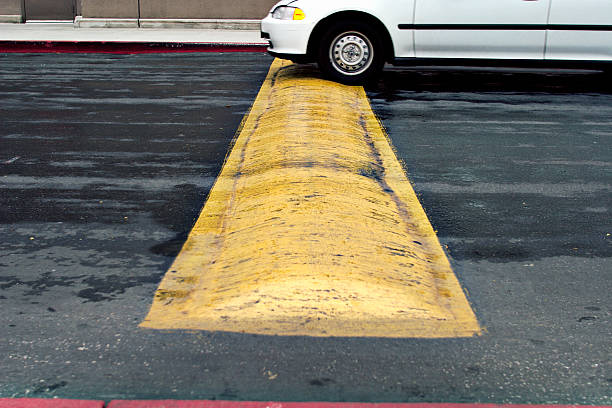
If the speed bump is not perfectly aligned, vehicles may experience uneven impact, increasing wear on both the bump and the surrounding pavement.
These mistakes often result in additional repair costs that exceed the original savings.
Importance of Correct Placement
Location plays a critical role in the effectiveness of speed bumps for asphalt.
Professional installers evaluate several factors before determining placement, including traffic speed, pedestrian activity, parking lot layout, visibility, drainage patterns, and emergency vehicle access.
Simply installing a speed bump wherever speeding occurs may not produce the desired results.
Proper positioning helps maximize safety while maintaining smooth traffic flow.
Asphalt Condition Matters
Before installing speed bumps for asphalt, the pavement itself should be carefully inspected.
Older asphalt may contain:
- Surface cracks
- Potholes
- Loose aggregate
- Weak base layers
- Water damage
- Uneven settlement
Installing directly over damaged pavement often leads to loose anchors, movement, and premature failure.
Professionals identify these issues before installation and recommend repairs when necessary.
Professional Installation Explained
Professional installation involves much more than attaching a speed bump to the pavement.
Experienced installers begin by evaluating the site, measuring traffic patterns, selecting appropriate materials, preparing the surface, and ensuring every component is securely installed.
Professional installation also includes verifying alignment, anchor depth, spacing, and overall safety before reopening the area to vehicle traffic.
The result is a stronger, longer-lasting installation that performs as intended.
Better Equipment Produces Better Results
Professional contractors use specialized equipment designed specifically for asphalt installations.
These tools create cleaner anchor holes, ensure consistent drilling depth, and reduce the risk of pavement damage.
Professional equipment also allows installers to complete projects more efficiently while maintaining higher installation quality.
Long-Term Durability
One of the biggest advantages of professional installation is durability.
Correctly installed speed bumps for asphalt remain securely attached despite years of vehicle traffic, changing weather conditions, and repeated impact.
Professional installers understand how asphalt expands and contracts throughout seasonal temperature changes, helping prevent premature loosening.
This longer lifespan often makes professional installation more economical over time.
Safety Considerations
Safety extends beyond slowing traffic.
Improperly installed speed bumps may become hazards themselves if anchors loosen or the bump shifts from its original position.
Professional installation minimizes these risks by ensuring secure fastening and proper alignment.
This protects both drivers and pedestrians while reducing liability for property owners.
Traffic Flow Planning
Every parking lot or roadway has unique traffic patterns.
Professional installers analyze:
- Entry and exit points
- Pedestrian crossings
- Parking rows
- Delivery routes
- Emergency vehicle access
- Turning radiuses
Proper planning ensures speed bumps for asphalt slow vehicles without disrupting normal operations.
Commercial Properties Require Greater Precision
Commercial parking lots experience continuous traffic throughout the day.
Customer vehicles, delivery trucks, maintenance equipment, and employee traffic all create different loading conditions.
Professionally installed speed bumps for asphalt are designed to handle these demands while maintaining structural integrity.
Commercial property owners often benefit from expert planning because even minor installation errors can affect traffic flow and customer experience.
Industrial Facilities Present Unique Challenges
Industrial environments frequently involve forklifts, box trucks, trailers, and heavy commercial vehicles.
These vehicles require carefully selected speed bump designs that reduce speed without interfering with operations.
Professional installers understand these requirements and recommend suitable solutions for industrial traffic conditions.
Weather and Environmental Factors
Weather significantly affects asphalt performance.
Heat causes pavement expansion, while freezing temperatures create contraction. Rainwater can also penetrate poorly sealed anchor holes, leading to pavement deterioration over time.
Professional installers account for these environmental factors during installation, helping ensure long-lasting performance.
Future Maintenance
Maintenance requirements depend heavily on installation quality.
Properly installed speed bumps for asphalt generally require only occasional inspections and minor maintenance.
Routine maintenance may include tightening anchors, replacing reflective markings, removing accumulated debris, and checking surrounding pavement.
DIY installations often require more frequent adjustments due to alignment issues or loose hardware.
Hidden Costs of DIY Installation
Many property owners compare only the initial installation costs without considering long-term expenses.
DIY projects may involve unexpected costs such as purchasing specialized drill bits, heavy-duty anchors, safety equipment, replacement hardware, pavement repairs, or correcting installation mistakes.
If errors occur, the total project cost may ultimately exceed professional installation.
Considering the full lifecycle cost often provides a more accurate comparison.
When DIY May Be Appropriate
DIY installation can be suitable under certain circumstances.
Small private driveways or very low-traffic properties may be reasonable candidates if the installer has the proper tools, experience, and an understanding of correct placement.
However, even smaller projects should begin with a thorough evaluation of the pavement condition to ensure a secure installation.
When Professional Installation Is the Better Choice
Professional installation is generally the preferred option for:
- Commercial parking lots
- Shopping centers
- Industrial facilities
- Schools
- Apartment communities
- Churches
- Office complexes
- Healthcare facilities
These properties typically experience higher traffic volumes and require reliable, long-lasting traffic calming solutions.
Professional installation helps ensure compliance with safety standards while maximizing durability and performance.
Why Quality Installation Protects Your Investment
The purpose of speed bumps for asphalt is to improve safety for years—not just during the first few months after installation.
Choosing experienced professionals helps protect your investment by reducing the likelihood of premature failure, pavement damage, or recurring maintenance costs.
A properly installed speed bump delivers consistent performance, improves driver awareness, and enhances overall property safety.
Why Choose Commonwealth Paving?
When it comes to installing speed bumps for asphalt, experience, precision, and quality workmanship make a significant difference. Whether you’re improving safety in a commercial parking lot, industrial facility, or private roadway, professional installation helps ensure lasting results.
Commonwealth Paving provides expert asphalt paving and traffic safety solutions designed to meet the unique needs of commercial and industrial properties. From evaluating pavement conditions to recommending the right speed bump solution and completing a professional installation, every project is handled with attention to quality and long-term performance.
If you’re unsure whether DIY or professional installation is the right choice, the experienced team at Commonwealth Paving can help you evaluate your property and recommend the safest, most cost-effective solution.
Commonwealth Paving
136 Outer Loop
Louisville, Kentucky 40214
Toll-Free: +1 502 459 7283
Ultimately, while DIY installation may seem appealing for small, low-traffic areas, professional installation remains the best choice for most commercial and industrial properties. Professionally installed speed bumps for asphalt offer superior durability, improved safety, better traffic control, and long-term value—making them a worthwhile investment for any property owner focused on protecting people, vehicles, and pavement.
Address
Commonwealth Paving, 136 Outerloop, Louisville, Kentucky 40214
Phone: 502-459-7283, Fax: 502-456-2678
Opening Hours
| Monday | 9:00 AM – 5:00 PM |
| Tuesday | 9:00 AM – 5:00 PM |
| Wednesday | 9:00 AM – 5:00 PM |
| Thursday | 9:00 AM – 5:00 PM |
| Friday | 9:00 AM – 5:00 PM |
| Saturday | Closed |
| Sunday | Closed |