
Asphalt Driveway Sealer: Everything You Need to Know Before Sealing Your Driveway
Your driveway is more than a place to park your vehicle. It is one of the first parts of your property that visitors notice, and it plays an important role in providing a smooth, reliable surface for everyday use. Because asphalt driveways are constantly exposed to sunlight, rain, vehicle traffic, temperature changes, and other environmental conditions, they require proper maintenance to remain in good condition.
One of the maintenance options property owners often consider is using an asphalt driveway sealer. Sealing an asphalt driveway can help protect the surface from certain environmental stresses while improving its overall appearance. However, sealing is not simply a matter of applying a product whenever the pavement looks faded. Timing, pavement condition, preparation, weather, and application all matter.
For homeowners and property owners in Louisville, Kentucky, Commonwealth Paving provides professional paving and asphalt maintenance solutions. Commonwealth Paving is located at 136 Outer Loop, Louisville, Kentucky 40214. For questions about driveway maintenance and paving services, call +1 502 459 7283.
Everything You Need to Know About Asphalt Driveway Sealer
What Is an Asphalt Driveway Sealer?
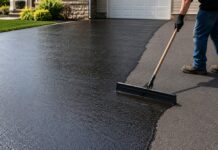
An asphalt driveway sealer is a protective coating applied to the surface of asphalt pavement. Its purpose is to create a layer over the pavement that can help protect the surface from exposure to weather, sunlight, moisture, and everyday use.
Fresh asphalt typically has a rich, dark appearance. Over time, exposure to sunlight and environmental conditions can cause asphalt to become lighter and more weathered-looking. Sealing may help restore a darker, more uniform appearance while providing an additional layer of surface protection.
However, driveway sealer should not be viewed as a solution for every asphalt problem. It is primarily a maintenance measure. Significant cracks, potholes, drainage problems, or structural pavement issues may need to be addressed separately before sealing is considered.
Why Does Asphalt Need Protection?
Asphalt is durable, but it is not completely resistant to environmental damage. Every day, your driveway is exposed to conditions that can gradually affect the pavement.
Sunlight can contribute to oxidation and surface aging. Rain and moisture can affect cracks and damaged areas. Vehicle traffic creates repeated stress. Seasonal temperature changes can cause the pavement to expand and contract.
Over time, these factors can contribute to fading, surface wear, cracking, and other forms of deterioration.
Using an asphalt driveway sealer as part of a broader maintenance strategy may help protect the pavement surface from some of these stresses. Regular maintenance can also make it easier to identify developing problems before they become more extensive.
What Are the Potential Benefits of Sealing?
A properly maintained and appropriately sealed asphalt driveway can offer several potential benefits.
First, sealing can improve the appearance of an aging asphalt surface. The darker finish can make the driveway look cleaner and more recently maintained.
Second, a sealer can provide an additional surface barrier against environmental exposure. This may help reduce the effects of sunlight and moisture on the pavement surface.
Third, sealing can become part of a proactive pavement maintenance routine. Instead of waiting until the driveway has significant deterioration, property owners can monitor its condition and perform appropriate maintenance at different stages of its life.
The effectiveness of sealing depends heavily on the condition of the asphalt and whether the surface is properly prepared before application.
When Should You Consider Sealing Your Driveway?
Timing is an important part of driveway maintenance. Sealing too soon or applying sealer to pavement that is not ready can affect the result.
A driveway should generally be evaluated based on its age, surface condition, previous maintenance, weather exposure, and level of traffic.
If the pavement is relatively new, it may need time to properly cure before a sealer is applied. On the other hand, an older driveway with extensive deterioration may require repairs or other maintenance before sealing.
Rather than relying solely on a calendar, consider the actual condition of the pavement. A professional evaluation can help determine whether sealing is appropriate.
What Should Be Done Before Applying Sealer?
Preparation is one of the most important parts of any sealing project. Applying an asphalt driveway sealer over a dirty, damaged, or poorly prepared surface may produce an unsatisfactory result.
The pavement should be inspected for cracks, potholes, loose material, oil contamination, vegetation, dirt, and other surface problems.
Cracks may need appropriate repair before the sealing process. Potholes or severely deteriorated areas may require more extensive attention.
The driveway should also be properly cleaned so that dirt and debris do not interfere with the sealer’s ability to adhere to the pavement.
Good preparation takes time, but it can make a significant difference in the quality and durability of the finished surface.
Should Cracks Be Repaired Before Sealing?
In many situations, cracks should be addressed before applying a sealer. A sealer is not intended to replace proper crack repair.
Small cracks can allow water to reach areas beneath the pavement. If cracks remain open, sealing the surrounding surface does not necessarily resolve the underlying concern.
Property owners should inspect the driveway carefully before sealing and determine whether visible cracks require attention.
Addressing pavement problems before applying an asphalt driveway sealer can help create a more uniform finished surface and support a more effective maintenance strategy.
What About Potholes and Damaged Areas?
Potholes are more than surface imperfections. They can indicate areas where asphalt and supporting materials have deteriorated.
Applying sealer over a pothole does not restore the damaged pavement structure. Potholes should be evaluated and repaired appropriately before the driveway is considered ready for sealing.

The same principle applies to areas where asphalt is severely broken, loose, or uneven.
A quality maintenance approach focuses on correcting significant pavement problems first and then using sealing as a protective maintenance step when appropriate.
Weather Matters During Sealing
Weather conditions can have a significant effect on an asphalt sealing project.
Sealer needs suitable conditions to properly dry and cure. Rain shortly after application can interfere with the process, while extremely unfavorable temperatures can also affect performance.
For this reason, sealing should be planned around appropriate weather conditions rather than simply choosing a convenient day.
Property owners should also consider how long the driveway will need to remain free from vehicle traffic after sealing. Allowing sufficient curing time can help protect the newly treated surface.
How Often Should an Asphalt Driveway Be Sealed?
There is no single schedule that works for every driveway.
The appropriate frequency depends on several factors, including the age and condition of the pavement, local weather exposure, traffic volume, previous sealing, drainage, and the overall quality of the asphalt.
Sealing too frequently is not necessarily better. The pavement should be evaluated to determine whether another application is actually needed.
Instead of automatically sealing the driveway at a fixed interval, property owners can monitor the surface and seek professional advice when its appearance or condition begins to indicate that maintenance may be beneficial.
Signs Your Driveway May Need Maintenance
Your driveway can provide several visual clues when it needs attention. Look for changes rather than waiting until significant deterioration occurs.
Common signs include:
- The asphalt has become noticeably faded or gray.
- Small cracks are becoming more visible.
- The surface appears dry or weathered.
- Water is collecting in certain areas.
- Edges or sections of pavement are beginning to deteriorate.
These signs do not necessarily mean the driveway needs immediate sealing. They indicate that the pavement should be evaluated so the appropriate maintenance can be determined.
Can Sealer Fix Existing Pavement Problems?
One of the most important things to understand about an asphalt driveway sealer is that it is not a cure-all.
Sealer can provide surface protection, but it cannot correct major structural problems, eliminate large potholes, repair unstable pavement, or resolve serious drainage issues.
If the driveway has extensive cracking or deterioration, applying a coating without addressing those issues first may only hide the problem temporarily.
Effective pavement maintenance starts with understanding what the asphalt actually needs.
Why Proper Application Matters
Even a quality sealer may not perform as expected if it is applied incorrectly.
The pavement needs to be prepared properly, and the application should provide appropriate coverage across the surface. Excessive application or uneven coverage can affect the appearance and performance of the finished pavement.
Professional application can also help ensure that cracks, edges, drainage areas, and other pavement conditions are considered before the project begins.
For property owners who want a consistent result, having the driveway evaluated and maintained professionally can be a practical choice.
Sealing Can Improve Driveway Appearance
One of the most noticeable benefits of an asphalt driveway sealer is its effect on appearance.
Asphalt naturally becomes lighter as it ages. A properly applied sealer can give the pavement a darker, more consistent appearance, helping the driveway look cleaner and better maintained.
Appearance is not the only consideration, but it can be important for homeowners who take pride in their property.
A well-maintained driveway can complement the surrounding landscape, home exterior, and other property improvements.
Sealing Is Part of a Larger Maintenance Strategy
A driveway should not be maintained through sealing alone.
A comprehensive maintenance approach can include regular inspections, crack repair, drainage management, cleaning, timely attention to damaged areas, and appropriate sealing when conditions are suitable.
The goal is to identify problems early and protect the pavement throughout its useful life.
An asphalt driveway sealer can be an effective part of this strategy when the pavement is in suitable condition and the surface is properly prepared.
Avoid Waiting Until the Driveway Is Seriously Damaged
Preventive maintenance is generally easier than dealing with extensive pavement deterioration.
If small cracks, fading, and surface wear are ignored for years, the driveway may eventually require more substantial repairs.
That does not mean every driveway problem can be prevented through sealing. However, regular maintenance allows property owners to identify concerns sooner and make decisions before deterioration becomes widespread.
Taking care of asphalt while it is still in reasonably good condition can help protect the investment you have already made in your driveway.
Make an Informed Decision About Driveway Sealing
Before choosing an asphalt driveway sealer, look beyond the color or appearance of the pavement. Consider the driveway’s age, surface condition, cracking, drainage, traffic, previous maintenance, and exposure to weather.
Ask whether the pavement needs repairs first. Determine whether the weather is appropriate for the project. Make sure the surface can be properly prepared.
Most importantly, remember that sealing works best as part of a maintenance plan rather than as a quick solution for serious pavement problems.
Protect Your Driveway With Timely Maintenance
Your asphalt driveway is exposed to demanding conditions every day. Sunlight, rain, traffic, temperature changes, and time can gradually affect its appearance and performance.
Using an asphalt driveway sealer at the appropriate time can be one way to support pavement maintenance and improve the appearance of an aging surface. However, preparation and pavement condition are just as important as the sealer itself.
Regular inspections and timely maintenance can help property owners recognize problems early and determine what their driveway actually needs.
If you are in Louisville, Kentucky, and want to learn more about asphalt driveway maintenance, Commonwealth Paving can help you evaluate your pavement and discuss appropriate solutions.
Commonwealth Paving is located at 136 Outer Loop, Louisville, Kentucky 40214. To discuss your driveway or learn more about using an asphalt driveway sealer, call +1 502 459 7283.
A well-maintained driveway does not happen by accident. With the right maintenance at the right time, you can help preserve its appearance, usability, and long-term condition.
How Asphalt Driveway Sealer Extends Pavement Life and Improves Appearance
An asphalt driveway does more than provide a place to park vehicles. It contributes to the overall appearance, accessibility, and functionality of a property. Every day, however, the pavement is exposed to sunlight, rain, changing temperatures, vehicle traffic, dirt, and other environmental stresses. Without regular maintenance, these conditions can gradually cause asphalt to fade, dry out, crack, and deteriorate.
One maintenance option property owners often consider is an asphalt driveway sealer. When applied at the appropriate time and to properly prepared pavement, sealer can provide an additional layer of surface protection while giving an aging driveway a darker, cleaner, and more uniform appearance.
Understanding how an asphalt driveway sealer works, what it can and cannot do, and when it should be applied can help property owners make smarter pavement maintenance decisions.
For property owners in Louisville, Kentucky, Commonwealth Paving provides professional paving and asphalt maintenance solutions. Located at 136 Outer Loop, Louisville, Kentucky 40214, Commonwealth Paving can be reached at +1 502 459 7283 for information about asphalt pavement and driveway maintenance.
How Asphalt Driveway Sealer Extends Pavement Life and Improves Appearance
Asphalt Is Constantly Exposed to Wear
Asphalt may be durable, but it is not immune to the effects of everyday exposure. A driveway experiences repeated vehicle traffic and remains exposed to changing weather conditions throughout the year.
Sunlight can gradually contribute to oxidation and surface aging. Rain introduces moisture, while seasonal temperature changes can cause pavement to expand and contract. Vehicle movement creates additional stress on the surface.
Over time, these factors can cause the asphalt to become faded and weathered. Existing cracks may become more noticeable, and areas of deterioration can gradually develop.
Regular maintenance helps property owners respond to these changes before the pavement becomes severely damaged.
What Does an Asphalt Driveway Sealer Do?
An asphalt driveway sealer is a protective coating applied over an asphalt surface. Its purpose is to provide an additional surface layer that can help protect pavement from environmental exposure and everyday wear.
Sealer can also improve the visual appearance of asphalt. A faded gray driveway may regain a darker and more consistent appearance after proper sealing.
However, sealer should be considered a maintenance treatment rather than a complete repair solution. It cannot correct major structural problems, eliminate significant potholes, or repair severely deteriorated asphalt.
The condition of the pavement should always be considered before sealing.
Sealing Can Help Protect Against Environmental Exposure
One of the reasons property owners consider an asphalt driveway sealer is to provide additional protection against environmental conditions.
Asphalt is exposed to sunlight and weather every day. Over time, this exposure can contribute to surface aging.
A properly applied sealer creates a coating over the pavement surface. This additional layer can help reduce direct exposure to certain environmental stresses and support the overall maintenance of the asphalt.
The effectiveness of sealing depends on pavement condition, preparation, application, weather, and other factors. Proper maintenance is therefore about more than simply putting a coating on the driveway.
Moisture Can Contribute to Pavement Deterioration
Water can become a significant concern when asphalt has cracks or damaged areas. Open cracks may allow moisture to move into the pavement structure, where it can contribute to deterioration depending on drainage and underlying conditions.
Sealing a suitable asphalt surface can provide an additional protective layer, but it should not be used to cover up significant pavement problems.
Cracks, potholes, and damaged areas should be evaluated and addressed appropriately before sealing.
This is why a professional assessment can be valuable. Understanding the condition of the driveway first can help determine whether sealing is appropriate and whether additional maintenance should be completed beforehand.
Sealing Can Improve a Faded Driveway
One of the most immediate advantages of an asphalt driveway sealer is visual improvement.
Fresh asphalt has a deep, dark appearance. As pavement ages, sunlight and environmental exposure can cause the surface to become lighter and more gray.
A properly applied sealer can restore a darker appearance and create a more uniform surface. This can make the driveway look cleaner, newer, and better maintained.
Although appearance is only one part of pavement maintenance, it can make a noticeable difference to the overall presentation of a property.
A Better-Looking Driveway Can Improve Property Presentation
Your driveway is often visible from the street and may be one of the first parts of your property that visitors see.
Cracked, faded, or neglected pavement can make a property appear less maintained. A cleaner and more consistent asphalt surface can create a more polished appearance.
For homeowners who care about curb appeal, driveway maintenance can complement landscaping, exterior improvements, and other property upgrades.
Using an asphalt driveway sealer when appropriate can be one part of maintaining that appearance.
Sealing Works Best on Properly Maintained Asphalt
Sealing is not a replacement for repairing damaged pavement.
Before applying an asphalt driveway sealer, the surface should be inspected for cracks, potholes, loose asphalt, drainage problems, and other signs of deterioration.
If significant damage is present, those issues may need to be addressed first. Applying sealer over deteriorated pavement does not restore the underlying structure.
A successful maintenance strategy starts by determining what condition the asphalt is actually in.
Cracks Should Be Addressed Before Sealing
Cracks can provide pathways for water to enter the pavement. If they are ignored, they may become wider or spread into surrounding areas.
For that reason, crack maintenance should be considered before sealing the driveway.
A sealer may improve the appearance of the surrounding pavement, but it should not be expected to solve significant cracking problems.
Addressing cracks first can help create a cleaner and more consistent finished surface while supporting the overall pavement maintenance plan.
Potholes Require More Than a Surface Coating
Potholes are another problem that should not simply be covered with sealer.
A pothole can indicate that the asphalt and potentially the supporting materials beneath it have deteriorated. Applying a surface coating does not restore missing pavement or correct structural damage.
If potholes are present, the driveway should be evaluated to determine the appropriate repair.
Once necessary repairs have been completed and the pavement is in suitable condition, sealing may become an appropriate maintenance step.
Timing Is Important
When you apply an asphalt driveway sealer can affect the outcome.
New asphalt may need sufficient time to cure before sealing. Older pavement may need cleaning, crack repair, or other preparation before a coating can be applied.
Weather conditions are also important. Sealer generally needs appropriate conditions to dry and cure properly. Rain, unsuitable temperatures, or other unfavorable weather can interfere with the process.
Planning the project around suitable conditions helps support better results.
Proper Preparation Makes a Difference
A driveway should be properly prepared before sealer is applied. Dirt, debris, loose material, and other contaminants can interfere with the coating’s ability to adhere to the pavement.
The surface should be inspected and cleaned, while cracks and damaged areas should be addressed as appropriate.
Preparation may not be the most visible part of the project, but it can have a major effect on the final appearance and performance of the sealer.
A rushed application without proper preparation may produce uneven or disappointing results.
How Often Should You Seal an Asphalt Driveway?
There is no universal schedule for sealing every driveway.
The appropriate maintenance frequency depends on pavement age, traffic, weather exposure, surface condition, previous sealing, and other factors.
Some driveways may require attention sooner than others. A heavily used driveway exposed to significant weather conditions may age differently from a lightly used residential surface.
Rather than relying on a fixed timetable alone, property owners should monitor the pavement and consider its actual condition when deciding whether another application is appropriate.
Signs Your Driveway May Need Attention
A driveway can provide several clues that maintenance may be appropriate. Watch for:
- Noticeable fading or a gray, weathered appearance.
- Increasingly visible surface wear.
- Small cracks developing across the pavement.
- Areas that appear dry or aged.
- Minor surface deterioration.
These signs do not automatically mean that sealing is the correct solution. They indicate that the pavement should be evaluated.
If the driveway has extensive cracking, potholes, drainage issues, or structural deterioration, additional work may be necessary before a sealer is considered.
Sealing Can Be Part of a Preventive Maintenance Plan
Long pavement life depends on more than one maintenance treatment.
Regular inspections, prompt crack attention, drainage management, cleaning, appropriate repairs, and sealing can all play a role in maintaining asphalt.
An asphalt driveway sealer can provide a protective surface treatment when applied under suitable conditions. By including sealing within a broader pavement maintenance plan, property owners can take a proactive approach instead of waiting until the driveway has serious deterioration.
The objective is to protect the pavement while it remains in reasonably good condition.
Avoid Waiting for Major Pavement Damage
It is easy to ignore a faded driveway or a few small cracks because the pavement remains usable.
However, pavement problems can develop gradually. Once cracking becomes widespread or asphalt begins breaking apart, the maintenance requirements may become more extensive.
Regular attention gives property owners a better opportunity to identify changes and respond appropriately.
Sealing is most useful when it is part of proactive maintenance rather than an attempt to hide major pavement damage.
Professional Evaluation Can Help You Decide
Property owners may not always know whether their driveway needs sealing, crack repair, resurfacing, or another form of maintenance.
A professional evaluation can consider the pavement’s age, surface condition, cracking, traffic, drainage, and environmental exposure.
This helps determine whether an asphalt driveway sealer is appropriate and whether the pavement needs preparation or repairs first.
Making the right maintenance decision starts with understanding the condition of the surface.
Protect Your Driveway While Improving Its Appearance
A driveway that is properly maintained can remain attractive and functional for years. While no maintenance treatment can prevent every form of asphalt deterioration, proactive care can help property owners manage the effects of everyday exposure.
An asphalt driveway sealer can provide an additional protective surface layer while improving the appearance of faded asphalt.
The key is to use sealer at the appropriate time, prepare the pavement properly, and address significant problems before application.
Make Driveway Maintenance a Long-Term Priority
Your driveway is an investment that deserves regular attention. Small cracks, fading, and surface wear may seem insignificant today, but they can become more noticeable as the pavement continues to age.
By monitoring the driveway and addressing maintenance needs early, property owners can take practical steps toward preserving the surface.
An asphalt driveway sealer can be a valuable component of this approach when the pavement is in suitable condition.
For Louisville property owners, Commonwealth Paving provides professional paving and asphalt maintenance solutions to help keep pavement in better condition.
Give Your Asphalt the Attention It Deserves
A well-maintained driveway can improve both the appearance and usability of your property. Protecting asphalt does not necessarily require waiting until major problems develop.
Regular inspections, timely repairs, proper cleaning, and an appropriately applied asphalt driveway sealer can all contribute to a thoughtful pavement maintenance strategy.
If your driveway has become faded, weathered, or showing early signs of surface wear, consider having its condition evaluated before deciding on the next maintenance step.
Commonwealth Paving is located at 136 Outer Loop, Louisville, Kentucky 40214. To discuss your driveway maintenance needs or learn more about an asphalt driveway sealer, call +1 502 459 7283.
A stronger, better-looking driveway starts with proactive care. By maintaining your asphalt before small concerns become major problems, you can help protect your pavement investment and keep your property looking its best.
Address
Commonwealth Paving, 136 Outerloop, Louisville, Kentucky 40214
Phone: 502-459-7283, Fax: 502-456-2678
Opening Hours
| Monday | 9:00 AM – 5:00 PM |
| Tuesday | 9:00 AM – 5:00 PM |
| Wednesday | 9:00 AM – 5:00 PM |
| Thursday | 9:00 AM – 5:00 PM |
| Friday | 9:00 AM – 5:00 PM |
| Saturday | Closed |
| Sunday | Closed |