

Speed Bumps for Asphalt: How They Improve Safety and Control Traffic Flow
Traffic control is an important consideration for any property where vehicles share space with pedestrians, buildings, parking areas, or busy driveways. While signs and pavement markings can communicate important information, physical traffic-calming features can provide another layer of control. Speed bumps for asphalt are one practical solution for encouraging drivers to slow down in areas where excessive speed may create safety concerns.
Speed bumps are commonly used in parking lots, private roads, commercial properties, residential communities, driveways, and other locations where vehicles need to travel at controlled speeds. When properly designed and installed, they can encourage slower driving without requiring constant supervision.
For property owners in Louisville, Kentucky, understanding how speed bumps for asphalt work, where they are appropriate, and how they should be maintained can help create a safer and more organized driving environment. Commonwealth Paving provides paving and pavement-related services for properties that need durable, functional, and professionally maintained surfaces.
What Are Speed Bumps for Asphalt?
Speed bumps for asphalt are raised pavement features designed to encourage drivers to reduce their speed. They create a noticeable change in the driving surface, prompting motorists to slow down before crossing the raised section.
Unlike ordinary pavement markings, speed bumps provide a physical traffic-calming measure. Drivers can see the raised area ahead and naturally adjust their speed to cross it more comfortably.
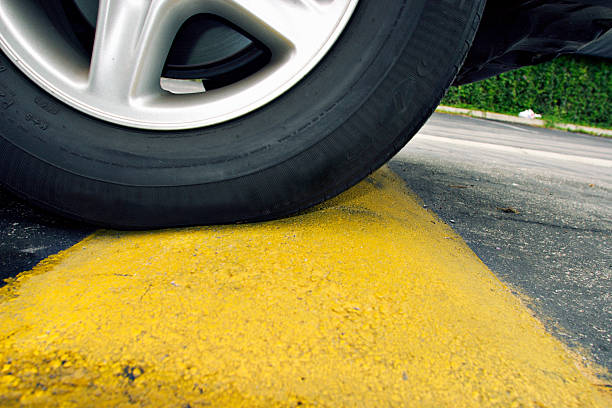
They are particularly useful in locations where maintaining lower vehicle speeds is important, such as parking lots, private roads, pedestrian-heavy areas, and internal property roadways.
The design, dimensions, placement, and visibility of a speed bump should be appropriate for the location and its intended traffic pattern.
Why Speed Control Matters
Excessive speed can create additional risks wherever vehicles and pedestrians operate near one another. A driver moving too quickly has less time to respond to pedestrians, vehicles entering the roadway, unexpected obstacles, or changes in traffic conditions.
Parking lots can be particularly challenging because drivers are often looking for open spaces while pedestrians may be walking between parked vehicles. Residential and commercial properties can also have areas where vehicles should travel at lower speeds.
Speed bumps for asphalt can encourage drivers to reduce speed at specific points. Rather than attempting to control vehicle speed across an entire property, strategically placed traffic-calming features can focus attention on areas where slower movement is especially important.
Improve Safety in Parking Lots
Parking lots are busy environments. Vehicles move in multiple directions, pedestrians cross travel lanes, and drivers frequently stop, turn, and reverse.
A vehicle traveling too quickly through a parking lot may have less time to react when a pedestrian unexpectedly enters its path or another vehicle backs out of a parking space.
Properly positioned speed bumps for asphalt can encourage drivers to approach these areas more cautiously. They can be especially useful near building entrances, pedestrian crossings, parking-area intersections, or other locations where vehicle speeds should remain controlled.
Speed bumps should be paired with appropriate signs and pavement markings where needed so drivers have sufficient notice before reaching them.
Control Traffic Flow on Private Roads
Some commercial and residential properties contain internal roads where vehicles may travel faster than intended. A long, straight section of pavement can sometimes encourage drivers to accelerate, particularly when there are few visual interruptions.
Strategically installed speed bumps can break up these stretches and encourage slower travel.
By creating designated traffic-calming points, speed bumps for asphalt can help establish a more controlled driving environment. Drivers learn to expect a slower section of roadway and adjust their speed accordingly.
This can be particularly useful on private roads, apartment communities, business campuses, and other properties where traffic management is the responsibility of the property owner or manager.
Encourage Drivers to Slow Down Naturally
One advantage of a physical traffic-calming feature is that it does not depend entirely on driver attention to a sign.
A speed bump creates a physical condition that drivers can feel as they approach and cross it. When the vehicle is traveling too quickly, the bump becomes more noticeable, encouraging motorists to slow down.
This does not mean drivers should approach a speed bump aggressively or use it as a substitute for posted speed limits. The purpose is to encourage appropriate speeds through areas where traffic control is important.
Proper warning signs, pavement markings, and visibility can make the traffic-calming feature easier for drivers to recognize.
Protect Pedestrian Areas
Pedestrian safety is one of the most important considerations when vehicles operate near sidewalks, entrances, walkways, and crossings.
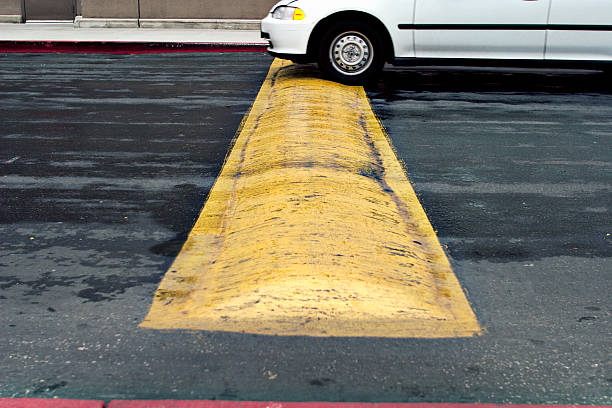
A driver who approaches a pedestrian-heavy area at excessive speed may have less time to react to people crossing the road. Encouraging lower speeds can provide a more controlled environment.
Speed bumps for asphalt can be placed before pedestrian-focused areas to encourage drivers to reduce speed before reaching them. This creates a transition from a faster-moving section of pavement to an area where greater caution is appropriate.
The location should be carefully selected so the speed bump supports pedestrian safety without interfering with normal pedestrian movement.
Help Manage Traffic Near Building Entrances
Building entrances often experience a combination of vehicle and pedestrian activity. Customers may cross from parking areas, employees may walk between vehicles and doors, and delivery vehicles may operate nearby.
A strategically located speed bump can encourage vehicles to approach these areas more slowly.
For commercial properties, this can be especially useful near entrances where pedestrian activity is high. Combining traffic-calming features with clear pedestrian crossings and visible pavement markings can make the intended movement pattern easier to understand.
Where Speed Bumps May Be Useful
Every property has different traffic patterns, so speed bumps should not be installed simply because a roadway exists. Their placement should be based on actual traffic behavior and safety considerations.
Potential locations may include:
- Commercial parking lots
- Private roads and driveways
- Residential communities
- Business campuses
- Parking areas near pedestrian crossings
- Internal roadways with repeated speeding concerns
The surrounding environment should also be evaluated. Drainage, emergency access, vehicle types, roadway dimensions, and pedestrian routes can all influence where a traffic-calming feature should be placed.
Speed Bumps and Asphalt Pavement
Asphalt provides a suitable surface for many parking and roadway applications, but speed bumps must be properly integrated with the pavement.
The surrounding asphalt should be evaluated before installation. Significant cracks, potholes, surface deterioration, or structural problems may need attention so the traffic-calming feature can function effectively.
A properly constructed speed bump should transition appropriately with the surrounding pavement. Sharp or poorly formed transitions can create unnecessary discomfort for drivers and may contribute to premature pavement damage.
This is why installation should be approached as part of the overall pavement system rather than as an isolated feature.
Visibility Is Just as Important as the Bump Itself
A speed bump should be easy for drivers to recognize. If a raised feature blends into the pavement and drivers do not see it until the last moment, it can create an uncomfortable or potentially hazardous situation.
Visible pavement markings and appropriate warning signs can help alert drivers in advance.
Fresh markings can also help maintain visibility as weather and traffic gradually affect the pavement surface. Property managers should periodically inspect the area around each speed bump and refresh markings when they become difficult to see.
Good visibility gives drivers time to reduce speed gradually rather than reacting at the last second.
Proper Placement Improves Effectiveness
The location of a speed bump can determine whether it actually improves traffic control. A poorly positioned bump may have little effect or may interfere with other property functions.
Before installing speed bumps for asphalt, property owners should consider where drivers are currently traveling too quickly, where pedestrians are most active, and where vehicles need additional speed control.
Spacing can also matter. If multiple traffic-calming features are installed, they should create a logical traffic pattern rather than an unnecessarily uncomfortable driving experience.
The objective is controlled traffic, not simply slowing vehicles everywhere.
Consider Emergency and Service Vehicles
Traffic-calming features can affect different types of vehicles in different ways. Emergency vehicles, maintenance vehicles, delivery trucks, buses, and other larger vehicles may require more careful consideration.
Property owners should evaluate the needs of vehicles that regularly use the roadway before selecting locations and designs for speed bumps.
A traffic-control strategy should improve everyday safety without unnecessarily interfering with essential access.
Maintain Your Speed Bumps and Surrounding Pavement
Like other pavement features, speed bumps require periodic inspection. Weather, vehicle traffic, pavement movement, and general wear can affect their condition over time.
Property managers should look for cracking, deterioration, damaged markings, loose materials, or changes in the surrounding asphalt. Problems should be addressed before they become more significant.
Maintaining the pavement around a speed bump is also important. If the surrounding asphalt develops potholes or severe cracking, the overall traffic-calming area may become less effective and less attractive.
Regular pavement maintenance supports both safety and appearance.
Avoid Using Speed Bumps as the Only Traffic-Control Measure
Speed bumps for asphalt can be effective, but they work best as part of a broader traffic-management strategy.
Depending on the property, other measures may include speed-limit signs, directional arrows, stop signs, pedestrian crossings, parking lot markings, lighting, and clearly defined traffic lanes.
Each feature serves a different purpose. Speed bumps physically encourage reduced speed, while signs and markings communicate rules and directions.
Combining these tools can create a more understandable and predictable environment for drivers and pedestrians.
The Appearance Benefits of Well-Maintained Traffic Features
Traffic-calming features can also contribute to the overall appearance of a property. A speed bump that is clearly marked and surrounded by clean, well-maintained asphalt looks intentional and professional.
For commercial properties, this matters because customers often form impressions based on exterior conditions. A well-organized parking lot with visible traffic markings can communicate that the property is carefully maintained.
Keeping speed bump markings fresh can therefore support both functionality and curb appeal.
Plan for Long-Term Pavement Performance
A speed bump should be viewed as part of the property’s long-term pavement plan. Installation, surrounding asphalt condition, markings, drainage, and routine inspections all contribute to its performance.
Before making changes, property owners should evaluate the entire area rather than focusing on one traffic issue. The best solution is one that addresses speed concerns while fitting naturally into the existing pavement and traffic layout.
Professional planning can help property owners avoid unnecessary modifications and create a more cohesive parking or roadway environment.
Improve Traffic Control With Speed Bumps for Asphalt
Speed bumps for asphalt provide property owners with a practical way to encourage slower vehicle speeds and create more controlled traffic movement. They can be useful in parking lots, private roads, commercial properties, residential communities, and other areas where vehicles operate near pedestrians or where excessive speed is a recurring concern.
Their effectiveness depends on thoughtful placement, appropriate design, good visibility, and regular maintenance. When combined with pavement markings, signs, pedestrian crossings, and well-maintained asphalt, speed bumps can become an important part of a comprehensive traffic-control strategy.
For property owners in Louisville, Kentucky, Commonwealth Paving can assist with paving and parking lot improvement needs. To discuss your project, contact Commonwealth Paving at +1 502 459 7283 or visit 136 Outer Loop, Louisville, Kentucky 40214.
A safer parking lot or private roadway starts with thoughtful planning. By using properly designed and maintained speed bumps for asphalt, property owners can encourage responsible driving speeds, improve traffic organization, and create a more comfortable environment for drivers and pedestrians alike.
Choosing the Right Speed Bumps for Asphalt for Commercial and Residential Properties
Controlling vehicle speed is an important part of maintaining a safe and organized property. Whether the pavement serves a busy commercial parking lot, a private driveway, an apartment community, or a residential access road, drivers may sometimes travel faster than conditions allow. This can increase risks for pedestrians, vehicles, buildings, landscaping, and other property features.
Speed bumps for asphalt can provide a practical traffic-calming solution by encouraging drivers to reduce their speed at specific locations. However, choosing and placing the right speed bump requires more consideration than simply adding a raised section of pavement. The property’s layout, traffic volume, vehicle types, pedestrian activity, pavement condition, and intended speed all play a role.
For property owners and managers in Louisville, Kentucky, thoughtful planning can help ensure that traffic-calming features improve safety without creating unnecessary obstacles. Commonwealth Paving provides paving and parking lot services to help commercial and residential properties maintain functional, organized, and attractive paved areas.
Why Choosing the Right Speed Bump Matters
Not every property has the same traffic-control requirements. A small residential driveway may need a different approach from a large commercial parking area with hundreds of daily vehicle movements.
The right speed bumps for asphalt should match the environment where they are installed. Their dimensions, placement, visibility, and surrounding pavement conditions all influence how effectively they control traffic.
A poorly selected or incorrectly positioned speed bump may have limited benefits or create unnecessary discomfort for drivers. Proper planning helps ensure that the feature addresses an actual speed-control concern while fitting naturally into the property’s overall traffic pattern.
Understand How Speed Bumps Work
Speed bumps are raised pavement features designed to encourage motorists to slow down before crossing them. They create a physical change in the driving surface that becomes more noticeable when approached at excessive speed.
The purpose is not to stop traffic but to influence driver behavior. When drivers see a clearly marked raised section ahead, they have an opportunity to reduce speed before reaching it.
This makes speed bumps for asphalt particularly useful in locations where vehicles should move more slowly, such as parking lots, private roads, pedestrian-heavy areas, and internal property roadways.
Evaluate Your Property Before Installation
The first step in choosing a traffic-calming feature is understanding the property itself. A thorough evaluation can identify where speeding occurs and why it is happening.
Property owners should consider traffic patterns throughout the day rather than looking at only one period. A commercial parking lot may have very different traffic conditions during business hours compared with early morning or evening periods.
Important factors to evaluate include:
- Average vehicle traffic and peak traffic periods
- Areas where pedestrians frequently cross
- Locations where drivers tend to accelerate
- Nearby entrances, exits, and intersections
- The condition and slope of the asphalt pavement
This information can help determine whether speed bumps are appropriate and where they can provide the greatest benefit.
Consider Commercial Property Needs
Commercial properties often experience a wide range of vehicle activity. Customers, employees, delivery drivers, service vehicles, and visitors may all use the same parking area or internal roadway.

Because of this, traffic control needs to balance safety with accessibility and convenience.
Speed bumps for asphalt can be useful near building entrances, pedestrian crossings, parking-lot intersections, and other areas where vehicle speeds should be reduced. They can encourage drivers to approach these locations more cautiously.
Commercial property owners should also consider the types of vehicles that regularly use the property. A location that frequently accommodates larger delivery or service vehicles may require a different traffic-calming strategy from a standard customer parking area.
Consider Residential Property Needs
Residential properties can also benefit from properly planned speed control. Apartment communities, private roads, shared driveways, and residential parking areas may experience vehicle speeds that are higher than desired.
Children, pedestrians, cyclists, pets, and parked vehicles can make residential areas especially sensitive to traffic speed.
Installing speed bumps for asphalt in appropriate locations can encourage drivers to slow down without requiring constant enforcement. The feature can be especially helpful on longer private roadways where drivers may naturally accelerate.
Residential property owners should consider the daily movement of residents, guests, service providers, and emergency vehicles when planning traffic-calming measures.
Identify the Best Installation Locations
Placement is one of the most important factors in speed-bump effectiveness. A speed bump should be located where it can influence vehicle behavior without interfering unnecessarily with other property functions.
Potential locations may include approaches to pedestrian areas, long internal road sections, parking-lot intersections, building entrances, and areas where speeding has been observed.
The objective should be to create a logical transition in vehicle speed. Drivers should have enough distance and visibility to recognize the feature and slow down smoothly.
Installing a speed bump immediately after a blind corner or in an unexpected location may not provide the same benefits as a clearly visible and properly announced traffic-calming point.
Visibility Should Be a Priority
Drivers need to see a speed bump before reaching it. A raised pavement feature that blends into the surrounding asphalt can be difficult to recognize, especially in poor weather or low-light conditions.
Clearly visible pavement markings can help identify the location of the bump. Appropriate warning signs may also be useful depending on the property and applicable requirements.
Maintaining visibility over time is equally important. Paint can fade, asphalt can become dirty, and pavement markings can deteriorate. Regular inspections help property owners determine when markings need to be refreshed.
A visible speed bump allows drivers to respond gradually rather than discovering the raised surface at the last moment.
Match the Speed Bump to Traffic Conditions
The right traffic-calming solution should reflect the speed and type of traffic on the property. A location with slow-moving parking-lot traffic may have different requirements from a private roadway where vehicles regularly reach higher speeds.
The goal is to encourage an appropriate speed rather than create an unnecessarily harsh driving experience.
Property owners should consider the normal operating conditions of the roadway and the purpose of the traffic-calming feature. Professional evaluation can help determine what type of installation is appropriate for the pavement and traffic environment.
Examine Asphalt Condition First
The condition of the existing asphalt should be evaluated before installing speed bumps for asphalt. A speed bump is only one part of the pavement system, and surrounding deterioration can affect its long-term performance.
Cracks, potholes, settlement, drainage problems, and other pavement issues may need attention before or alongside traffic-calming improvements.
Installing a new feature on severely deteriorated pavement may not produce the desired long-term results. Addressing underlying pavement conditions can create a better foundation for the traffic-control improvement.
Think About Drainage
Water management is another important consideration when planning pavement modifications. Parking lots and private roads need proper drainage to prevent standing water and reduce unnecessary stress on the pavement.
The placement and design of a speed bump should account for existing drainage patterns. A traffic-calming feature should not unintentionally create a location where water collects.
Considering drainage during planning can help protect both the speed bump and surrounding asphalt.
Account for Pedestrian Movement
Pedestrian activity should always be considered when choosing speed bumps for asphalt. Locations near building entrances, sidewalks, crosswalks, recreational areas, and other pedestrian zones may benefit from traffic-calming measures.
A speed bump can encourage vehicles to reduce speed before reaching a pedestrian-focused area. However, the surrounding layout should remain easy for people to navigate.
The placement should not obstruct sidewalks, wheelchair access, drainage paths, or other pedestrian facilities. A well-designed traffic-control strategy considers both vehicles and people.
Consider Emergency and Service Vehicles
Commercial and residential properties may need regular access from emergency responders, maintenance workers, delivery vehicles, waste collection vehicles, and other service providers.
Before installing speed bumps, property owners should consider how these vehicles use the roadway.
Traffic-calming features should support safer everyday driving without unnecessarily restricting essential access. This is another reason why location and design should be evaluated carefully rather than selecting a one-size-fits-all solution.
Combine Speed Bumps With Pavement Markings
A speed bump works best when drivers can easily understand why it is there and where it begins.
Pavement markings can reinforce the presence of speed bumps for asphalt and provide additional visual guidance. Directional arrows, lane markings, pedestrian crossings, parking lines, and other pavement markings can create a more complete traffic-management system.
When these features work together, drivers receive both physical and visual cues about how they should navigate the property.
Clear markings can also improve the overall appearance of the parking lot or roadway.
Do Not Ignore Existing Traffic Patterns
Before adding traffic-calming features, property owners should observe how drivers currently use the space.
For example, speeding may occur because a long roadway encourages acceleration. In another location, drivers may be moving too quickly because there is a wide, open section of pavement near an entrance.
Understanding the reason behind the behavior can help determine whether a speed bump is the right solution and where it should be installed.
Traffic-calming improvements should solve a specific problem rather than simply add obstacles to the pavement.
Maintain Speed Bumps After Installation
Installing speed bumps for asphalt is only the beginning of the maintenance process. Regular inspections can help ensure that the feature continues to perform as intended.
Property managers should look for cracks, deterioration, surface damage, fading markings, and changes in the surrounding pavement. Any noticeable damage should be evaluated promptly.
The area around the speed bump should also remain clean and free from debris that could make the feature less visible.
Routine maintenance can extend the useful appearance and functionality of the traffic-calming installation.
Refresh Faded Markings
Visibility can decline over time due to weather, sunlight, traffic, cleaning, and general pavement wear. A speed bump that was once highly visible may eventually become difficult to recognize.
Refreshing pavement markings can restore contrast and help drivers identify the feature from an appropriate distance.
For commercial properties, this maintenance also contributes to curb appeal. Clean, visible traffic markings make a parking lot appear more organized and professionally maintained.
Avoid Overusing Traffic-Calming Features
More speed bumps do not necessarily mean better traffic control. Installing too many can make a property uncomfortable to navigate and may create unnecessary delays.
The better approach is strategic placement. Each traffic-calming feature should have a clear purpose and address a specific speed-control concern.
A carefully planned layout can encourage appropriate speeds while allowing vehicles to move efficiently through the property.
Professional Planning Can Improve Results
Choosing speed bumps for asphalt involves more than selecting a raised pavement product. The surrounding pavement, traffic pattern, property layout, drainage, pedestrian movement, vehicle types, and visibility all need to be considered.
Professional assessment can help property owners identify the locations where traffic calming is most useful and determine how the feature should fit into the existing pavement system.
This approach can help prevent common problems associated with poor placement and ensure that the improvement supports the property’s broader safety and maintenance goals.
Make a Smarter Choice for Your Property
The right traffic-calming strategy can make a noticeable difference in how drivers use a commercial or residential property. Speed bumps for asphalt can encourage slower speeds, improve traffic control, and help create a safer environment around pedestrians, parked vehicles, buildings, and other property features.
The key is choosing the right location, considering the condition of the asphalt, maintaining good visibility, and integrating speed bumps with appropriate pavement markings and traffic-management features.
For property owners in Louisville, Kentucky, Commonwealth Paving can assist with paving and parking lot improvement needs. To discuss your project, contact Commonwealth Paving at +1 502 459 7283 or visit 136 Outer Loop, Louisville, Kentucky 40214.
Whether you manage a commercial parking lot, private roadway, residential community, or driveway, thoughtful traffic control can protect your property while improving the experience for drivers and pedestrians. With properly selected and maintained speed bumps for asphalt, you can create a more controlled, organized, and safety-focused paved environment.
Address
Commonwealth Paving, 136 Outerloop, Louisville, Kentucky 40214
Phone: 502-459-7283, Fax: 502-456-2678
Opening Hours
| Monday | 9:00 AM – 5:00 PM |
| Tuesday | 9:00 AM – 5:00 PM |
| Wednesday | 9:00 AM – 5:00 PM |
| Thursday | 9:00 AM – 5:00 PM |
| Friday | 9:00 AM – 5:00 PM |
| Saturday | Closed |
| Sunday | Closed |