
How Often Should You Schedule Parking Lot Painting for Your Business?
A parking lot is one of the first things customers, employees, tenants, and visitors notice when they arrive at a business. Clearly defined parking spaces, visible traffic markings, directional arrows, pedestrian crossings, and designated restricted areas create a more organized environment and make the property look well maintained. Over time, however, pavement markings naturally fade because of vehicle traffic, sunlight, weather, dirt, and general wear.
There is no single schedule that works for every business. Some parking lots may need fresh markings more frequently because they experience heavy traffic, while others may retain their appearance for longer periods. The condition of the pavement, type of paint, weather exposure, traffic volume, maintenance practices, and layout can all affect how long markings remain visible.
For businesses in Louisville, Kentucky, Commonwealth Paving provides professional paving and parking lot services to help properties maintain functional, organized, and attractive paved areas. To discuss your parking lot needs, contact Commonwealth Paving at +1 502 459 7283 or visit 136 Outer Loop, Louisville, Kentucky 40214.
Why Parking Lot Painting Needs Regular Attention
Fresh pavement markings do more than improve appearance. They help drivers understand where to park, where traffic should travel, and where pedestrians may cross.
As paint gradually fades, these visual cues become less noticeable. Drivers may have difficulty distinguishing individual parking spaces or understanding traffic patterns. Faded markings can also make a commercial property appear neglected, even when other areas of the property are well maintained.
Regular parking lot painting helps restore visibility and organization. Instead of waiting until markings are almost impossible to see, property owners can monitor their condition and plan maintenance before the lot becomes confusing or unattractive.
What Is the Typical Painting Schedule?
For many commercial properties, pavement markings may need to be refreshed approximately every 1 to 3 years, but this is only a general planning range. Some high-traffic properties may need repainting sooner, while lightly used parking areas may remain acceptable for longer.
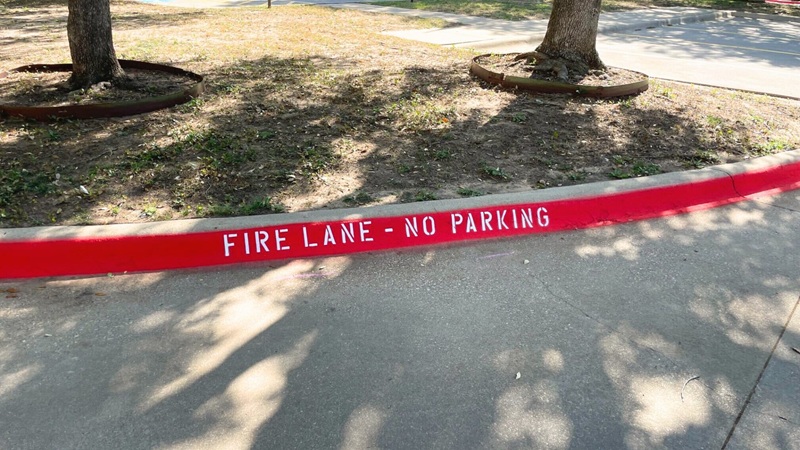
The actual schedule should be based on pavement conditions rather than an arbitrary calendar date.
A busy retail parking lot with constant vehicle movement may experience faster paint wear than a small office parking area used primarily during weekday business hours. Similarly, severe weather exposure can affect different properties differently.
Traffic Volume Has a Major Impact
The amount of traffic a parking lot receives is one of the biggest factors affecting paint longevity.
Every vehicle that enters, parks, turns, and exits contributes to surface wear. High-traffic areas such as entrances, exits, drive lanes, and frequently used parking spaces may show fading sooner than less-used portions of the property.
Businesses with significant daily traffic should consider inspecting pavement markings more frequently. If lines are visibly worn after a relatively short period, the property’s maintenance schedule may need to be adjusted.
A proactive approach can help prevent the parking lot from reaching a point where markings become difficult to recognize.
Consider the Type of Business
Different businesses place different demands on their parking lots.
A busy retail property may have vehicles moving continuously throughout the day. Restaurants may experience concentrated traffic during lunch and dinner periods. Office buildings may have more predictable weekday traffic, while apartment communities may have vehicle activity throughout the day and night.
These differences can influence how quickly pavement markings wear.
When planning parking lot painting, property owners should consider the actual way their parking area is used rather than copying another property’s maintenance schedule.
Weather Can Accelerate Fading
Louisville parking lots are exposed to changing weather throughout the year. Sunlight, rain, temperature fluctuations, moisture, and winter conditions can all contribute to pavement marking deterioration.
Direct sunlight can gradually affect painted surfaces, while rain and moisture can contribute to general wear. Seasonal temperature changes may also affect the pavement and markings over time.
A parking lot that receives strong weather exposure may need more frequent inspections than a protected or lightly used area.
Sunlight and UV Exposure Matter
Large open parking lots receive significant sunlight. Over time, ultraviolet exposure can contribute to fading and make pavement markings less vibrant.
The effect may be gradual, so property owners may not notice the change from one week to the next. Comparing the current markings with older photographs can sometimes make deterioration more obvious.
If parking lines have become significantly less visible, parking lot painting may be appropriate even if the markings are technically still present.
Winter Conditions Can Affect Markings
Cold-weather conditions can create additional challenges for parking lots. Snow, ice, moisture, freezing temperatures, and winter maintenance activities can affect painted surfaces.
Snow removal and other seasonal activity may also contribute to wear in areas that receive frequent equipment or vehicle movement.
After winter, property managers should inspect the entire parking lot for faded lines, damaged markings, potholes, cracks, and other pavement problems.
Spring can therefore be a useful time to assess whether parking lot painting should be scheduled for the upcoming maintenance season.
Inspect Your Parking Lot Before Repainting
Rather than repainting automatically, conduct a visual inspection of the parking area.
Walk through the lot and examine parking lines, traffic lanes, directional arrows, accessible parking markings, pedestrian crossings, fire lanes, and other painted areas.
Look at the pavement from a driver’s perspective as well. Ask whether someone unfamiliar with the property could easily determine where to park and how traffic should move.
If markings are technically visible but difficult to recognize at a distance, repainting may already be worthwhile.
Signs Your Parking Lot Needs Painting
Property owners do not need to wait for complete paint failure before scheduling maintenance. Several warning signs can indicate that markings are approaching the end of their useful appearance.
Common signs include:
- Parking lines that appear faded or broken
- Directional arrows that are difficult to recognize
- Accessible parking symbols that have lost visibility
- Pedestrian crossings that are becoming unclear
- Fire-lane or no-parking markings that are fading
- Parking spaces that are difficult to distinguish
- A general loss of visual organization throughout the lot
When multiple areas show these signs, it may be more efficient to plan a comprehensive parking lot painting project instead of addressing individual markings separately.
Why Parking Lot Painting Improves Safety
Visible markings provide drivers and pedestrians with important information.
Parking lines help drivers position vehicles consistently. Directional arrows can communicate traffic movement. Pedestrian crossings identify areas where people may cross vehicle lanes.
When these markings fade, drivers may have less visual guidance.
Fresh parking lot painting can restore these visual cues and help make the parking area easier to navigate. Paint alone cannot eliminate parking lot hazards, but clear markings are an important part of an organized traffic environment.
Keep Accessible Parking Markings Visible
Accessible parking spaces need to be clearly identifiable. Over time, symbols, lines, and access aisle markings can become faded.
Property managers should pay particular attention to these areas during routine inspections.
Maintaining visible accessible parking markings is part of responsible property management. The layout should also comply with applicable accessibility requirements and local regulations.
If markings have become difficult to distinguish, scheduling parking lot painting can help restore their visibility.
Maintain Fire Lanes and Restricted Areas
Fire lanes, loading zones, no-parking areas, and other restricted spaces may rely on pavement markings to communicate their purpose.
When these markings fade, drivers may not recognize the restriction as easily.
Regular inspection of these areas is particularly important for commercial properties. Repainting can restore visual clarity and help reinforce the intended use of restricted sections.
Parking Lot Painting and Curb Appeal
A parking lot covers a large portion of many commercial properties, so its appearance can have a noticeable impact on curb appeal.
Faded lines can make the entire property appear older and less maintained. Fresh markings create contrast and definition, making the parking area look cleaner and more organized.
Professional parking lot painting can therefore provide both functional and visual benefits.
For businesses that rely on customer visits, this can be particularly valuable because the parking lot is often part of the customer’s first impression.
Do You Need to Repaint the Entire Lot?
Not every parking lot requires complete repainting every time markings begin to fade.
If only a few isolated markings have deteriorated, localized maintenance may be appropriate. However, if fading is widespread, repainting the entire layout may produce a more consistent appearance.
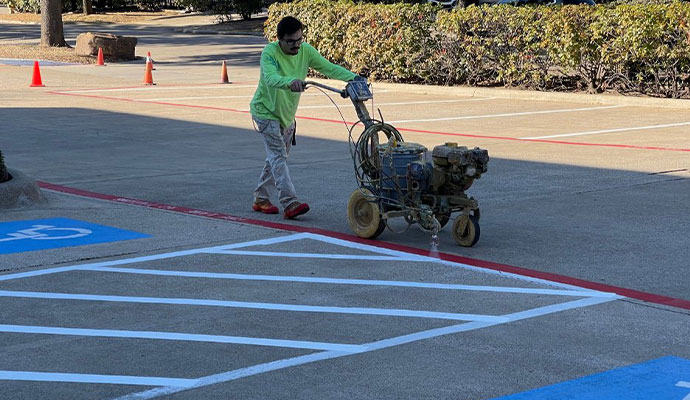
Painting only a few lines on an otherwise faded lot can create uneven visual quality.
Property owners should evaluate the condition of the entire parking area before deciding whether to repaint selected sections or undertake a comprehensive project.
Consider Parking Lot Layout Changes
Sometimes a painting project is an opportunity to reconsider the existing layout.
Business needs can change. A property may have added employees, changed entrances, expanded customer service areas, or modified pedestrian routes.
If the existing parking configuration no longer serves the property effectively, simply repainting the old lines may not be the best long-term solution.
Before parking lot painting, property owners can evaluate whether the current layout still provides an efficient balance of parking, traffic movement, pedestrian access, and restricted areas.
Proper Preparation Matters
Good results depend on more than applying fresh paint. The pavement should be appropriately prepared before markings are installed.
Dirt, debris, loose material, and other contaminants can affect the appearance and performance of pavement markings.
The pavement should also be evaluated for significant deterioration. Large cracks, potholes, or damaged areas may need attention before painting.
Preparing the surface appropriately helps create cleaner, sharper markings and contributes to a more professional finished appearance.
Timing Your Project Around Business Operations
Commercial properties need to consider how painting will affect customers, employees, deliveries, and normal operations.
Parking areas may need to be temporarily restricted while markings are being applied and allowed to cure.
Planning the project during lower-traffic periods can help minimize disruption. Depending on the business, this may mean scheduling work during off-hours, quieter days, or another period when alternative parking is available.
Good scheduling can make the parking lot painting process more convenient for both the business and its visitors.
Why Waiting Too Long Can Be a Problem
It may seem economical to postpone repainting until lines have almost disappeared. However, severely faded markings can create several problems.
Drivers may park inconsistently, traffic patterns may become less obvious, and important restricted areas may be harder to identify. The property may also appear less professionally maintained.
Waiting too long can turn a simple maintenance task into a more noticeable property improvement project.
Regular inspections allow owners to plan parking lot painting before the deterioration becomes severe.
Build Parking Lot Painting Into Your Maintenance Plan
Instead of treating pavement marking as an occasional emergency, make it part of the property’s regular maintenance strategy.
Inspect the parking lot at least periodically and pay particular attention after winter, severe weather, or periods of unusually heavy traffic.
Keep records or photographs of the markings so changes can be easier to recognize over time.
A proactive schedule allows property owners to budget for painting and coordinate it with other pavement maintenance activities.
Professional Parking Lot Painting in Louisville
There is no universal answer to how often a business should schedule parking lot painting. For many commercial properties, a general interval of approximately one to three years may be reasonable, but actual needs depend on traffic, weather exposure, pavement condition, paint wear, and the property’s use.
The most reliable approach is to inspect markings regularly and repaint when they become noticeably faded or difficult to understand.
For businesses in Louisville, Kentucky, Commonwealth Paving can assist with parking lot maintenance and pavement marking needs. To discuss your project, contact Commonwealth Paving at +1 502 459 7283 or visit 136 Outer Loop, Louisville, Kentucky 40214.
Keep Your Business Parking Lot Looking Its Best
A well-marked parking lot creates structure, improves visual guidance, and contributes to a professional first impression. Parking lot painting is not simply a cosmetic task; it is an important part of maintaining a functional and organized commercial property.
Rather than relying on a rigid repainting schedule, pay attention to how your markings are performing. Consider traffic volume, weather conditions, pavement wear, business activity, and the visibility of important markings.
By scheduling repainting before lines become severely faded, property owners can maintain a cleaner appearance and a more understandable parking environment. With regular inspections, proper preparation, and timely parking lot painting, your business can keep its parking area safer, more organized, and welcoming to customers and visitors.
Parking Lot Painting Tips to Enhance Safety and Traffic Flow
A well-designed parking lot does more than provide space for vehicles. It helps drivers understand where to park, guides traffic, separates pedestrian areas, and creates a more organized experience for everyone using the property. When pavement markings become faded, confusing, or difficult to see, even a well-maintained parking lot can lose some of its functionality.
This is where professional parking lot painting becomes important. Clearly painted parking spaces, directional arrows, crosswalks, loading zones, fire lanes, and other markings can help improve visibility and create a more predictable traffic environment. Fresh pavement markings can also give a commercial property a cleaner and more professional appearance.
For property owners in Louisville, Kentucky, Commonwealth Paving provides paving and parking lot services designed to help businesses maintain functional, attractive, and organized paved areas. To discuss your project, contact Commonwealth Paving at +1 502 459 7283 or visit 136 Outer Loop, Louisville, Kentucky 40214.
Why Parking Lot Painting Matters
Parking lots can become surprisingly complicated environments. Vehicles enter and exit from different directions, pedestrians move between parked cars, delivery vehicles may need designated areas, and drivers must determine where they are permitted to park.
Clearly visible pavement markings provide visual guidance throughout this environment.
Professional parking lot painting can help define individual parking spaces and make traffic patterns easier to understand. It can also distinguish areas where vehicles should not park or where pedestrians should have priority.
Good markings do not replace responsible driving or proper parking lot design, but they provide important visual information that supports safer movement.
Start With a Well-Planned Parking Layout
Before applying fresh paint, consider whether the existing parking layout still meets the property’s needs.
A business may have changed since the original parking lot was marked. Customer traffic may have increased, entrances may have moved, or additional pedestrian routes may now be necessary.
Repainting an outdated layout without evaluating these changes can preserve problems instead of solving them.
Before beginning parking lot painting, review the entire property and consider parking spaces, traffic lanes, entrances, exits, pedestrian routes, loading areas, and restricted zones.
Make Parking Spaces Easy to Identify
Parking lines are among the most important markings in any parking lot. When lines fade, drivers may park at inconsistent angles or positions, reducing the efficient use of available space.
Fresh, clearly defined lines help drivers recognize individual spaces quickly.
Consistent spacing also contributes to a more organized appearance. A parking lot with evenly defined spaces looks cleaner and can make it easier for drivers to navigate.
During parking lot painting, property owners should consider whether the existing layout uses space efficiently while maintaining appropriate access and circulation.
Use Directional Arrows to Guide Drivers
Directional arrows can help communicate how vehicles should travel through a parking lot.
They are particularly useful in areas where drivers could otherwise become uncertain about the intended direction of traffic.
Clear arrows can help reduce confusion at intersections, entrances, exits, and one-way sections.
When planning parking lot painting, directional markings should be positioned where drivers have enough time and visibility to understand the intended movement.
Clearly Mark Entrances and Exits
Entrances and exits are often among the busiest areas of a parking lot. Drivers may be arriving, leaving, turning, or waiting for other vehicles.
Clearly defined markings can help distinguish these areas from regular parking spaces.
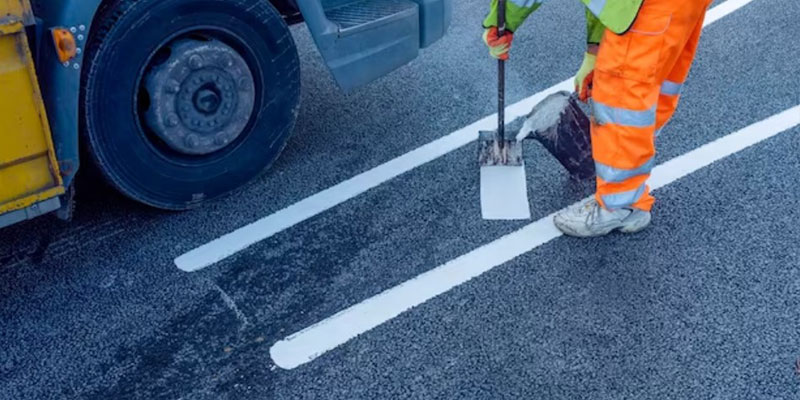
Directional arrows and lane markings can reinforce the intended traffic pattern and make the transition between the parking lot and surrounding roadway easier to understand.
Keep Pedestrian Crossings Visible
Parking lots are shared by vehicles and pedestrians. People frequently walk from their vehicles to buildings, sidewalks, entrances, or nearby businesses.
Clearly marked pedestrian crossings can make these areas easier to recognize.
Crosswalk markings should be visible and positioned in logical locations that align with pedestrian movement.
During parking lot painting, property owners should consider where pedestrians naturally travel and whether existing crossings still make sense.
Give Accessible Parking Areas Special Attention
Accessible parking spaces require clear identification and appropriate markings. Faded lines, symbols, or access aisle markings can make these areas difficult to recognize.
Property owners should regularly inspect accessible parking spaces and ensure that markings remain visible.
Accessible parking layouts should also comply with applicable laws, regulations, and local requirements.
Professional parking lot painting can refresh worn markings and help maintain clear visual identification.
Clearly Define Fire Lanes
Fire lanes and other restricted areas should be visually distinct from regular parking spaces.
If markings become faded, drivers may not recognize that parking or stopping is restricted.
Property owners should inspect fire-lane markings regularly and repaint them when visibility declines. The exact layout and markings should follow applicable requirements for the property.
Maintaining clear markings can help reinforce the intended use of these critical areas.
Mark Loading and Service Zones
Businesses that receive deliveries may benefit from clearly identified loading and service areas.
Without visible markings, vehicles may park in locations needed for deliveries or block access routes.
Designating these spaces through appropriate parking lot painting can help separate everyday parking from operational areas.
Clear service zones can improve traffic flow by reducing conflicts between parked vehicles and delivery activity.
Avoid Overcrowding the Pavement With Markings
While clear markings are important, too many markings can create confusion.
Every painted line, arrow, symbol, and restricted zone should have a clear purpose. A parking lot should communicate information quickly without overwhelming drivers.
A well-planned design uses markings strategically.
Before parking lot painting, review the entire layout from a driver’s perspective. Ask whether the markings are easy to understand at normal driving speeds.
Choose High-Visibility Markings
Parking lot markings need to stand out from the pavement. Fresh, well-defined lines are generally easier to see than faded or broken markings.
Visibility becomes particularly important during poor weather, low-light conditions, or busy periods when drivers need to make decisions quickly.
Consistent application and appropriate spacing can help create a cleaner visual pattern throughout the parking area.
Prepare the Pavement Before Painting
The quality of parking lot painting depends partly on surface preparation.
Dirt, dust, debris, loose material, and other contaminants can interfere with the appearance and performance of pavement markings.
Before painting, the pavement should be inspected and prepared appropriately. Areas with significant deterioration may also need repair before new markings are applied.
Painting over damaged or unstable pavement may produce an attractive result temporarily but does not solve the underlying pavement problem.
Repair Pavement Damage Before Repainting
Cracks, potholes, depressions, and other pavement defects can interfere with a clean parking lot layout.
If a parking line crosses a severely damaged area, the marking may not remain consistent as the pavement deteriorates.
Property owners should therefore consider the condition of the pavement before scheduling parking lot painting.
Addressing major pavement problems first can create a better surface for fresh markings and contribute to a more polished final result.
Consider Traffic Volume
Not every parking lot experiences the same amount of traffic. A busy retail property may experience constant vehicle movement, while an office parking lot may have predictable peaks and quieter periods.
High traffic can contribute to faster wear of pavement markings.
Businesses should inspect their parking lots regularly and consider repainting when lines, arrows, and other markings become noticeably faded.
A proactive approach to parking lot painting can prevent the parking lot from reaching a point where important markings are difficult to recognize.
Consider Weather and Seasonal Wear
Rain, sunlight, temperature changes, and winter conditions can all contribute to pavement marking wear.
After periods of severe weather, property owners should inspect the parking lot for faded markings as well as cracks, potholes, and drainage issues.
Spring can be a useful time to assess the condition of parking lot markings after winter exposure.
However, the ideal timing depends on the actual condition of the property rather than a specific month on the calendar.
Use Consistent Line Spacing
Consistency matters when painting parking spaces. Uneven lines or irregular spacing can make the lot appear poorly organized and may cause drivers to park unpredictably.
A consistent layout helps drivers understand the boundaries of each space.
Professional parking lot painting should focus on accuracy and uniformity throughout the property, particularly in larger parking lots with many spaces.
Make Traffic Flow Easy to Understand
A parking lot should have a logical movement pattern. Drivers should be able to identify where they are entering, where they can travel, where they can park, and how they can exit.
Directional arrows, lane markings, stop markings, and other visual cues can help establish this pattern.
If drivers frequently hesitate or make unexpected turns, the existing layout may need to be evaluated.
Fresh parking lot painting provides an opportunity to improve visibility and reinforce the intended traffic flow.
Keep Intersections Clear
Parking lot intersections can become congested when vehicles park too close to corners or when traffic markings are unclear.
Restricting parking near intersections can improve visibility and give vehicles more room to turn.
Clearly defined lines and restricted zones can help communicate where vehicles should not be parked.
During a parking lot painting project, review intersections carefully and consider whether existing markings adequately support vehicle movement.
Consider Pedestrian Traffic Patterns
Safety and traffic flow are not limited to vehicles. Pedestrians need predictable routes through the parking area as well.
Consider where customers and employees naturally walk after parking. If pedestrians frequently cross vehicle lanes, clearly visible crossings can help identify these areas.
The goal is to create a parking lot where vehicle and pedestrian movement can coexist in an organized manner.
Repaint Before Markings Become Nearly Invisible
Waiting until parking lines have almost disappeared can make the property look neglected and can reduce the effectiveness of important markings.
Instead, property owners should monitor the gradual fading of paint and plan maintenance before visibility becomes a significant concern.
For many properties, repainting may be needed every few years, but traffic, weather, pavement condition, and paint wear can change the appropriate schedule.
Regular inspections are more useful than relying on a rigid timetable.
Keep the Parking Lot Visually Organized
A visually organized parking lot can create a better experience for visitors. Drivers can quickly identify spaces, traffic directions, pedestrian areas, and restricted zones.
This organization can also contribute to curb appeal.
For businesses, a clean parking lot can reinforce the impression that the property is professionally managed and maintained.
Professional parking lot painting can refresh the entire appearance of the paved area while improving its functionality.
Common Parking Lot Painting Mistakes to Avoid
Poor planning can reduce the benefits of new pavement markings.
Property owners should avoid:
- Painting over dirty or poorly prepared pavement
- Ignoring significant pavement damage
- Repainting an outdated parking layout
- Allowing important markings to become severely faded
- Creating unnecessary or confusing markings
- Neglecting pedestrian routes
- Failing to review accessible parking and restricted areas
A thoughtful plan can help ensure that new markings improve rather than complicate the parking environment.
Schedule Painting Around Business Operations
Commercial properties need to consider customers, employees, deliveries, and daily operations when scheduling pavement marking work.
Depending on the size of the parking lot, some areas may need to be temporarily unavailable during the project.
Scheduling work during quieter periods can help reduce disruption.
Good planning allows the business to maintain access while giving the parking lot painting crew adequate space to complete the work efficiently.
Inspect the Finished Markings
After painting is complete, inspect the parking lot from several viewpoints.
Check that parking spaces are clearly defined, arrows are easy to recognize, pedestrian crossings are visible, and restricted areas are properly identified.
It is also helpful to drive through the parking lot and evaluate whether the markings are easy to understand from behind the wheel.
A final inspection can identify inconsistencies before the project is considered complete.
Maintain Your Parking Lot After Painting
Fresh markings are only one part of parking lot maintenance. Property owners should continue monitoring the pavement and painted surfaces.
Keep the lot clean, address pavement deterioration promptly, maintain drainage, and inspect markings periodically.
If lines begin to fade, schedule repainting before they become difficult to see.
A proactive maintenance approach can help extend the useful appearance of parking lot painting and keep the parking area organized.
Professional Parking Lot Painting in Louisville
Well-planned parking lot painting can improve visibility, organization, traffic guidance, pedestrian awareness, and curb appeal. The key is to treat pavement markings as part of the property’s overall design rather than simply adding paint to the pavement.
For property owners in Louisville, Kentucky, Commonwealth Paving can assist with parking lot and pavement improvement needs. To discuss your project, contact Commonwealth Paving at +1 502 459 7283 or visit 136 Outer Loop, Louisville, Kentucky 40214.
Create a Safer, More Organized Parking Environment
A parking lot should communicate clearly with everyone who uses it. Drivers need to understand where they can travel and park, pedestrians need recognizable crossing areas, and businesses need an organized layout that supports daily operations.
Professional parking lot painting can help provide that visual structure. From parking spaces and directional arrows to pedestrian crossings, fire lanes, and accessible parking markings, each element contributes to a more understandable environment.
By inspecting pavement regularly, repairing significant damage, maintaining clear markings, and repainting when visibility declines, property owners can keep their parking lots functional and attractive.
A well-marked parking lot is not simply a better-looking parking area. It is a thoughtfully organized space that can make everyday traffic movement easier, reinforce important boundaries, and create a more welcoming first impression for customers, employees, and visitors.
Address
Commonwealth Paving, 136 Outerloop, Louisville, Kentucky 40214
Phone: 502-459-7283, Fax: 502-456-2678
Opening Hours
| Monday | 9:00 AM – 5:00 PM |
| Tuesday | 9:00 AM – 5:00 PM |
| Wednesday | 9:00 AM – 5:00 PM |
| Thursday | 9:00 AM – 5:00 PM |
| Friday | 9:00 AM – 5:00 PM |
| Saturday | Closed |
| Sunday | Closed |