
When Should You Apply Asphalt Driveway Sealer? Expert Tips for Best Results
An asphalt driveway can provide a durable, attractive surface for years, but regular maintenance is essential to protect it from weather, moisture, vehicle traffic, and everyday wear. One of the maintenance options property owners often consider is applying an asphalt driveway sealer. When applied at the right time and under suitable conditions, a quality sealer can help protect the pavement surface and maintain its appearance.
However, timing matters. Applying sealer too early, too late, or under unsuitable weather conditions can affect the finished result. Property owners should consider the driveway’s age, pavement condition, weather, temperature, moisture, and upcoming traffic before scheduling a sealing project.
For homeowners and property owners in Louisville, Kentucky, Commonwealth Paving provides paving and pavement maintenance services. To discuss your driveway needs, contact Commonwealth Paving at +1 502 459 7283 or visit 136 Outer Loop, Louisville, Kentucky 40214.
What Is an Asphalt Driveway Sealer?
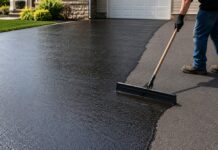
An asphalt driveway sealer is a protective coating applied over an asphalt pavement surface. Its primary purpose is to provide a protective layer over the pavement while improving its overall appearance.
Asphalt naturally contains binders that help hold aggregate together. Over time, exposure to sunlight, oxygen, moisture, vehicle traffic, and changing temperatures can contribute to surface aging.
A sealer can help protect the surface from some of these environmental factors. It can also give an older driveway a darker, more uniform appearance.
Sealing does not replace structural repairs, however. Cracks, potholes, drainage problems, and significant pavement failures should be addressed appropriately before sealing.
Why Timing Matters
Applying an asphalt driveway sealer is not simply a matter of choosing a convenient date. Weather and pavement conditions can significantly affect how the coating performs.
The surface needs appropriate conditions for the sealer to spread evenly, adhere properly, and cure. Excessive moisture, rain, very low temperatures, or unsuitable weather can interfere with the process.
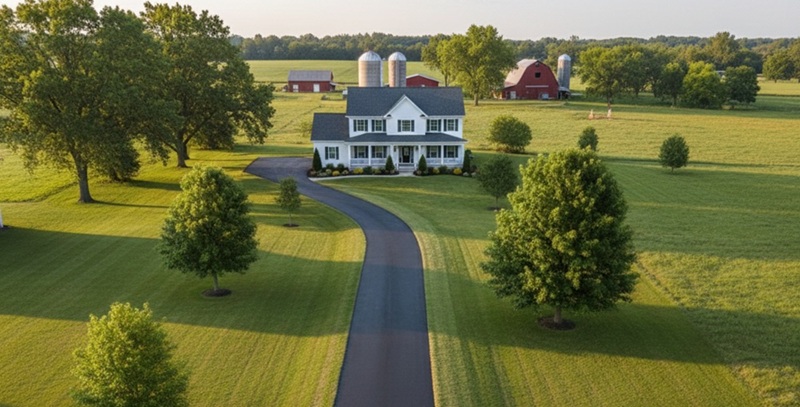
Timing also matters because a driveway should be in an appropriate condition before sealing. Applying sealer over significant cracks, potholes, or unstable pavement may hide problems temporarily without addressing their underlying causes.
The best results come from combining proper pavement preparation with favorable application conditions.
How Old Should an Asphalt Driveway Be Before Sealing?
A newly installed asphalt driveway generally needs time to cure before an asphalt driveway sealer is applied. Fresh asphalt contains oils and other components that need time to stabilize.
Applying sealer too soon can interfere with the natural curing process. For this reason, property owners should follow the recommendations appropriate to the specific pavement and installation.
Older asphalt may also benefit from sealing when the surface remains structurally sound but is beginning to show signs of oxidation and weathering.
The ideal timing depends on the pavement’s condition rather than simply its calendar age.
Look for Signs Your Driveway Needs Sealing
Not every asphalt driveway needs to be sealed immediately. Instead, property owners should monitor the surface for changes that indicate it may benefit from protective maintenance.
Signs that sealing may be worth considering include a noticeably faded or gray appearance, increasing surface dryness, minor surface wear, and reduced richness in the asphalt’s original appearance.
However, extensive cracking or potholes should not simply be covered with sealer. These conditions may require repair before any protective coating is applied.
The Best Season for Applying Sealer
Seasonal conditions can influence the success of an asphalt driveway sealer application. In general, moderate, dry weather is preferable because the pavement needs sufficient time to dry and the sealer needs appropriate conditions to cure.
Spring, summer, and early fall can provide suitable opportunities depending on local weather patterns.
However, a calendar date alone does not determine whether a sealing project should proceed. A warm day following several days of rain may still leave the pavement or surrounding ground too damp.
Checking the actual weather forecast and pavement conditions is more important than following a fixed seasonal schedule.
Temperature Matters
Temperature can affect how an asphalt driveway sealer spreads, adheres, and cures. Very cold conditions may slow curing, while excessively hot conditions can create other application challenges.
Property owners should follow the manufacturer’s recommended application conditions for the selected sealer.
The goal is to apply the material when the pavement and surrounding environment provide suitable conditions for an even application and adequate curing.
Dry Weather Is Important
Moisture is one of the biggest concerns when scheduling a sealing project. Rain or damp pavement can interfere with the application and curing process.
The driveway should be sufficiently dry before the sealer is applied. Property owners should also consider whether rain is expected soon after application.
Even if the surface looks dry, moisture may remain in cracks or low areas. Adequate drying time helps create better conditions for the sealer.
Prepare the Driveway Before Sealing
Preparation is one of the most important steps in achieving good results. Applying an asphalt driveway sealer over dirt, debris, loose material, or existing pavement damage can reduce the quality of the finished surface.
Before sealing, the driveway should be inspected and appropriately cleaned. Leaves, dirt, grass, oil-related residue, and other contaminants may need to be removed.
Cracks and potholes should also be evaluated. Repairing significant pavement damage before sealing can help ensure that the protective coating is applied to a sounder surface.
Repair Cracks Before Applying Sealer
Sealer is not a substitute for crack repair. Cracks provide pathways for water to enter the pavement, and simply covering them with a coating may not stop the underlying deterioration.
Before applying an asphalt driveway sealer, property owners should inspect cracks and determine whether they require appropriate repair.
Small cracks may be manageable through routine pavement maintenance, while larger or interconnected cracks may indicate more extensive deterioration.
Addressing cracks first can help create a more uniform and better-prepared surface for sealing.
What About Potholes?
Potholes should also be repaired before sealing. A pothole represents pavement failure that cannot be corrected simply by applying a protective coating.
If potholes are present, the damaged areas should be evaluated and repaired appropriately.
Once the pavement is in suitable condition, sealing can be considered as part of a broader maintenance strategy.
Cleanliness Makes a Difference
A clean surface allows the sealer to contact the asphalt more effectively. Dirt and loose debris can interfere with coverage and create an uneven appearance.
Before applying an asphalt driveway sealer, the pavement should be cleaned thoroughly enough to remove materials that could compromise the application.
Particular attention should be given to areas where dirt collects along edges and in low spots.
Oil and Chemical Contamination Should Be Addressed
Oil and other contaminants can affect asphalt surfaces and may interfere with sealing. Areas with significant contamination should be evaluated and cleaned appropriately before application.
A sealer applied over contaminated pavement may not bond or appear consistently.
Property owners should identify such areas during preparation rather than discovering them after the project has begun.
Consider the Driveway’s Overall Condition
Sealing is generally most useful when the underlying asphalt remains structurally sound. If the driveway has widespread cracking, severe potholes, major settlement, or significant structural deterioration, a protective coating may not be the most appropriate first step.
A professional assessment can help determine whether the driveway is ready for sealing or whether repairs should come first.
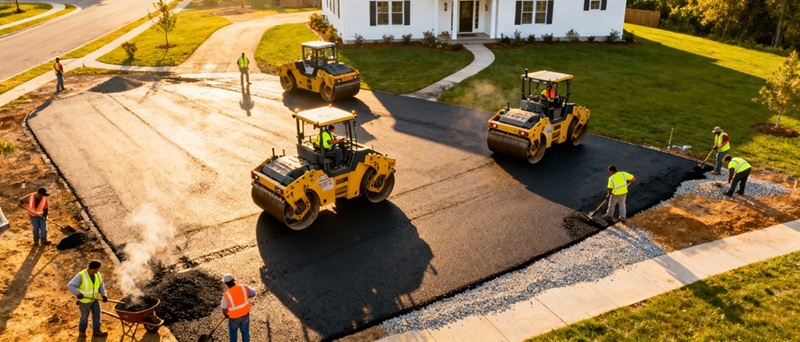
This approach helps ensure that an asphalt driveway sealer is used as a maintenance tool rather than as a way to conceal major pavement problems.
How Sealer Can Improve Appearance
One of the most visible benefits of sealing is improved pavement appearance. Weathered asphalt often becomes lighter and grayer as it ages.
A fresh coating can restore a darker, more consistent appearance and make the driveway look cleaner and better maintained.
For homeowners concerned about curb appeal, an asphalt driveway sealer can complement landscaping, exterior improvements, and other property maintenance projects.
Sealer Can Help Protect Against Weather Exposure
Asphalt is exposed to sunlight, rain, temperature changes, and other environmental conditions throughout its service life.
A properly applied sealer can provide an additional protective layer over the pavement surface. This can help reduce direct exposure to some environmental stresses.
However, sealing should be viewed as one part of an overall pavement maintenance strategy. Proper drainage, timely repairs, and responsible vehicle use remain important.
Allow Adequate Curing Time
One of the most important steps after applying an asphalt driveway sealer is allowing sufficient time for the surface to cure before normal use.
The exact curing period can vary depending on the product, weather, temperature, humidity, and application conditions.
Property owners should follow the specific recommendations provided for the sealer being used and avoid unnecessary vehicle or foot traffic until the surface is ready.
Using the driveway too soon can affect the finish and may leave marks or damage on the fresh coating.
Avoid Sealing Right Before Bad Weather
A sealing project should be planned around the weather rather than simply scheduled on the first available day.
Rain shortly after application can interfere with curing and may affect the appearance or performance of the coating.
Property owners should look for a suitable window of dry weather and enough time for the surface to cure properly.
This is especially important when planning an asphalt driveway sealer project during seasons when weather conditions change quickly.
How Often Should You Seal an Asphalt Driveway?
There is no universal sealing schedule that applies to every driveway. Traffic levels, climate, pavement age, surface condition, sealer type, and previous maintenance can all influence how frequently sealing may be appropriate.
Instead of automatically sealing every year, property owners should inspect the pavement and evaluate its condition.
Applying too much coating or sealing unnecessarily does not automatically improve pavement performance. Maintenance should be based on the actual needs of the driveway.
Avoid Overlooking Drainage
Even a well-sealed driveway can experience problems if water does not drain properly. Standing water can affect pavement edges, cracks, and the underlying structure.
Before sealing, inspect areas where water collects after rainfall.
If drainage is a recurring issue, it may be more important to address the water-management problem before applying an asphalt driveway sealer.
Think About Traffic Before Scheduling
Driveways should have enough downtime after sealing to allow the surface to cure. Property owners should therefore plan around household schedules, visitors, deliveries, and other vehicle activity.
For a residential property with multiple vehicles, it may be helpful to schedule the work when alternative parking is available.
Planning ahead reduces the temptation to drive on the freshly sealed surface before it has adequately cured.
Common Sealing Mistakes to Avoid
Even a good sealer can produce disappointing results if the application is poorly timed or the pavement is inadequately prepared.
Common mistakes include:
- Sealing pavement before it has sufficiently cured
- Applying sealer to damp asphalt
- Ignoring significant cracks and potholes
- Applying sealer before cleaning the surface
- Sealing immediately before expected rainfall
- Using the driveway before adequate curing
- Applying sealer without evaluating the pavement’s overall condition
Avoiding these mistakes can help improve the appearance and performance of the finished project.
Professional Evaluation Can Help
Determining whether your driveway is ready for sealing can sometimes be difficult from a visual inspection alone. A professional can evaluate the pavement’s age, surface condition, cracks, drainage, and areas of deterioration.
This can help determine whether an asphalt driveway sealer is appropriate or whether repairs should be completed first.
A professional approach can also help property owners choose an application schedule based on actual site conditions.
Protect Your Driveway With Proper Maintenance
Sealing is only one component of good asphalt maintenance. Property owners should continue monitoring the driveway after the coating has been applied.
Inspect the pavement periodically for new cracks, potholes, drainage issues, edge deterioration, and areas where the surface begins to wear.
Addressing small problems promptly can help protect the investment made in the driveway.
When Is the Best Time to Apply Asphalt Driveway Sealer?
The best time to apply an asphalt driveway sealer is when the pavement is properly prepared, structurally sound, sufficiently dry, and exposed to suitable weather conditions for application and curing.
Rather than choosing a date based solely on the calendar, consider the pavement’s condition and the upcoming weather. Avoid periods of persistent rain, unsuitable temperatures, or conditions that prevent proper curing.
For property owners in Louisville, Kentucky, Commonwealth Paving can assist with driveway and pavement maintenance needs. To discuss your project, contact Commonwealth Paving at +1 502 459 7283 or visit 136 Outer Loop, Louisville, Kentucky 40214.
Get Better Results From Your Asphalt Driveway Sealer
An asphalt driveway sealer can be a valuable part of a pavement maintenance plan when applied at the right time and under appropriate conditions. The most important factors are proper preparation, suitable weather, adequate drying and curing time, and addressing existing pavement damage before sealing.
Property owners should not use sealer as a replacement for necessary repairs. Instead, think of sealing as a protective maintenance step for asphalt that is otherwise in suitable condition.
By inspecting your driveway regularly, addressing cracks and potholes promptly, maintaining proper drainage, and choosing an appropriate time for sealing, you can help preserve both the appearance and functionality of your pavement. With thoughtful maintenance and professional guidance, your asphalt driveway can remain attractive, durable, and ready for everyday use for years to come.
Asphalt Driveway Sealer vs Unsealed Pavement: Why Protection Matters
An asphalt driveway is exposed to the elements every day. Rain, sunlight, temperature changes, vehicle traffic, dirt, and moisture can gradually affect the surface and contribute to pavement aging. While asphalt is known for its strength and durability, it still requires appropriate maintenance to preserve its appearance and performance.
One maintenance option property owners often consider is an asphalt driveway sealer. Sealing creates a protective layer over the pavement and can help maintain the surface while improving its appearance. By comparison, unsealed pavement remains directly exposed to environmental conditions and everyday wear.
The difference between sealed and unsealed pavement may not be obvious immediately after an asphalt driveway is installed. Over time, however, maintenance choices can influence how the pavement looks and how effectively it handles weather and daily use.
For property owners in Louisville, Kentucky, Commonwealth Paving provides paving and pavement maintenance services for residential and commercial properties. To discuss your driveway needs, contact Commonwealth Paving at +1 502 459 7283 or visit 136 Outer Loop, Louisville, Kentucky 40214.
What Is an Asphalt Driveway Sealer?
An asphalt driveway sealer is a protective coating applied to the surface of asphalt pavement. Its purpose is to provide an additional layer of protection while helping maintain the driveway’s appearance.
Asphalt contains binding materials that hold aggregate together. Over time, sunlight, oxygen, moisture, temperature changes, and vehicle traffic can gradually affect those components.
A suitable sealer can provide a protective surface over the asphalt and help reduce direct exposure to some environmental stresses. It can also give an aging driveway a darker, more consistent appearance.
However, sealer is not a replacement for structural repairs. Significant cracks, potholes, drainage problems, and unstable pavement should be addressed appropriately before sealing.
What Happens to Unsealed Asphalt?
Unsealed pavement remains exposed to weather and daily use without an additional protective coating.
This does not mean an unsealed driveway will immediately fail. Properly installed asphalt can provide years of service without being sealed. However, the surface continues to experience direct exposure to sunlight, moisture, oxidation, temperature fluctuations, and vehicle traffic.
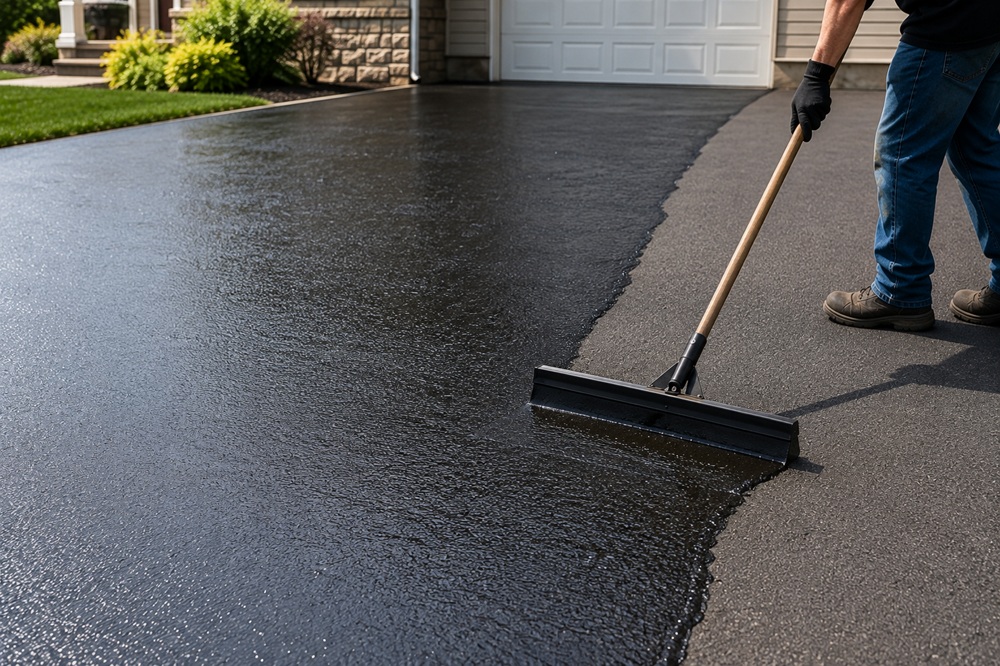
As asphalt ages, it can gradually become harder and less flexible. Surface color may fade from dark black to gray, and small imperfections may become increasingly visible.
Without timely maintenance, cracks can provide pathways for water to reach the pavement’s supporting layers.
Why Protection Matters
The main reason property owners consider an asphalt driveway sealer is to add another layer of protection to the pavement surface.
Water is particularly important because moisture can enter cracks and other openings in asphalt. Once it reaches the underlying layers, it can contribute to weakening, settlement, potholes, and other forms of deterioration.
A protective coating can help reduce direct exposure of the asphalt surface to moisture and other environmental factors.
Sealing should therefore be viewed as part of a broader maintenance strategy rather than a solution for every pavement problem.
Sealed vs. Unsealed Appearance
One of the most noticeable differences between sealed and unsealed pavement is appearance.
Freshly sealed asphalt typically has a darker and more uniform appearance. This can make an older driveway look cleaner and better maintained.
Unsealed asphalt naturally becomes lighter as it ages and oxidizes. Gray or faded pavement does not necessarily mean the driveway is structurally failing, but it can indicate that the surface has experienced significant exposure.
For homeowners concerned about curb appeal, an asphalt driveway sealer can provide a noticeable visual improvement when applied to pavement that is otherwise in suitable condition.
Sealing Can Help Protect Against Moisture
Moisture is one of the primary causes of pavement deterioration. Rainwater can enter cracks, seams, and damaged areas and eventually affect the materials beneath the asphalt.
An asphalt driveway sealer provides a protective surface that can help limit direct exposure to moisture.
However, sealing should never be used to hide significant pavement damage. Existing cracks and potholes should be evaluated and appropriately repaired before the sealer is applied.
A sealed driveway with unresolved structural problems can still deteriorate beneath the coating.
Protection From Sunlight and Oxidation
Sunlight and oxygen gradually affect asphalt binder. Over time, this process can make the pavement surface harder and more brittle.
As asphalt becomes less flexible, it may become more susceptible to cracking and surface wear.
Using an asphalt driveway sealer as part of a suitable maintenance program can help protect the surface from direct environmental exposure.
Regular inspections remain important because sealing does not stop the natural aging process completely.
Sealing Does Not Fix Existing Damage
One of the most important things property owners should understand is that an asphalt driveway sealer is a maintenance product, not a structural repair material.
A sealer cannot properly correct a deep pothole, major crack, severe settlement, or failed pavement base.
If these issues are present, they should be addressed before sealing. Otherwise, the coating may simply cover visible damage temporarily while the underlying problem continues.
The best results come from applying sealer to pavement that is structurally sound and properly prepared.
Cracks Should Be Addressed First
Cracks allow water to penetrate the pavement. If they are significant, applying sealer over them without appropriate repair may not provide the protection property owners expect.
Before sealing, inspect the driveway carefully for cracking.
Small cracks and larger structural cracks may require different approaches. Widespread cracking can also indicate that the pavement is reaching a stage where more comprehensive work may be necessary.
Addressing cracks before applying an asphalt driveway sealer helps create a better-prepared surface.
Potholes Require More Than Sealing
Potholes are another problem that should be addressed before sealing.
A pothole indicates that pavement material has broken down and that the affected area may have underlying structural or moisture-related problems.
Applying sealer over a pothole does not restore the missing pavement or stabilize the damaged area.
Proper asphalt driveway sealer application should come after necessary repairs have been completed.
Drainage Still Matters on Sealed Pavement
Sealing can provide surface protection, but it does not eliminate the importance of drainage.
If water consistently collects on a driveway, the underlying drainage problem remains. Standing water can place continued stress on the pavement and surrounding areas.
Property owners should inspect their driveways after rainfall. If water repeatedly collects in the same locations, grading or drainage may need to be evaluated.
A properly maintained driveway combines protective surface treatment with effective water management.
Weather Affects Sealing Results
An asphalt driveway sealer needs suitable conditions for application and curing. Applying sealer during unsuitable weather can affect the finished result.
The pavement should generally be sufficiently dry, and the temperature and forecast should be appropriate for the selected product.
Rain shortly after application can interfere with curing, while unsuitable temperatures can affect how the sealer spreads and sets.
Planning the project around a suitable period of weather can help produce a more consistent finish.
Why Preparation Matters
Preparation is one of the most important differences between a successful sealing project and a disappointing one.
Before applying an asphalt driveway sealer, the pavement should be inspected and cleaned. Dirt, leaves, loose debris, vegetation, and other contaminants can interfere with application.
Oil or other surface contamination should also be addressed appropriately.
The driveway should be in suitable condition before coating begins. Proper preparation helps the sealer contact the pavement more effectively and can improve the finished appearance.
Sealed Pavement Still Needs Maintenance
Applying an asphalt driveway sealer does not mean the driveway can be forgotten.
Property owners should continue inspecting the surface for cracks, potholes, drainage problems, edge deterioration, and other signs of wear.
Regular maintenance can help identify problems before they become extensive.
Keeping the driveway clean and maintaining surrounding drainage areas can also support the overall condition of the pavement.
How Vehicle Traffic Affects Asphalt
Every vehicle that travels across a driveway places some stress on the pavement. Passenger cars generally create less loading than heavy trucks, trailers, or equipment.
Repeated heavy traffic can accelerate surface wear, especially when the pavement was not designed for those loads.
An asphalt driveway sealer can provide surface protection, but it cannot compensate for a pavement structure that is inadequate for its actual use.
Property owners should consider traffic patterns when evaluating driveway maintenance needs.
Sealing and Curb Appeal
A driveway occupies a significant portion of many property’s visible exterior. When asphalt becomes faded, gray, or weathered, it can affect the overall appearance of the property.
Applying an asphalt driveway sealer can restore a darker, more consistent appearance and make the pavement look better maintained.
This can complement other exterior improvements such as landscaping, painting, walkways, and property maintenance.
For homeowners who care about curb appeal, sealing can therefore provide both practical and aesthetic benefits.
How Often Should You Seal?
There is no universal schedule for every driveway. The appropriate timing depends on pavement age, traffic, weather exposure, surface condition, previous maintenance, and the type of sealer used.
Instead of sealing automatically on a fixed schedule, property owners should evaluate the actual condition of the pavement.
If the surface remains healthy and well maintained, additional sealing may not be immediately necessary. Conversely, a heavily exposed or aging driveway may require more frequent attention.
The objective is appropriate maintenance, not simply applying more coating.
Common Mistakes to Avoid
Poor timing and inadequate preparation can reduce the benefits of sealing.
Common mistakes include:
- Applying sealer to a damp or dirty surface
- Sealing pavement before it is ready
- Ignoring significant cracks or potholes
- Applying sealer immediately before rainfall
- Driving on the surface before adequate curing
- Assuming sealer can correct structural pavement problems
- Ignoring drainage issues
Avoiding these mistakes can help property owners achieve better results from their maintenance investment.
When Sealed Pavement May Be the Better Choice
A properly maintained and appropriately sealed driveway may be a good choice for property owners who want additional surface protection and improved appearance.
An asphalt driveway sealer can be particularly useful when the pavement is structurally sound but beginning to show normal signs of aging and surface exposure.
The coating can help maintain a darker appearance while adding a layer between the asphalt and environmental conditions.
When Unsealed Pavement May Be Appropriate
Not every driveway requires immediate sealing. Some property owners may choose to leave structurally sound asphalt unsealed and focus on other maintenance priorities.
Unsealed pavement can still perform well when it is properly installed, has good drainage, and receives regular inspections and timely repairs.
The important point is to understand that unsealed asphalt remains exposed to environmental conditions and should be monitored accordingly.
Make Sealing Part of a Bigger Maintenance Plan
The greatest value comes from treating an asphalt driveway sealer as one component of an overall pavement maintenance strategy.
Property owners should combine sealing, where appropriate, with crack repair, pothole repair, drainage management, regular inspections, and proper use of the driveway.
This comprehensive approach can help preserve the surface and reduce the likelihood of avoidable deterioration.
Professional Guidance Can Help
Determining whether a driveway should be sealed is easier when the pavement’s overall condition has been evaluated.
A professional can identify cracks, potholes, surface oxidation, drainage issues, settlement, and other conditions that may affect the decision.
For property owners in Louisville, Kentucky, Commonwealth Paving can assist with driveway and pavement maintenance needs. Contact Commonwealth Paving at +1 502 459 7283 or visit 136 Outer Loop, Louisville, Kentucky 40214 to discuss your project.
Protect Your Asphalt Driveway for the Long Term
The difference between sealed and unsealed pavement is not simply about whether the driveway looks darker. An asphalt driveway sealer can provide an additional protective layer that helps shield the pavement surface from moisture, sunlight, oxidation, and everyday environmental exposure.
At the same time, sealing is not a cure-all. Cracks, potholes, drainage problems, and structural deterioration need to be addressed separately. Applying sealer to damaged pavement without proper preparation may produce short-term cosmetic improvement without solving the underlying issue.
For property owners, the best approach is to evaluate the driveway’s condition and choose maintenance based on its actual needs. With proper preparation, appropriate timing, regular inspections, and professional guidance, an asphalt driveway sealer can be a valuable part of a long-term pavement care strategy.
A protected, well-maintained driveway not only looks better but can also provide a more dependable surface for everyday use. By taking proactive steps today, property owners can help preserve their asphalt investment and maintain curb appeal for years to come.
Address
Commonwealth Paving, 136 Outerloop, Louisville, Kentucky 40214
Phone: 502-459-7283, Fax: 502-456-2678
Opening Hours
| Monday | 9:00 AM – 5:00 PM |
| Tuesday | 9:00 AM – 5:00 PM |
| Wednesday | 9:00 AM – 5:00 PM |
| Thursday | 9:00 AM – 5:00 PM |
| Friday | 9:00 AM – 5:00 PM |
| Saturday | Closed |
| Sunday | Closed |